
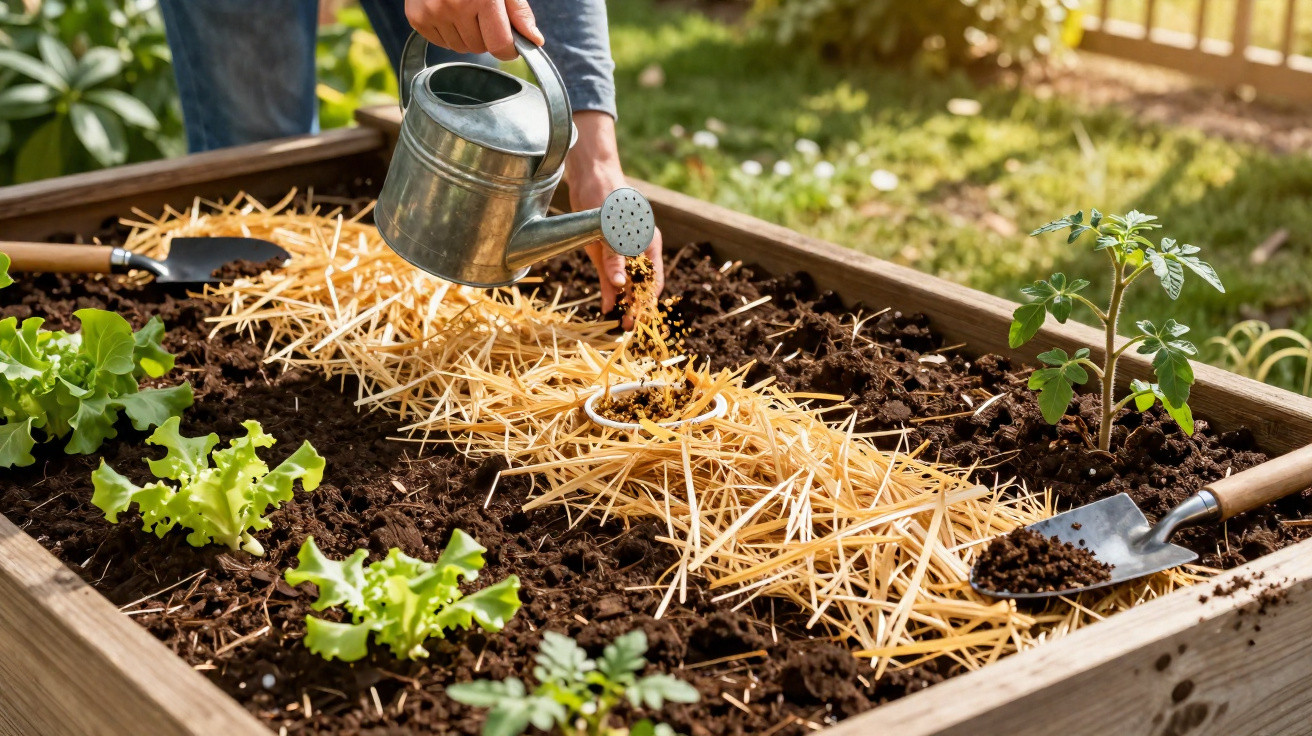
Mulch can quietly transform that outcome.
With hotter summers and unpredictable rainfall becoming increasingly commonplace, gardeners need straightforward ways to keep soil damp for longer. Layered mulches are proving to be one of the most useful options, helping to turn water-hungry raised beds into robust, easier-to-manage growing areas.
Why raised beds dry out so fast
Raised beds heat up quickly, drain freely and create a well-aerated environment for roots. In dry weather, however, these advantages can work against them. Their raised edges can encourage water to escape rather than sink in. Wind passes over the open soil surface, drawing moisture from uncovered ground, while dark wooden or metal sides can absorb heat and warm the root area during hot afternoons.
Many gardeners react by watering more frequently rather than watering more effectively. Light, regular watering promotes shallow roots and speeds up evaporation. When soil has no protective cover, its upper few inches can form a dry crust. This crust prevents water from soaking through, causing later watering to flow across the surface instead of reaching plant roots.
Mulch layers do not just “cover” the soil. They change how water moves, how heat builds and how roots behave.
Carefully selected mulch layers reduce evaporation, protect soil from temperature fluctuations, improve its structure and help nourish the underground life that retains water within reach of plants.
How mulch layers retain water in raised beds
Creating an evaporation barrier
In its most basic role, mulch acts as armour for the soil. Covering the surface reduces direct sun, cushions the effects of wind and blocks the first rush of drying air. Moisture held in the topsoil therefore escapes into the atmosphere more slowly. Your previous watering lasts longer, allowing a little more time before the next one is needed.
The best raised-bed mulches share three characteristics: rainwater and hose water can pass through them, they exclude light to limit weeds, and they retain some moisture without becoming waterlogged. When applied at an appropriate depth, organic options including shredded leaves, straw and wood chips provide all of these benefits.
Insulating soil from heat and cold
Mulch also works as an insulating layer. During sunny weather, it protects the soil from direct heat and can keep root zones several degrees cooler. On chilly nights and towards the end of the growing season, that same covering reduces heat loss. This means roots experience fewer sudden changes, while soil microbes remain active for a greater part of the year.
| Mulch type | Main benefit | Best depth in raised beds |
|---|---|---|
| Shredded leaves | Break down quickly and feed soil life | 5–8 cm (2–3 in) |
| Straw or hay (seed-free) | Highly effective evaporation barrier that is light and airy | 8–12 cm (3–5 in) |
| Compost | Provides nutrients while retaining moisture | 2–5 cm (1–2 in) |
| Wood chips or bark | Durable mulch with strong temperature buffering | 5–8 cm (2–3 in) between plants |
Improving soil structure and soil life
Beneath mulch, subtle changes take place: worms work nearer the surface, fungi spread their threads and bacteria occupy tiny pores in the soil. Together, they build better structure, allowing water to infiltrate rather than run away. As organic mulches break down, they contribute carbon, which acts like a sponge by holding water for roots to draw on later.
Healthy, living soil can hold several times more water than tired, compacted ground, turning every rainfall into a slow-release reservoir for your raised beds.
Creating a moisture-smart mulch system
Begin with well-watered soil
Mulch reduces moisture loss, but it cannot immediately restore a completely dry raised bed. Thoroughly water the soil before adding any covering. Try to moisten it to a depth of at least 15–20 cm (6–8 in). This initial deep watering encourages roots to grow downwards, where soil remains cooler and wetter.
Apply a compost contact layer
A light application of mature compost directly on the soil creates a link between the root zone and the mulch above. It closes surface cracks, improves contact between soil particles and supplies food for beneficial microbes.
- Apply 2–3 cm (about 1 in) of screened, weed-free compost across the bed.
- Keep the compost a little clear of tightly grouped stems to limit the chance of rot.
- Water lightly again to help the compost settle into the pores at the soil surface.
Select top mulch for your climate
After the compost has been added, spread the main mulch layer. The most suitable material will often depend on local weather conditions and the crops you are growing.
In hot, dry areas, gardeners often choose straw or finely chopped dry leaves. Their trapped air pockets improve insulation. In cooler or wetter locations, a more open covering of shredded bark or coarse wood chips placed between plants can reduce the risk of waterlogging while still slowing evaporation.
Where conditions are mixed, many gardeners now layer several materials. A fine compost layer goes directly onto the soil, followed by a middle layer of shredded leaves and a light, uneven scattering of wood chips. Compost provides nutrients, leaves regulate moisture and the chips stop the leaves from being blown away.
Mulching different crops
Fruit and deep-rooted perennials
Perennial plants, including blueberries, rhubarb and perennial herbs, respond well to a deep, stable mulch layer. As their roots grow further down, they can access water stored beneath the surface, particularly when the upper soil dries during midsummer.
Place 5–8 cm of straw or woody mulch around perennials, but leave a narrow clear ring around each crown. Renew the mulch annually by adding more on top rather than removing the old layer, helping to avoid disturbing soil life.
Salads and fast-growing crops
Leafy salads and crops with a quick turnaround require a gentler approach. Thick, coarse mulch may overwhelm seedlings or leave soil too cold early in the growing season. In these beds, a finer material, such as shredded leaves or a slim compost covering, is more suitable. It limits evaporation while allowing seeds to emerge without difficulty.
After young plants have developed several sets of true leaves, carefully place extra mulch around them as a collar, maintaining a clear gap around the stem.
Water-hungry summer vegetables
Tomatoes, peppers, courgettes and cucumbers can quickly suffer when soil repeatedly shifts from wet to dry. Uneven moisture can cause fruit to split, blossom end rot and restricted growth. A substantial mulch layer helps to reduce these fluctuations.
Consistent soil moisture beneath a good mulch often matters more than the brand of fertiliser when it comes to healthy, crack-free fruit.
Install drip lines or soaker hoses before laying the mulch. Water can then seep gradually into the root zone and remain there, protected from sun and wind by the layer above.
Common raised-bed mulching mistakes
Applying mulch too deeply or when it is too wet
Extra mulch is not necessarily beneficial. In raised beds, a layer deeper than roughly 10–12 cm can remain sodden, particularly when using fine materials such as grass clippings. This waterlogged condition restricts airflow, reduces oxygen and can encourage slugs, mould and root issues.
Aim for a layer that can still be gently moved aside by hand to reveal the soil underneath. If it feels dense or slimy, or has a sour smell, pull it back to improve airflow and blend it with drier material such as leaves or straw.
Pressing mulch against stems
“Mulch volcanoes” around plant bases may appear neat, but they provide perfect conditions for rot and collar disease. Woody mulches touching tender stems can also shelter pests that feed on soft plant tissue.
Create a small moat instead: leave 3–5 cm of bare earth around young stems and shrub trunks. In a raised bed, where growing room is limited, this modest gap can make a considerable difference over a long season.
Depending on plastic alone
Plastic sheets and woven weed-control fabric can seem to deal with weeds and moisture loss at once. In reality, they may create further problems. Strong sunlight can build up beneath plastic and overheat the upper soil. Water applied from above may run off rather than soak in evenly. Roots then gather in the limited strip of soil below planting holes, leaving crops exposed if irrigation is interrupted.
When using a membrane to control weeds, cover it with an organic mulch to moderate temperatures and capture rainfall. Many gardeners now avoid plastics entirely in raised beds, as deep organic mulches with regular top-ups can suppress most weeds while preserving soil health.
Adjusting mulch layers for a changing climate
Weather patterns in the UK and US are changing. Increasingly, gardeners experience extended dry spells followed by brief, heavy downpours. Raised beds, with their freely draining sides, respond to these extremes particularly quickly. Mulch can soften these changes without requiring the garden to be completely redesigned.
During dry summers, thicker seasonal mulches combined with drip irrigation beneath the surface can noticeably reduce water use. In particularly wet years, a looser and more open mulch layer helps prevent compaction and allows surplus water to drain, while still sheltering soil from forceful rain.
There is a wider, less obvious benefit as well. Every time rich soil is built with mulch, carbon is stored in its organic matter. That carbon supports climate resilience and also functions as a large hidden sponge below raised beds. Water from heavy rain moves into this sponge instead of flooding paths, then becomes available to roots as the soil dries.
Beyond mulch: additional moisture-saving methods
Mulch performs best when included in a broader water-management plan. Small decisions can strengthen its results. Closer planting shades the soil surface, while grouping crops according to their water needs prevents hardy herbs from being overwatered simply to keep lettuce alive. Selecting varieties bred for heat and drought tolerance also offers a useful margin of safety when forecasts change.
Some gardeners now combine several methods: sunken planting pockets within raised beds, buried clay pots known as ollas that release water gradually, and windbreaks along exposed sides. Each measure shifts conditions in the plants’ favour, although mulch layers often do much of the quiet daily work.
For a further experiment, set up a simple comparison. Leave one raised bed uncovered and mulch another with similar dimensions and planting. Record how often each needs watering, how rapidly the soil dries at a depth of 5 cm, and how the harvests differ. This direct side-by-side test often reveals more than any list of gardening trends, and frequently turns even doubtful gardeners into regular mulch users.





Comments
No comments yet. Be the first to comment!
Leave a Comment