
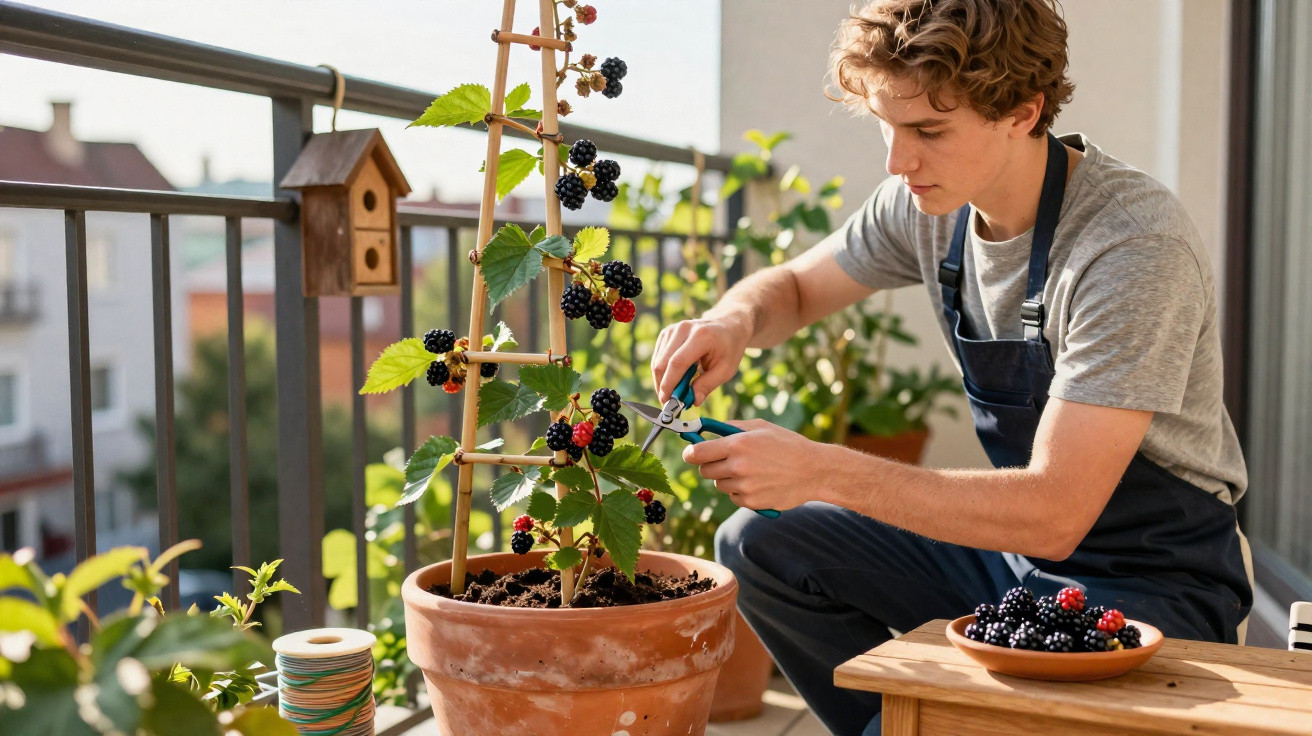
Across cities in the US and UK, more gardeners are transforming tight outdoor nooks into fruitful mulberry plots. With keen secateurs, sizeable containers and plenty of patience, they are drawing unexpectedly sweet crops from the smallest of spaces.
Why mulberries are becoming popular in small spaces
Mulberries were once associated with large gardens and historic estates. Their trees grew vast, the fruit did not keep for long, and their tendency to make a mess was well known. That image is rapidly evolving. Plant breeders are introducing smaller varieties, container cultivation is advancing, and home gardeners want fruit that is both usefully practical and pleasantly nostalgic.
Mulberries now sit in the same conversation as dwarf apples and patio figs: real fruit trees scaled down for renters and balcony gardeners.
Compared with fussier fruit crops, mulberries cope more readily with pruning, irregular watering and less-than-perfect soil. They begin fruiting when young, commonly after two to three years, while certain varieties produce over several weeks rather than during one frantic weekend.
For households dealing with higher food costs and ever-smaller outdoor areas, this matters. One carefully maintained mulberry in a tub can supply bowls of fruit for eating fresh, freezing, making jam and preparing syrups, all without taking up any lawn.
Selecting the best mulberry for compact gardens
Not every mulberry is well behaved in a courtyard or roof terrace. Given the opportunity, some will still try to reach 30 ft. The present move towards smaller gardens is being led by compact or naturally contained cultivars that tolerate firm pruning well.
Mulberry varieties that remain relatively manageable
- Dwarf everbearing mulberry – Usually reaches 6–10 ft in a container, crops over a lengthy season, and generally bears sweet, dark berries.
- ‘Illinois Everbearing’ – Not a genuine dwarf, but exceptionally productive and very responsive to pruning; more suitable for bigger patios and small gardens.
- Black mulberry (Morus nigra) – Naturally compact and slow growing, producing some of the most fragrant and complex-flavoured berries.
Growers in the UK often choose black mulberry for its flavour, whereas many urban gardeners in the US favour dwarf everbearing varieties that cope with pots on hot decks and fire escapes. In both countries, suppliers are seeing a consistent rise in orders for grafted, container-ready trees instead of field-grown whips.
| Priority | What to look for in a mulberry |
|---|---|
| Space | A compact habit, marketed as dwarf or suitable for patios, preferably on a restrained rootstock. |
| Flavour | Black or dark-purple fruit, which offers greater sweetness and a fuller flavour than many white varieties. |
| Climate | Cold-hardy varieties for northern states and most of the UK; heat-tolerant choices for cities in the southern US. |
| Use | Long-cropping varieties for fresh snacking; a heavier single flush for jam or wine making. |
Growing mulberries in containers: a practical approach
This latest interest in growing mulberries in limited space is driven less by novelty than by technique. Gardeners are managing the trees much like oversized berry bushes: restricting roots within a fertile environment, then controlling the canopy through annual pruning.
Creating a portable mulberry “home”
Most specialists now favour large, robust containers over decorative, narrow pots. This gives the roots room to anchor the tree and retain sufficient moisture without requiring constant emergency watering.
- Container size: 40–75 litres for a balcony tree; use larger tubs or half-barrels in small gardens.
- Drainage: Provide several large holes, and raise the pot slightly on feet or bricks so water can flow freely.
- Growing medium: Combine peat-free compost, loam and coarse grit or bark to create structure.
- Position: Give the tree at least six hours of sunshine in most climates, adding afternoon shade in exceptionally hot cities.
Think of a potted mulberry less as décor and more as a long-term fruit appliance that needs a solid, breathable container and regular servicing.
Watering practices can determine whether these trees succeed or fail. During their first two seasons, young mulberries in pots benefit from reliable moisture while their roots spread through the entire soil volume. Later, many gardeners move to a thorough but occasional soaking instead of daily small drinks. This encourages hardier roots and reduces sulky growth during heatwaves.
Pruning mulberries: the understated route to sweet fruit in small spaces
The compact mulberry “lollipops” and fan-trained trees seen against courtyard walls on social media are usually the result of a disciplined winter routine using sharp tools. In a restricted space, pruning performs two key functions: it keeps the canopy open and low, and it channels the tree’s energy into fruit rather than extra height.
An annual routine for compact trees
Gardeners who do well in small spaces generally use a schedule centred on two principal pruning sessions:
- Structural prune in late winter: Take out crossing branches, cut tall leaders back to the selected height, and thin overcrowded shoots in the centre.
- Summer tidy: Pinch out or shorten vigorous water shoots and any growth likely to shade balconies or neighbours’ windows.
In the UK, this winter pruning is commonly done from February to early March. Across much of the US, it can be carried out after the worst cold has passed but before the sap begins to rise. The aim is not an immaculately symmetrical tree, but one that can be picked without ladders and has enough light reaching the fruiting spurs.
Regular, confident pruning tends to give fewer but better berries, with higher sugar and fuller colour, especially on black mulberry cultivars.
Urban gardeners find that infrequent, drastic cutting can trigger stressed growth and long, unproductive branches. Making lighter, regular cuts every year appears to limit this response, shaping a stable and compact tree that bears fruit close to its main structure.
Patience, pollinators and the first genuinely sweet crop
The growing interest in mulberries for small spaces reflects a broader change: people increasingly see fruit trees as long-term housemates rather than instant decoration. A tree’s first year in a pot may yield only a few berries, and many specialists now recommend removing most flowers during year one so the root system can become stronger.
The timeline for sweeter fruit
Mulberries have a subtle secret: their flavour develops as the tree ages. Gardeners in warm and cool regions observe much the same progression.
- Year 1–2: Light yields, with fruit that can taste less full, particularly on young trees under stress.
- Year 3–4: Clearly sweeter berries, more even sizing and a heavier set following balanced pruning.
- Year 5 and beyond: Dependable crops, with richer, wine-like flavours in many black and dark-purple cultivars.
Pollinators can support this development. In built-up areas, the presence of bees and hoverflies, as well as wind movement, may be inconsistent. In response, some balcony gardeners place small pots of flowering herbs-thyme, marjoram and chives-around the mulberry container. These form a miniature insect corridor between courtyards and windowsills.
The sweetest mulberries usually come from trees that have been allowed to settle in one spot for several seasons, with a fairly calm routine of water, light and pruning.
Handling mess, neighbours and practical balcony fruit growing
The traditional criticism of mulberries remains true: ripe berries stain. That creates genuine concerns on terraces and in shared courtyards. Rather than ignoring the issue, the newer approach focuses on careful placement and timely harvesting.
- Position containers so fallen berries land on gravel, soil or a sacrificial mat instead of pale paving.
- Angle the canopy slightly towards your own area, rather than over shared walkways or parked vehicles.
- During the main season, pick fruit regularly-every day or two-to minimise berries dropping to the ground.
Some landlords now incorporate fruit trees into planting plans while requiring dark, textured surfaces beneath them. Others ask tenants to keep trees within specified height and spread limits, again making disciplined pruning essential. The idea of “edible landscaping” is slowly moving beyond herb boxes towards fully fruiting trees in mixed-use developments.
Beyond the berry bowl: why the mulberry trend is lasting
Mulberries in confined gardens offer more than food for the people who grow them. They provide light summer shade, attract birds to hard-surfaced courtyards, and offer children raised far from conventional orchards a quiet lesson in the seasons.
Health researchers observe that caring for fruit trees can encourage people to go outdoors for brief, frequent jobs, including watering, testing fruit for ripeness and trimming an errant shoot. These gentle bursts of activity throughout the week closely match public-health advice on sustainable, low-impact exercise.
There is also an underlying financial consideration. As soft-fruit prices rise and harvests decline in some commercial growing areas because of heat and water stress, a dependable balcony crop can seem less like a pastime and more like a modest safeguard against uncertain supply, particularly for households already interested in cooking and preserving at home.
What follows mulberries: connected ideas for tiny fruit gardens
After mastering containers, pruning and patience with mulberries, many gardeners apply the same principles to other crops. Columnar apples, cordon pears and fan-trained peaches can occupy unused corners beside walls and fences. Tayberries and blackberries can be trained along balcony rails, making use of vertical room instead of precious floor space.
Some designers now refer to “fruit stacks”: combining early and late varieties, varied root depths and contrasting heights within one small area. A deep mulberry tub may stand behind shallow planters of alpine strawberries, while a lightweight trellis above carries autumn raspberries.
The challenges are genuine: balconies can be overloaded, plants may become rootbound, water can drip onto neighbours, and trees may struggle in heat held by concrete and glass. Yet for urban residents willing to learn, measure and adapt, the benefits are clear: warm, sun-softened berries picked within arm’s reach, with no car travel and no packaging-only the quiet pleasure of helping a tree flourish where people once assumed that only geraniums would survive.





Comments
No comments yet. Be the first to comment!
Leave a Comment