
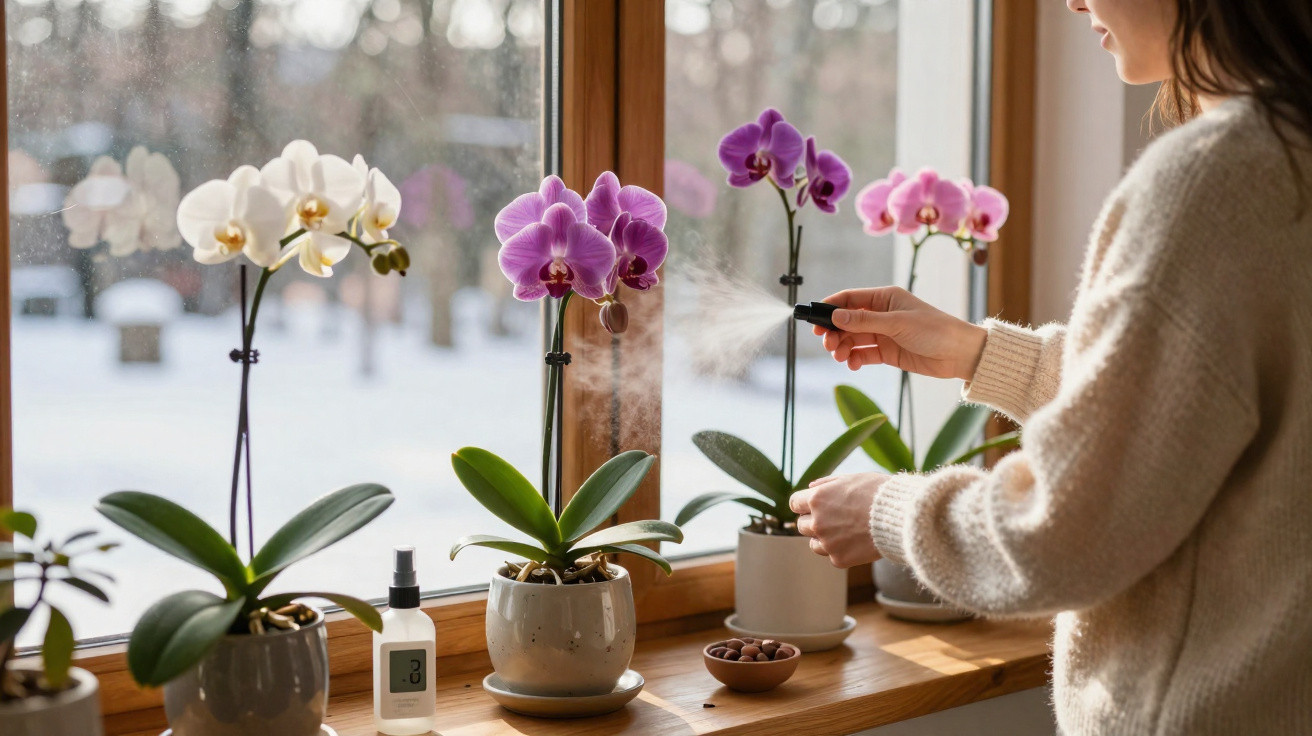
During winter, when many species become dormant and lose their vibrancy, some orchids turn the cold into an opportunity to bloom. On balconies, in sheltered gardens or even indoors, these tropical plants prove that lower temperatures do not necessarily mean a lack of colour, producing striking flowers and distinctive fragrances precisely when the landscape is usually more subdued.
What makes winter-flowering orchids so special?
Winter-flowering orchids use cooler conditions and shorter daylight hours as a natural trigger for flowering. Rather than being harmed by moderate cold, they slow their leaf growth and channel their resources into producing buds, which can last for weeks.
Their hardiness is another important advantage, as many tolerate mild temperature fluctuations and bright indoor settings. With free-draining growing medium, measured watering and protection from frost and drying winds, they are excellent choices for keeping greenery prominent throughout the colder season.
Which orchids are best suited to winter?
Among the species that adapt best to cooler weather, several groups are favourites with both beginners and collectors. Their resilience, pronounced scent and long-lasting flower displays make them ideal for bringing an exotic touch to winter décor.
Here are some well-known orchids that usually flower successfully in mild temperatures and can be grown in hanging pots, decorative planters or well-drained troughs:
- Zygopetalum: its green and purple petals give it the appearance of a wild orchid. It enjoys mild conditions, good airflow and indirect light, and its flowering stems can remain in bloom for up to two months.
- Oncidium ‘Sharry Baby’: a hybrid renowned for its sweet, chocolate-like fragrance. It commonly blooms in winter when given filtered light and a difference between daytime and night-time temperatures, producing abundant clusters in red, burgundy and white shades.
- Coelogyne cristata: native to mountainous regions, this orchid favours cool, humid conditions. It produces large white flowers with yellowish centres and requires high humidity along with careful watering, often by immersing the pot in water.
How should cool-climate orchids be cared for indoors?
Growing these orchids at home depends on balancing light, water, humidity and ventilation. As evaporation is lower in winter, a few simple adjustments to the routine can prevent overwatering and keep roots and leaves healthier for longer.
They favour bright but indirect light, such as a spot near a window softened by sheer curtains, and benefit from good air circulation to help prevent fungal problems. In many homes, watering once or twice a week is enough; always check the growing medium by touch and avoid leaving water standing in saucers.
What extra care helps ensure winter flowering?
A few details can help orchids return with flowers every winter. The gentle contrast between day and night temperatures, often found on glazed balconies, encourages bud formation in several species. Trays filled with pebbles and a little water, without the pot touching the water, also help maintain slightly humid air around the plant.
Before and during the growth phase, a specialist orchid fertiliser can be applied in light doses, with feeding reduced at the height of flowering. With careful observation and small adjustments to their care, these plants respond with regular blooms, showing that even on cold days the garden continues to change, full of cycles and visual and fragrant surprises.

Comments
No comments yet. Be the first to comment!
Leave a Comment