
When frost brings the run to a standstill, many chickens face a risky combination of boredom, stress and too little exercise.
Anyone who keeps chickens will recognise the issue: in winter, the coop feels bleak, the ground is hard or muddy, and there are scarcely any insects or fresh greens. Birds spend much of their time sitting around, start pecking at one another or quietly put on fat. Yet an unexpectedly simple game can break this winter inertia – without expensive specialist feed.
Why chickens can quickly suffer in winter when they have nothing to do
Cold weather itself is rarely the biggest issue for healthy chickens. They cope fairly well with sub-zero temperatures, provided they are kept dry and out of draughts. The real source of stress is inactivity: there is little in the garden to scratch through, while frozen ground prevents their natural urge to search, peck and dig.
This essential occupation is then missing for hours each day. As a result, the birds huddle closely together, move very little and appear listless. That affects both their bodies and their behaviour.
When chickens get bored, stress, weight and the risk of feather pecking rise considerably.
Two issues are especially noticeable in winter:
- Excess weight: Hardly any activity while receiving the same amount of feed can soon lead to weight gain.
- Feather pecking: Out of frustration, chickens may start pulling at flockmates or plucking out their own feathers.
Keepers who know their birds well will spot the signs early: unrest in the coop, bare patches and tension within the group. This is where a straightforward approach, used by animal carers for years, comes in: food-based enrichment games.
The ball game: how a chicken treat ball gets birds moving in winter
The basic principle comes from zoos and wildlife parks: animals should have to “work” for their food rather than receiving it fully prepared. This keeps them mentally and physically active. For the chicken coop, it can be put into practice remarkably easily.
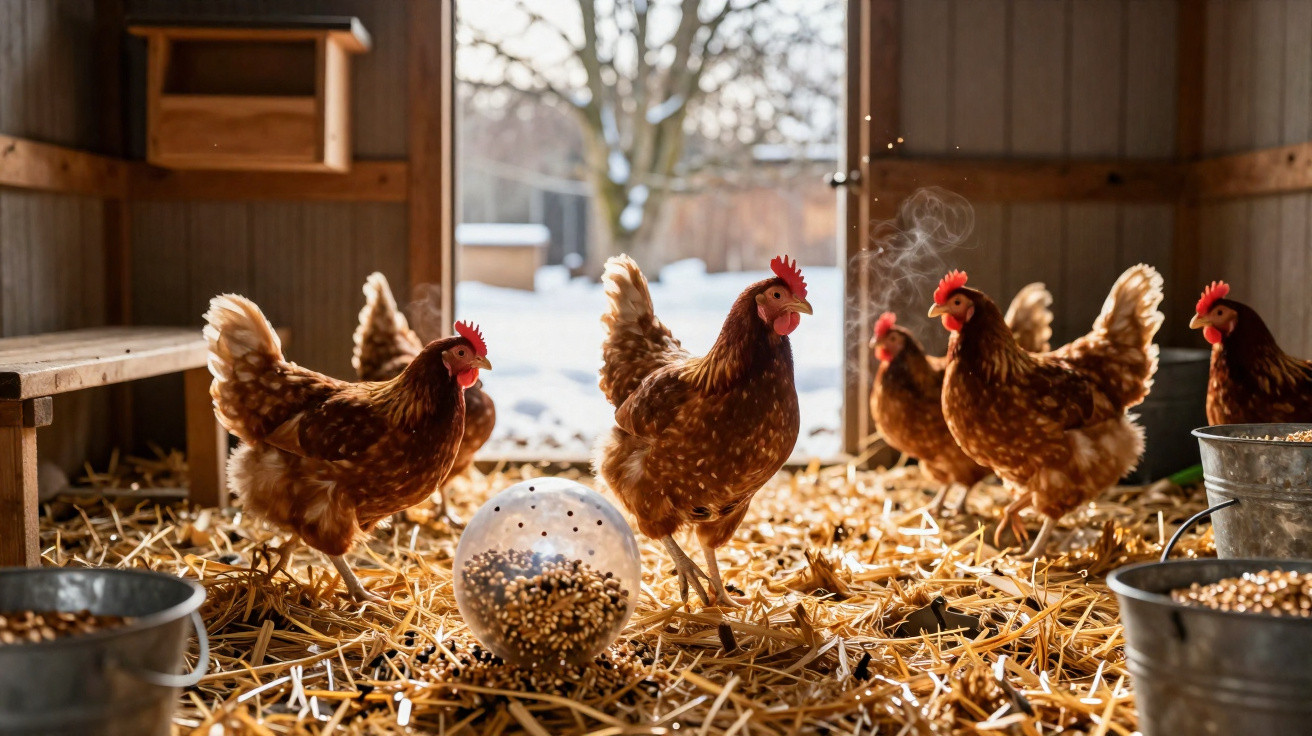
The idea is simple: fill a sturdy ball with holes with treats. As it rolls, small portions gradually fall out. The chickens must nudge, chase and work at the ball to earn their reward.
A dull feeding bowl becomes a hunting game – and suddenly every bird is racing after a rolling food source.
Suitable options include:
- ready-made treat balls or snack balls from a pet shop
- tough hard-plastic balls with holes added by you
- old, thick-walled play balls or plastic containers that can be securely closed
Crucially, the ball must be strong enough that the chickens cannot break it apart or expose sharp edges. Its holes should be round and free from burrs so that no toes can be injured.
How chickens learn the game in just a few minutes
Chickens are more curious than many people realise. When the ball is first placed in the run, the first attempts often happen within seconds. A few tips for getting started:
- Fill the ball directly in front of the chickens so they can see that it contains food.
- Give the ball a gentle push so that a few grains fall out.
- For particularly cautious birds, begin with larger holes so that treats emerge quickly.
Usually, one inquisitive bird is enough to make a start, and the rest of the flock follows. Within a day, hesitation turns into enthusiasm, and the treat ball becomes a highlight of an otherwise dreary winter routine.
What to put in the treat ball – and what to avoid
To keep the appeal from fading, the ball needs a filling that is healthy, nourishing and tempting at the same time. Pieces must not be so large that they become stuck, but they should not be too tiny either, as the chickens need to make some effort to get them.
The ideal filling provides enough energy for cold days without making the birds “fat and sluggish”.
Suitable winter fillings include:
- Dried mealworms: A protein boost for cold days and extremely popular.
- Cracked maize: Supplies energy and warms the birds from within during digestion.
- Small cubes of pumpkin or winter squash: Rich in vitamins and easy to store for a long time.
- Sunflower seeds: A good source of fat, though they should not be offered too often.
You can also try your own combinations, such as mixing some grain feed with a few special treats. The key point remains: the ball does not replace the basic ration; it is an addition for play and enrichment.
Variety keeps interest high
Chickens quickly become accustomed to routines. If the ball contains exactly the same food every day, their enthusiasm will decline. The easy answer is to change the contents regularly.
- Monday: mealworms + a little grain feed
- Tuesday: pieces of maize + cubes of pumpkin
- Wednesday: grain mix with a few sunflower seeds
Even minor changes are enough to rekindle curiosity and the urge to play.
More movement, better warmth: how the game supports health
A treat ball does more than lift spirits; it also noticeably changes the birds’ behaviour. Anyone who sees a chicken suddenly dash across the run because the ball has rolled away again will immediately understand the effect.
Movement produces warmth – an active chicken gets through frosty nights far better than a sluggish one.
The main health benefits are:
- Improved circulation: Muscle activity boosts blood flow, helping the birds feel less cold.
- A more active metabolism: Feed is used more efficiently and digestion remains steadier.
- Less fat accumulation: The risk of fatty liver, breathing difficulties and strain on the joints is reduced.
- A more stable pecking order: Occupied chickens have less time for stress and aggression.
Many keepers report that common winter issues, such as dull plumage, lethargic birds or constant feather pecking, decline markedly once a regular “play session” becomes part of the daily routine.
Making the game a regular winter ritual in the coop
One session can already bring more activity, but the treat ball is most effective when it becomes a daily habit. A set time benefits both people and birds.
Midday or early afternoon is ideal, when conditions outside often feel at their bleakest and the birds have already eaten their main meal. Starting at around 14:00 fits well into the short winter daylight hours.
Just 30 minutes of treat-ball play once a day is enough to noticeably change the chickens’ everyday life.
A practical daily routine could look like this:
- Briefly fill the ball indoors.
- Place it in the run and give it a small push.
- Let the birds play for 30 to 45 minutes.
- Collect the empty ball again before it gets dark.
The final step matters: leftover food can attract mice and rats. Putting the ball away each evening helps protect the coop from unwelcome visitors. Washing the toy weekly with hot water keeps it hygienic.
Further winter ideas for active chickens
The treat ball is a powerful tool, but it combines well with other straightforward measures. Together, they create a genuinely varied winter activity course.
- Piles of leaves or straw: Hide a few grains inside. The birds will enthusiastically scratch through the layers.
- Hanging vegetables: Half a cabbage or a lettuce attached to a string becomes a swinging “punchbag”.
- Changing perches: Different heights and thicknesses encourage climbing and balancing.
Combining these elements helps chickens stay active, inquisitive and visibly more content despite short days and frost.
What keepers should bear in mind
Even with all this play, it remains important to watch each individual bird. Weak or unwell chickens often take less part in the ball game. They may need easier access to treats, such as a few extra grains offered away from the group.
The size of the ball should also suit the flock: bantam breeds manage a smaller ball more easily, while larger breeds can move a somewhat heavier model. For mixed groups, a middle ground is worthwhile.
By observing the birds for a few days, you will soon see how intensively they use the game and can adjust the amount of filling and the duration accordingly. That way, the treat ball remains a highlight rather than becoming a source of weight gain.



Comments
No comments yet. Be the first to comment!
Leave a Comment