
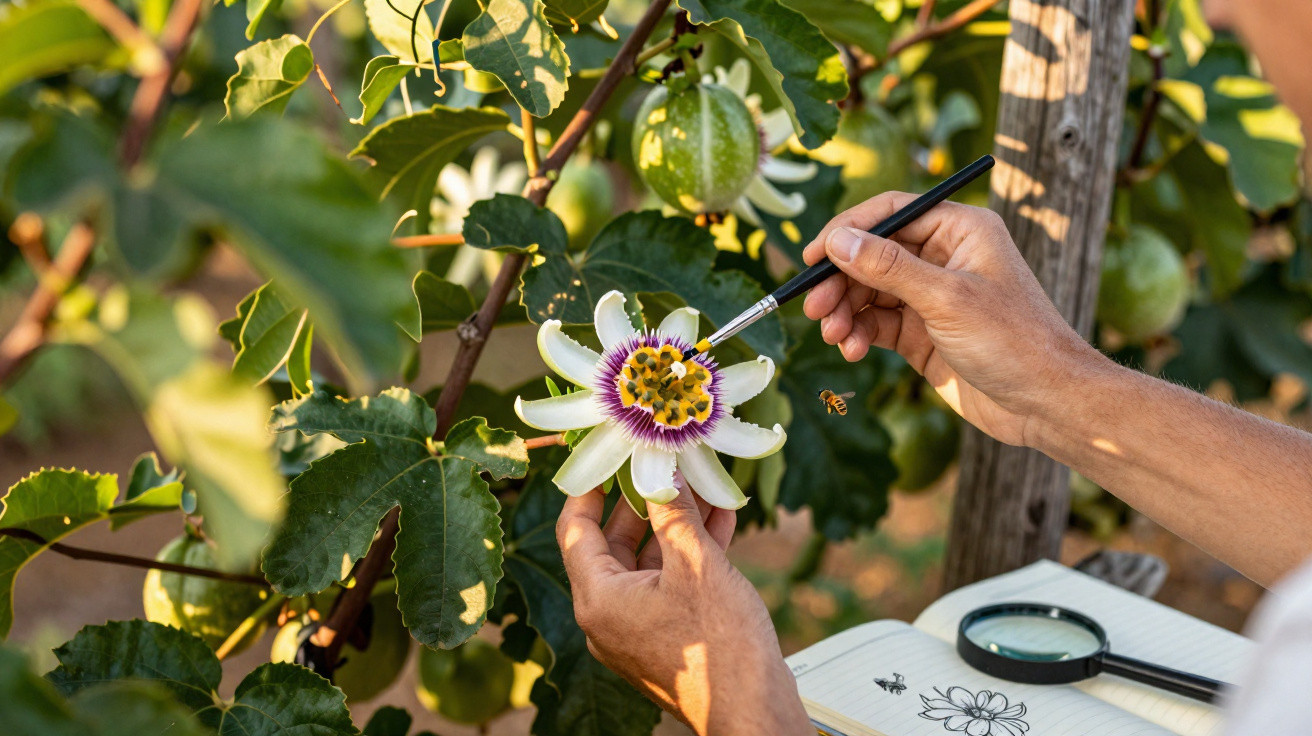
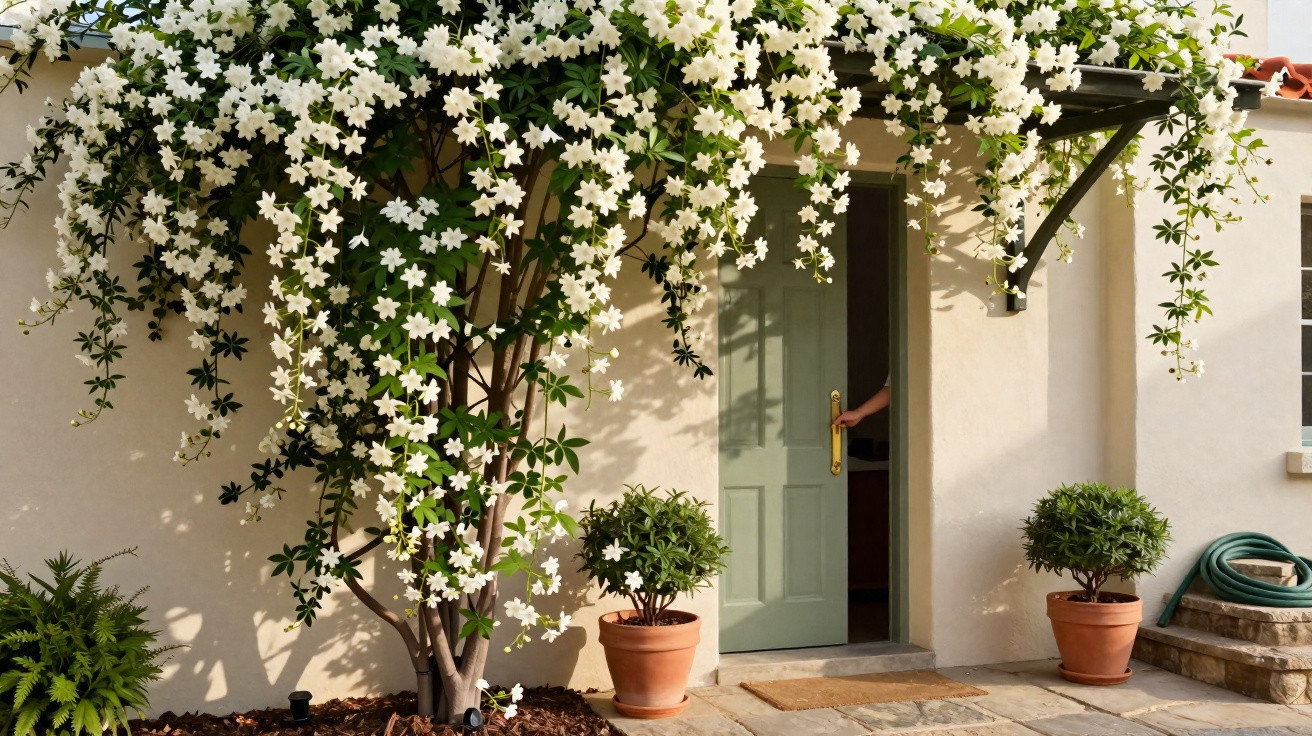
If you grow a passion flower vine, you may encounter an unusual situation: the plant grows strongly, develops plenty of leaves and may even flower, yet produces very little fruit. Before adding more fertiliser or pruning unnecessarily, it is worth checking one important aspect of cultivation: pollination. Unless pollen is transferred properly, the flower may not complete the process required to set fruit.
Why does a passion flower vine flower but fail to produce fruit?
Fruit set relies on a series of stages that begins with the flower. Once pollen reaches the plant's female structure, fertilisation takes place, allowing the fruit and seeds to develop.
If this transfer is inefficient, a passion flower vine can be covered in flowers but still yield only a few fruits. A lack of pollinators, or unfavourable conditions while the flowers are open, may lead to this outcome.
Which pollinators help a passion flower vine produce fruit?
Passion flower vine blooms have features that encourage visits from particular pollinators. The most significant include carpenter bees, large bees able to move pollen between the flower's structures.
Creating an environment that supports these pollinators can be more beneficial than simply applying products to the plant. Avoiding indiscriminate insecticide use and keeping a varied selection of flowers in the garden can help provide better conditions for these animals to visit.
How can manual pollination help?
Where pollinator numbers are low, manual pollination can be an option for some passion flower vine varieties. This involves moving pollen from the flower's male structures to its receptive female parts.
It should be done gently, preferably while the flowers are open and receptive. A clean, soft brush can be used to carry pollen between flowers, although the precise method may differ according to the species being grown.
Does flower shape affect fruit formation?
Yes. The flower's own structure affects how the pollen must be moved. On the passion flower vine, the reproductive parts are arranged in a way that favours visits from pollinators able to touch the necessary areas at the same time.
For that reason, having many flowers does not automatically mean they will all be fertilised. Checking whether they receive visits from bees and other pollinators can help explain why the plant flowers without producing a matching number of fruits.
What should you check when a passion flower vine produces little fruit?
In addition to pollination, it is worth assessing the plant's general growing conditions. Light levels, water availability, nutrition, room to grow and the characteristics of the variety all play a part in the healthy development of a passion flower vine.
If the plant is growing vigorously but its flowers drop without setting fruit, pollination deserves particular attention. Monitoring when flowers open and whether pollinators are present can reveal whether this is truly the factor restricting production. When needed, correctly carried out manual pollination can supplement insect activity and encourage fruiting.
Comments
No comments yet. Be the first to comment!
Leave a Comment