
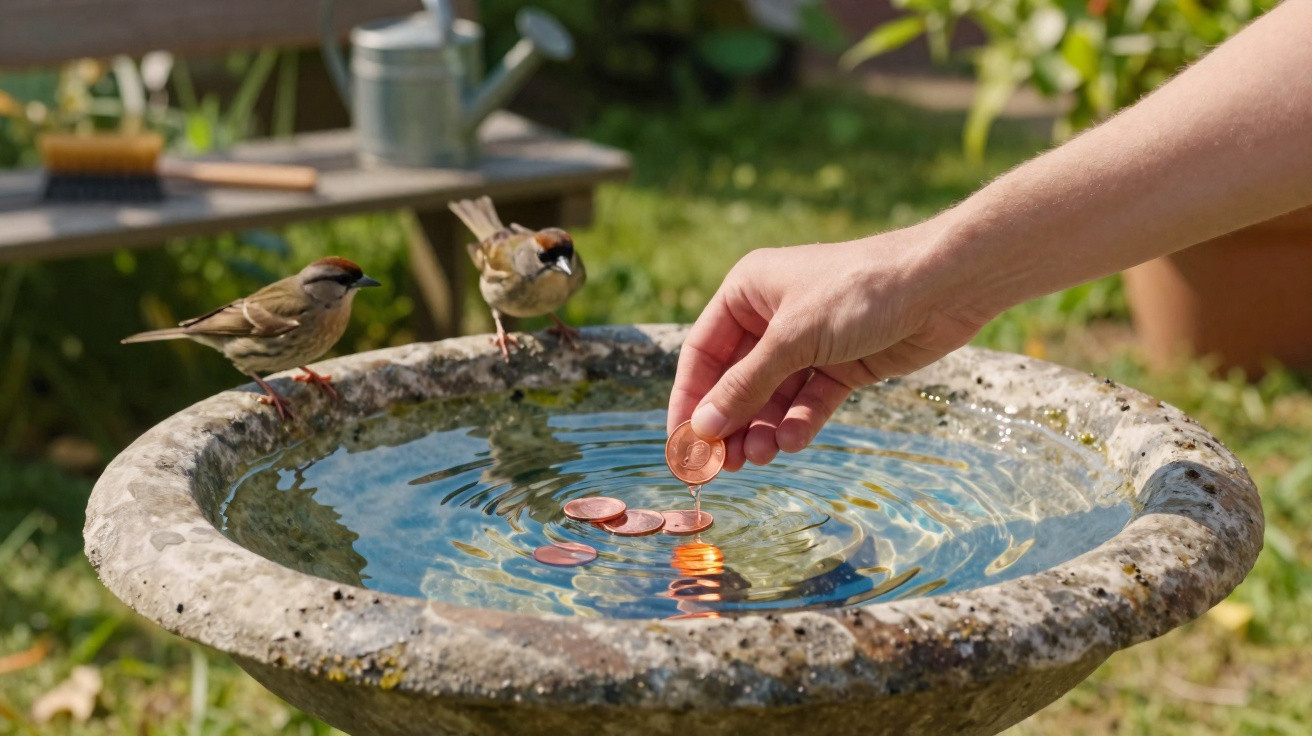
Anyone with a bird bath in the garden will recognise the issue: no sooner has it been refilled than the water turns cloudy, greenish and unpleasant-smelling. A tip from the United Kingdom is now circulating on social media, and it sounds remarkably simple: a single copper coin is said to slow algae growth. It may sound like nonsense, but there is a plausible idea behind it - on one clear condition: a cent does not replace cleaning.
Why bird bath water deteriorates so quickly
At first glance, a bird bath may seem like nothing more than an innocent piece of garden decoration. In reality, it is a small, uncovered water reservoir exposed to the elements. Leaves, pollen, dust, seeds and bird droppings all end up in it. Combined with sunshine and warm temperatures, these create ideal conditions for algae and bacteria.
Garden experts explain that nutrients build up when water is left standing, and algae thrive on them. The smaller and shallower the bowl, the faster the water heats up, accelerating algae growth. During particularly hot summer weeks, many bird baths deteriorate within one or two days.
Conservation organisations have therefore warned for years that dirty water is more than an unsightly problem. It increases the risk of diseases spreading among songbirds, finches and sparrows. At the same time, it provides mosquitoes with ideal places to lay their eggs.
A neglected bird bath can quickly turn from a place of wellbeing into a breeding ground for germs affecting wild birds.
Anyone genuinely wishing to help their feathered visitors must therefore replace the water regularly, even without any supposed secret trick.
The cent in the bird bath: how copper affects algae
The currently popular tip is to place a copper coin in a freshly filled bird bath after cleaning it thoroughly. Amateur gardeners in the United Kingdom swear by a “penny”, while the recommendation in German-speaking countries is to use one or two cent coins.
The reasoning is straightforward: the surface of these coins contains copper. When it remains in contact with water, tiny quantities of copper ions are released into it. These ions can inhibit the growth of algae. This mechanism has long been used in ponds and industry, although there it involves precisely measured products and clearly defined limits.
The effect in a bird bath is far weaker, but measurable: the water will often remain clear for a little longer. Specialists describe it as modest support rather than a miracle cure. A coin delays the issue, but cannot solve it completely.
A cent acts more like a brake on algae than a magical eraser.
How to use the copper coin trick safely in a bird bath
For this tip to do more good than harm, a few simple rules are needed. Copper can be toxic to small animals at higher concentrations, especially in tiny water bowls. The rule of thumb is therefore: few coins, plenty of care.
Recommended bird bath care routine
- Empty the water completely and refill it every one to two days.
- Scrub the bowl thoroughly with a brush or sponge once a week.
- Use only clean water, with no harsh cleaners or chemicals.
- After cleaning, place a one- or two-cent coin in a small bird bath.
- For very large bowls, use no more than two copper coins.
- Replace coins every few months if they have become heavily tarnished.
Throwing a whole handful of small coins into the water goes too far. Doing so raises the copper concentration unnecessarily. Small songbirds are particularly sensitive to pollutants, which is why bird protection organisations clearly advise caution.
Avoid chlorine, pond treatments and homemade mixtures
Because algae can be so frustrating, some gardeners turn to drastic measures: a splash of chlorine cleaner, some anti-algae treatment intended for garden ponds, or a dash of vinegar. While these may seem harmless to people, they are not harmless to birds.
Many products designed to keep ponds clear are intended for fish and large bodies of water, not small birds using a shallow bowl. In a small volume of water, the same chemical can quickly reach far higher concentrations. Birds absorb these substances through their beaks, skin and feathers while drinking and bathing.
Only tap water and, at most, one or two small copper coins belong in a bird bath - nothing else.
Highly salted mixtures and vinegar solutions are not suitable either. They can irritate birds’ mucous membranes, eyes and skin. A basic brush, a little effort and fresh water are safer and more reliable than any chemical cocktail.
The right position for a bird bath is crucial
Whether water turns green depends not only on the copper trick, but also heavily on where the bird bath is placed. Positioning the bowl in full sunshine practically invites algae to grow. A partly shaded location slows that growth considerably.
A suitable location should meet several criteria:
- Partial shade rather than uninterrupted full sun.
- Enough distance from feeding stations so that fewer seeds and droppings fall into the water.
- A clear view for birds, allowing them to spot cats early.
- One or two bushes or trees nearby as an escape route.
A slightly raised position, such as on a sturdy pedestal, helps protect the bath from inquisitive pets. It also keeps the water somewhat cleaner, as less soil and grass are splashed into it.
How much hygiene does a bird bath really need?
Many amateur gardeners are unsure whether cleaning it “now and then” is sufficient. Specialists offer clear guidance: during hot periods, fresh water should ideally be added every day; outside summer, every two days is recommended.
Those wanting to minimise the effort should choose a smooth bowl made from ceramic, metal or stone. Porous materials retain more dirt, allowing algae to cling on more stubbornly. A simple hand brush, perhaps a little mild soap, followed by thorough rinsing is usually all that is required.
Risks of leaving a bird bath neglected
When a bird bath is left uncared for over a long period, pathogens can multiply rapidly. These include bacteria and single-celled parasites, which can make already weakened birds especially vulnerable. In the worst case, the bird bath becomes a kind of “hub” for pathogens in the garden.
Many birds use the same water source, especially on warm days. They drink, bathe and leave droppings behind. Without regular cleaning, a cycle develops that can only be broken by draining and scrubbing the bath. The much-discussed cent cannot prevent this; at best, it provides a little extra time before the water visibly changes.
How useful is the cent trick in reality?
Experts take a matter-of-fact view: yes, copper can slow algae growth. In practice, a single coin in a bird bath offers a slight benefit, particularly where there is strong sunlight. Anyone already cleaning the bath regularly will often notice that the water takes a little longer to deteriorate.
However, anyone relying on the cent and ignoring the bowl for days will be disappointed. Algae will return, bird droppings will still accumulate and bacteria will continue multiplying. The coin does not resolve a maintenance problem; it merely supports good care.
For gardeners who already enjoy going around the garden at the weekend with a watering can in hand, the trick fits easily into the routine. When topping up the water, simply check that the coin remains in place, whether it has corroded heavily and whether the water still looks clear - that is enough.
Practical everyday tips for a healthy bird bath
Anyone who truly wants to do something good for visiting birds should combine several straightforward steps. The cent is only a small part of the picture.
- Choose a sturdy bowl with a shallow edge so that birds can land easily.
- Keep the water level fairly shallow; it is better to top it up than to provide a deep basin.
- In winter, offer an ice-free spot, but avoid heating rods with uncertain safety.
- Do not position feeding stations directly beside the bird bath, to reduce contamination.
- Inspect the bird bath thoroughly once or twice a year and replace it if it has cracks.
Following these steps creates a small garden oasis that genuinely helps birds. The copper cent then becomes a useful extra: a small trick that keeps the water clear a little longer, as part of a routine involving fresh water, sensible positioning and regular cleaning.



Comments
No comments yet. Be the first to comment!
Leave a Comment