
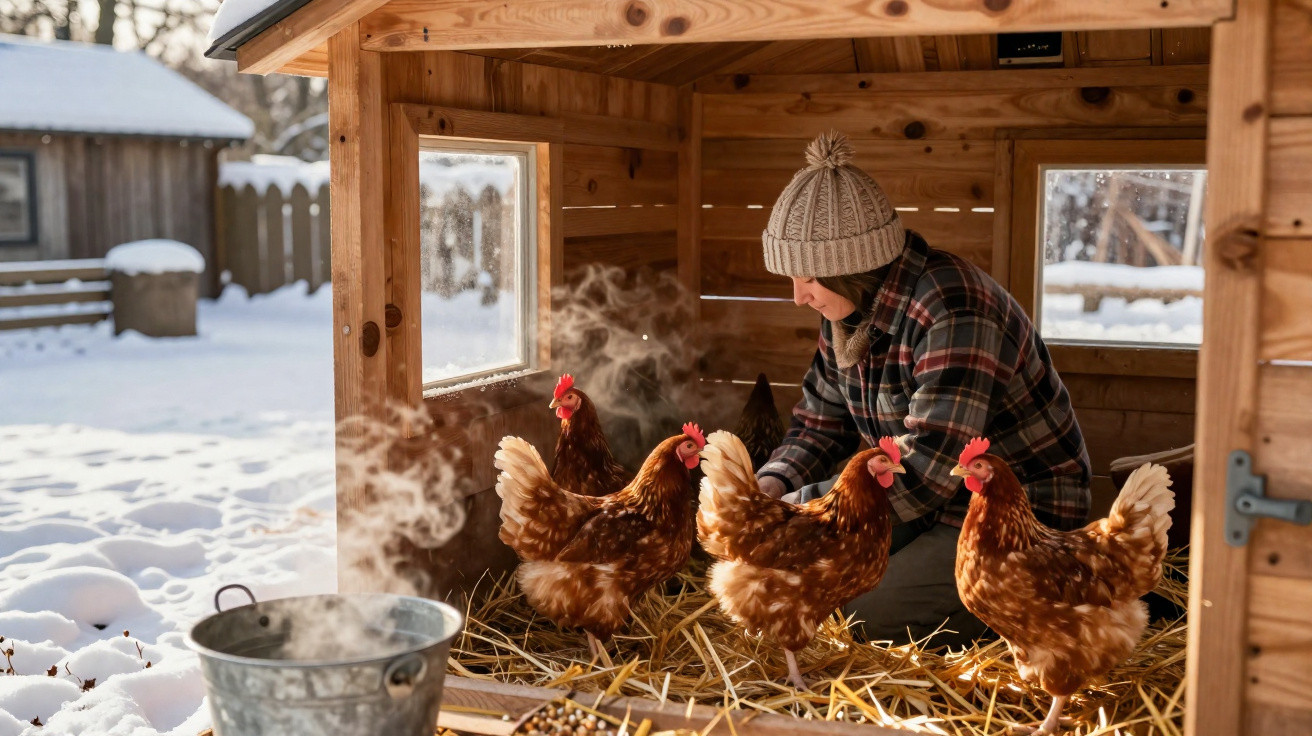
As temperatures fall and daylight hours shorten, chickens face a subtle seasonal challenge: cold, humid conditions, iced-over water and fewer insects to forage for. Winter does more than reduce laying; poor management can leave birds in weaker condition for months.
Making the coop a safe winter shelter
Although most chickens tolerate low temperatures well, dampness, draughts and abrupt cold snaps are much harder on them. Their coop is their primary protection, and a few modest improvements can separate a resilient flock from one with repeated health problems.
Insulation that works for chickens
Aim for a coop that is dry and free from draughts, rather than one that is overly warm. Heating it too much commonly causes condensation, which can leave birds chilled through.
- Fit insulation boards, such as polystyrene, cork or thick cardboard, behind firm walls, and cover them with plywood so chickens cannot peck at the material.
- Inspect the roof after heavy rain or snow for leaks, including dark marks that can reveal slow drips.
- If practical, raise the coop slightly above ground level to reduce rising damp and cold coming through the floor.
Unseen moisture and tiny drafts do more harm to winter chickens than the cold number on the thermometer.
Ventilation without creating wind tunnels
Ammonia from droppings and retained moisture can irritate a chicken’s respiratory system long before any strong smell becomes obvious. Air needs to circulate, but it must not blow across the perches at bird height.
A few straightforward checks are useful:
- Install vents high beneath the roofline and above the roosting bars, allowing humid air to leave without blowing directly onto the flock.
- Fix gaps around windows and doors where your hand can feel a direct, cold draught.
- Cover ventilation openings with welded mesh rather than glass, maintaining airflow while preventing predators from entering.
A common error is blocking every opening in an effort to retain heat. This leaves the coop holding humid breath, droppings and dust, all of which can contribute to respiratory illness in the harshest part of winter.
Bedding, roosts and daily habits to combat the cold
Deep, dry litter for natural insulation
Straw, wood shavings and chopped hemp create an insulating barrier between chickens and frozen ground.
| Bedding type | Winter advantage | Main point to watch |
|---|---|---|
| Straw | Insulates well and is easy to add to | May retain moisture if it is not turned |
| Wood shavings | Absorbent and comfortable | Select dust-extracted shavings to protect lungs |
| Hemp or flax | Highly absorbent and composts effectively | Usually costs more |
As a general rule, provide a layer measuring 10–15 cm. Turn it frequently so that it stays loose and dry. Any odour of damp, mould or strong ammonia shows that it needs dealing with.
Roost design that shields toes from frostbite
Blood circulation slows overnight, making uncovered toes particularly susceptible. The design of the perch determines whether chickens can settle over their feet to keep them warm.
- Choose wooden perches with a flat upper edge, around the width of a broom handle placed sideways, so toes rest flat instead of gripping a narrow round bar.
- Site roosts away from vents and gaps that send air across sleeping birds.
- Place them above nesting boxes, encouraging birds to use the roosts first and lowering the chance that they sleep in damp litter.
Warm feet, dry bedding and still air around the roost do more for winter comfort than any gadget in the farm shop.
Winter feeding: fuelling a small furnace
Every feathered bird acts as a small heater. In cold conditions, hens use additional calories simply to maintain their core temperature. Without enough dietary support, laying declines and they begin using their body reserves.
Increasing energy without upsetting the diet
Layers’ pellets or mash should remain the foundation of the diet, while small additions can help chickens manage frost and snow.
- Give cracked maize or mixed grains in late afternoon, allowing birds to roost with a full crop and a slow supply of energy.
- Provide extra protein, including dried mealworms, black soldier fly larvae or peas, particularly for flocks that are still laying.
- Ensure grit remains available; when the ground is frozen and natural opportunities to peck are limited, chickens still require it for effective digestion.
Fresh green food is less available in winter runs, and this shortage affects both digestion and immune response.
Vitamins and variety when the soil is frozen
Ordinary kitchen leftovers can be genuinely helpful:
- Suspend whole cabbages or leafy greens for hens to peck at while keeping them occupied.
- Give small portions of spinach, kale or broccoli stalks for vitamins and antioxidants.
- Restrict treats rich in salt, sugar or fat, as they provide calories without meaningful nutritional value.
Keepers often find that boredom increases once snow covers the run. Hanging vegetables and scattering grain can provide enrichment that helps reduce feather pecking and stress-related behaviour.
Keeping drinking water liquid in severe cold
A chicken manages a day without food more readily than a day without water. Dehydration and thickened blood can quickly affect both egg quality and general health.
Practical ways to prevent ice
Where electricity is available, heated drinkers are the most dependable answer. For smaller flocks, however, simpler measures can still be effective.
- Use black plastic drinkers where possible, as they absorb slightly more warmth from daylight.
- Keep drinkers in the coop or in a protected corner away from direct wind.
- Put a ping-pong ball on the water; wind-driven movement can slow ice forming across the surface.
Frequent, small checks on water during a cold snap prevent the quiet crisis of a flock going thirsty for hours.
In hard frosts, arrange regular water changes before work, after work and, if possible, once more later in the evening.
Outdoor time: weighing fresh air against frost risk
Fit hens still gain from time outdoors on bright winter days. Even weak sunshine contributes to vitamin D production and helps keep behaviour steadier.
Getting the run ready for snow and ice
Chickens seldom like stepping directly into deep snow. Many will pause at the entrance before returning indoors.
- Clear several paths or small areas in the run, forming accessible “islands” of ground.
- Put down pallets, timber boards or deep straw over frozen soil so birds are not standing directly on ice.
- Cover part of the run roof with plastic sheeting or corrugated panels, ensuring at least one section remains dry.
During the coldest periods, brief supervised sessions outside can be more effective than leaving the pop-hole open all day. Chickens can stretch their legs before returning indoors ahead of becoming too cold.
Interpreting your flock’s body language
Cold tolerance differs between individual hens. Look out for changes such as:
- Birds packed tightly into a corner instead of moving about and scratching.
- An unwillingness to leave the coop, even on dry, relatively mild days.
- Combs and wattles becoming pale or dark at their tips.
Bring birds indoors if they remain motionless for long stretches, with feet lifted, feathers puffed up and dull-looking eyes. This often indicates that they are drawing on reserves rather than coping comfortably.
Choosing chicken breeds that cope with cold
Even before winter arrives, genetics influence how successfully a flock handles it. Certain breeds remain active and continue laying reliably at low temperatures, while others become subdued and lose condition.
Cold-hardy characteristics to seek out
Chickens with dense plumage, small combs and medium-to-large bodies generally manage frost most successfully. Examples include:
- Sussex, valued for consistent laying and a calm nature in variable weather.
- Plymouth Rock, which has a sturdy build and strong cold tolerance.
- Wyandotte, whose rose comb lowers the risk of frostbite.
Birds with very large single combs or particularly light bodies are more vulnerable to frostbite and weight loss in severe weather. Mixed flocks can still do well, but delicate birds need closer observation and occasional additional care, such as petroleum jelly on comb tips during cold snaps.
Small winter routines that benefit spring laying
Protecting combs, wattles and eggs
The areas with the least feather coverage are often affected first.
- On nights forecast to be well below freezing, carefully spread a thin coating of petroleum jelly over combs and wattles to help limit frostbite.
- Inspect nesting boxes several times daily to prevent eggs freezing and cracking, which can allow bacteria in after they thaw.
- Put extra bedding in nesting boxes to cushion eggs and insulate them from cold walls.
Winter care does not just protect chickens today; it shapes the health and laying strength you will see once days lengthen.
Tracking weight and health during cold weather
A basic routine can identify issues early:
- Handle every hen once every couple of weeks, checking the keel bone and body condition beneath the feathers.
- Monitor coop droppings; abrupt changes in colour or consistency across several birds can indicate stress or disease.
- Use an inexpensive notebook to record dates of cold spells, feed changes and any health signs observed.
These simple notes allow you to assess which methods suit your climate and set-up. After a couple of winters, clear patterns can develop: particular birds that struggle each year, temperatures at which frozen water becomes a serious problem, or feed mixes that maintain egg numbers more consistently. Knowledge collected in your own garden is often more useful than general guidance from any handbook.



Comments
No comments yet. Be the first to comment!
Leave a Comment