
Many backyard chicken keepers know the problem: in spring, the flock becomes restless, the birds over-preen, their feathers stand out and egg production drops sharply. In most cases, red poultry mites and other skin parasites have taken hold in the coop. Chemical products from the garden centre are not only expensive; they often tackle the issue only temporarily. Yet a remarkably straightforward feature in the run can keep parasite infestations under control over the long term – by making use of an instinct every chicken naturally has.
Why red poultry mites are so dangerous for chickens
Red poultry mites are tiny arachnids that hide in cracks, gaps in timber or beneath perches during the day, becoming active after dark. They crawl onto the chickens at night to feed on blood, then retreat again when daylight returns.
- The birds gradually lose blood and strength.
- They sleep poorly and become unsettled and irritable.
- Their combs look paler and their plumage becomes untidy.
- Egg production declines noticeably.
If left untreated, an infestation can make young birds and weakened hens seriously unwell. Many keepers then reach for sprays, powders and coop fogging products in a panic. These can provide localised help, but require continual repeat treatment and do not reach every mite concealed deep within the wood.
A dry, well-designed “wellbeing area” in the chicken run can substantially reduce mites and other parasites – entirely without chemicals.
Chickens’ overlooked secret weapon: the dust bath
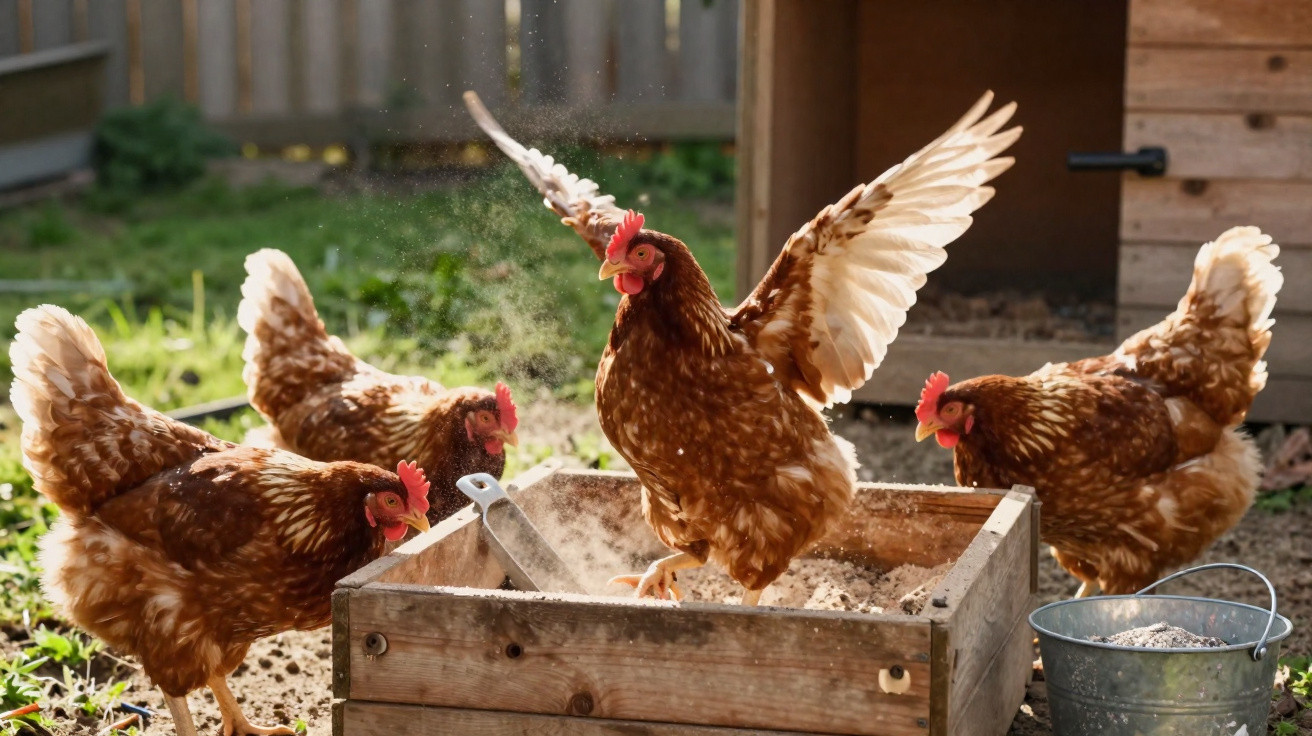
Anyone who watches chickens for any length of time will notice a distinctive ritual. As soon as they find a dry, sandy patch, they scratch out a hollow, settle into it and roll around enthusiastically. To an inexperienced observer, it may simply look like they are enjoying the dirt, but it is actually highly effective body care.
During a dust bath, the finest particles work through the feathers right down to the skin. There, they dislodge:
- parasite larvae and eggs
- attached mites and lice
- excess skin oil (sebum)
Parasites struggle to cling on in the dry, dusty conditions and may even be effectively smothered by the dust. The process is pleasant for the birds too: they visibly relax, half-close their eyes and savour every moment.
Why water baths tend to harm chickens
People naturally associate cleaning with water and soap. For chickens, however, this has the opposite effect to good hygiene. Dampness strips the protective oil layer from the feathers, reducing the insulating properties of the plumage and leaving it slow to dry. Bacteria and mites thrive more easily in wet conditions.
A wet chicken chills more quickly, becomes more susceptible to illness and must use considerable energy to warm up again. Healthy chickens therefore clean themselves consistently with dust rather than water – provided that a suitable spot is available.
How to create an effective dust-bath station in the chicken run
The good news is that a professional “chicken bath” needs neither costly equipment nor practical DIY skills. The container matters less than the correct filling and a dry location.
Suitable containers
Sturdy containers with enough depth are ideal, including:
- an old plastic mixing tub
- a solid wooden box with no gaps in its base
- a discarded galvanised tub
- a wide, shallow feed trough
For four to five chickens, a container measuring roughly 50 × 50 centimetres and around 15 centimetres deep is sufficient. This gives several birds room to bathe at once without being too crowded.
The ideal filling: a recipe for an effective dust bath
A simple sandpit will help to some degree, but it does not make full use of the opportunity. A dry mixture of three components has proved particularly effective:
| Component | Quantity (for one large container) | Purpose |
|---|---|---|
| Fine, dry sand | 10 litres | Mechanical “exfoliating” action that loosens parasites from the skin |
| Sieved wood ash | 5 litres | Dries out parasites and absorbs oil and moisture |
| Very fine garden soil | 5 litres | Makes the mixture soft and pleasant for extended bathing |
Important: the wood ash must be completely cold and free from nails, charcoal residue or larger fragments. It is best passed through a fine sieve or an old kitchen sieve. The garden soil should be crumbly, free of stones and as uncontaminated as possible.
The drier and finer the dust, the more effectively a chicken combats mites and similar pests every time it rolls in it.
The right location for a chicken dust bath – avoiding a muddy puddle
For the mixture to remain effective, it needs a sheltered position. Suitable areas include:
- beneath a small roof or canopy
- under the covered section of the run
- in a corner protected from driving rain and splashing water
If rain gets in, the contents clump together and the dust turns into sticky mud. The chickens will then either stop using the container altogether or smear their feathers with mud – the exact opposite of the intended result.
Maintaining and renewing the bath
Chickens are not delicate when using a dust bath: they scratch in it, defecate in it and shed feathers. This is normal, but regular maintenance is needed.
- Loosen the surface once a week with a small rake or hand trowel.
- Remove droppings, feathers and larger debris.
- Check more often during damp weather to make sure the material is still dry.
As soon as the mixture becomes heavy, looks grey or feels even slightly damp, it should be replaced completely. The old material is excellent for the compost heap, as the droppings and feather remains already add nitrogen and organic matter.
What keepers notice after making the change
After several weeks with a well-maintained dust bath, many backyard keepers report clear changes in their flock:
- Chickens scratch less and appear calmer overall.
- Gaps in the plumage begin to fill in again.
- Egg production becomes steadier, with eggs being laid more regularly.
- Checks of the feathers reveal far fewer red specks and crawling pests.
This does not automatically make the coop mite-free, but it noticeably reduces pressure on the population. Combined with further measures – such as cleaning the perches, flushing out cracks and choosing dry bedding – parasite infestations can be kept at a substantially lower level.
Important safety advice and additions
Not every “brilliant idea” from online forums is suitable for a dust bath. Some additions can harm chickens or irritate their airways.
- Do not use building sand containing cement residue.
- Do not use cat litter, as the granules may be too sharp-edged.
- Do not add strongly scented oils or fragrances.
- Do not use fine cement or plaster dust, which is hazardous to lungs.
Those wishing to enhance the bath can add small quantities of dry herbs, such as wormwood, lavender or thyme from the garden. These plants contain essential oils that many insects dislike. The effect is limited, but it can add to the overall positive experience for the chickens.
Why backyard chicken keepers often overlook this simple solution
Many people new to chicken keeping first invest in attractive coops, expensive feed and all manner of accessories. The birds’ natural behaviour can easily be overlooked. Anyone who only sees chickens in catalogues or on social media may never notice their enthusiasm for dust baths.
Professional poultry keepers in rural areas, by contrast, have known this trick for generations. In the past, a dry manure heap or sandy spot behind the barn often offered perfect conditions for a daily bath. These areas are frequently absent from modern small gardens, which is why a purpose-made dust bath in the run can make such a difference.
Anyone hoping to keep their chickens healthy in the long term while reducing the use of chemicals should therefore provide this kind of “wellbeing pool”. With very little effort, it creates a place where the birds can not only rid themselves of parasites but also show clear signs of happiness. For many keepers, that sight is the finest reward.






Comments
No comments yet. Be the first to comment!
Leave a Comment