
Many hobby gardeners look forward to the first warm days of spring, when they can move their container plants outdoors. For a lemon tree, however, this can be a trap: inconspicuous brown spots on its leaves may look harmless, but they can signal the beginning of a serious pest infestation that can severely weaken the tree within a few weeks.
What the brown bumps on a lemon tree really are
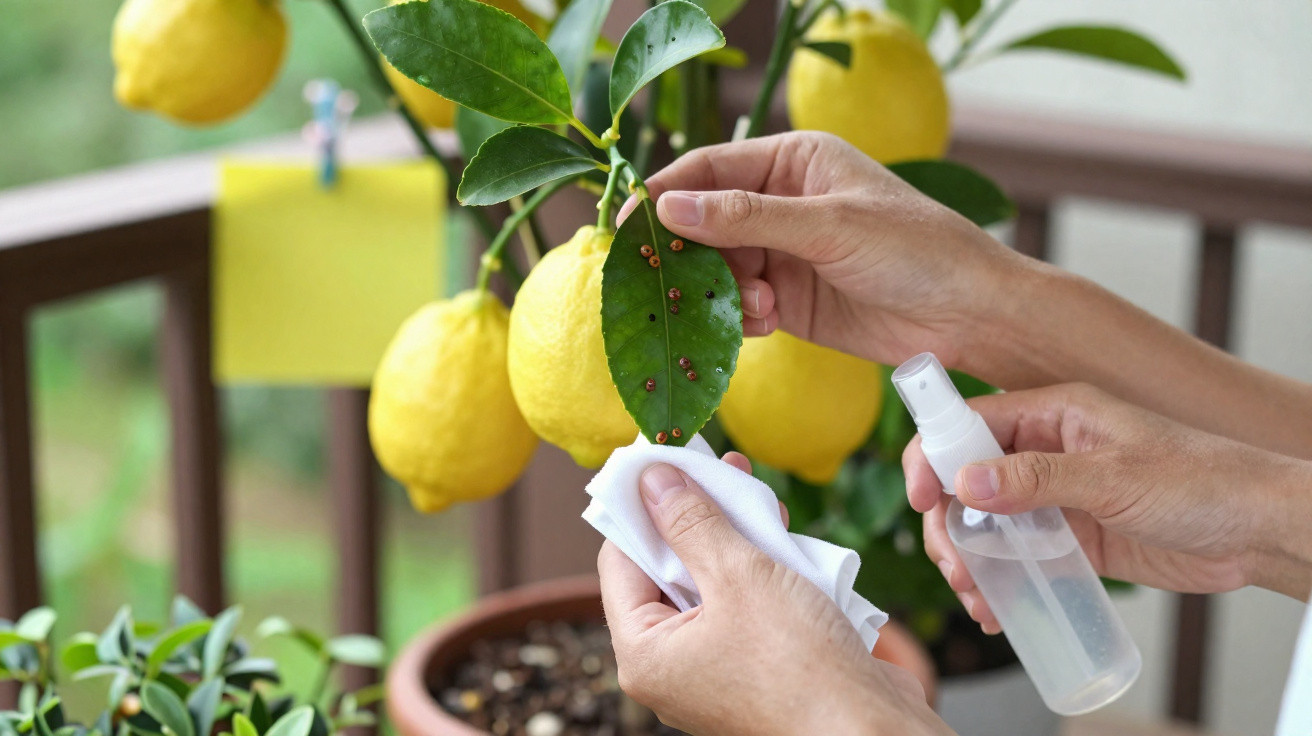
The usual signs emerge in April: tiny, rounded brown raised marks on the undersides of leaves or along their veins, along with a sticky feel when the foliage is touched. Soon afterwards, the leaves become covered with a black coating.
Many people immediately assume a fungal disease and reach for fungicides. That is the wrong approach. The real cause is well concealed beneath a hard covering and feeds on the tree's vitality.
“These brown bumps are scale insects on a lemon tree – sap-sucking insects that slowly but persistently drain the tree.”
The insects pierce the tree's vascular tissue with their mouthparts, draw out plant sap and produce large quantities of sugary honeydew. This honeydew leaves the foliage sticky. A black fungal growth, known as sooty mould, then settles on the sugary layer. It forms a veil over the leaves and blocks out light.
How to identify scale insects on a lemon tree
A close inspection is worthwhile before the pests have a chance to multiply in large numbers. Typical signs of scale insects on a lemon tree include:
- small round or slightly oval bumps, brown to dark brown in colour
- firmly attached to leaves and shoots, rather than easy to wipe away
- found mainly on leaf undersides and along leaf veins
- sticky droplets on leaves, pots or windowsills
- a dark, soot-like film developing on the foliage later on
If a spot only comes away with difficulty when scratched and appears soft or hollow underneath, it is very likely to be an old or dead scale insect. Live insects remain firmly in place and look smooth, almost like tiny drops of varnish.
Why April is such a critical month
The situation can deteriorate rapidly in spring. After spending winter in dry, warm indoor conditions or a heated conservatory, the pests find the environment particularly favourable. Females can lay hundreds of eggs in a short period, and in some cases even more than a thousand. Tiny, mobile young hatch from them and spread across the entire tree.
Anyone who does not act in April may be faced with a severely weakened lemon tree in May and June: dull green or yellowing leaves, barely any new growth and black deposits everywhere. Extra watering and fertiliser make little difference, because the problem lies within the tree's sap flow.
“An untreated infestation in spring can exhaust the lemon tree so badly that it sheds leaves and young shoots in large numbers.”
There is another particular pitfall: many owners treat the black coating with a fungicide and wonder why it has no effect. The black fungal growth is merely the consequence, not the cause. As long as the scale insects keep producing honeydew, the coating will return.
Step by step: immediate action against brown bumps
As soon as the first warning signs appear, a clear plan is needed. Resorting immediately to harsh chemicals is often not a good solution in living areas or on balconies, especially as the pests' waxy covering makes them fairly resistant to many contact treatments.
A tried-and-tested home mixture uses three readily available ingredients that work together specifically against the pests:
| Ingredient | Quantity per litre of water | Effect |
|---|---|---|
| liquid soft soap | 1 tablespoon | improves coverage and loosens fatty layers |
| vegetable oil, such as rapeseed or sunflower oil | 1 tablespoon | forms a film over the insects and blocks their breathing openings |
| 70% alcohol | 1 tablespoon | attacks the waxy layer and increases the treatment's effect |
Proceed as follows:
- Separate the lemon tree from other plants so the insects cannot spread to them.
- Stir the mixture thoroughly into lukewarm water.
- Spray the undersides of the leaves, the shoots and branch junctions carefully, concentrating especially on the areas where the bumps are located.
- Repeat the treatment twice at intervals of eight to ten days so that newly hatched young insects are also caught.
The plant should be well watered before treatment so it is not placed under additional stress. Avoid direct sunshine during spraying and shortly afterwards, otherwise the leaves may be scorched. If in doubt, test the mixture on a few leaves first.
When the infestation is still minor and confined to a few areas, manual removal can sometimes be enough: dab each individual insect with a cotton bud dipped in 70% alcohol. It takes time, but can be surprisingly effective on isolated branches.
How to prevent another infestation
After the initial rescue effort, the aim is to strengthen the lemon tree over the long term. A vigorous, well-cared-for tree copes far better with occasional pests than an already weakened specimen.
The following measures are helpful:
- inspect the undersides of leaves every one to two weeks from spring until late summer
- wipe away honeydew and the black coating with a damp cloth, allowing light to reach the leaf again
- ensure air circulation and avoid placing plants directly against window panes or in stuffy corners
- fertilise carefully, as too much nitrogen makes foliage soft and attractive to pests
- keep new plants separate for several days before placing them with citrus plants
It is better to cut out heavily infested branches and dispose of them with household waste. Never put them on the compost heap, as the pests may reappear by indirect routes.
Beneficial insects and special cases in a conservatory
For larger collections, such as a conservatory containing several citrus plants, it is worth considering beneficial insects. Certain species of ladybird and other predators readily feed on scale insects and keep their population under control. This works particularly well in enclosed spaces with stable temperatures.
Overly aggressive treatments are problematic indoors and often harm beneficial insects as well. Anyone using such products should do so only outdoors and in genuine exceptional cases.
Why sooty mould and honeydew are more than cosmetic problems
Many people put up with blackened leaves for a while, believing it is purely an appearance issue. In reality, the coating has tangible consequences. It obstructs photosynthesis, the process by which leaves generate energy. A leaf permanently shrouded in this way functions like a solar panel beneath a thick layer of dust.
“The longer the black coating remains on the foliage, the more strength the lemon tree loses – and the smaller the next harvest will be.”
In practical terms, regularly wiping the leaves with a damp cloth or lukewarm water lets the tree receive sunlight properly again. Combined with appropriate watering and moderate fertilising, this helps the tree rebuild its reserves.
What hobby gardeners should remember
Three observations determine the lemon tree's prospects in spring: are there brown, firmly attached bumps on the undersides of the leaves? Do the leaves or windowsill feel sticky? Is there a dark grey to black coating on the foliage? Anyone who takes these signs seriously, rather than simply watering or fertilising more, gives their tree a real head start for the season.
A careful look, timely treatment and a watchful inspection every few weeks require little time, yet can prevent the loss of a lovingly tended lemon tree – while preserving the chance of fragrant flowers and home-grown fruit in summer.



Comments
No comments yet. Be the first to comment!
Leave a Comment