
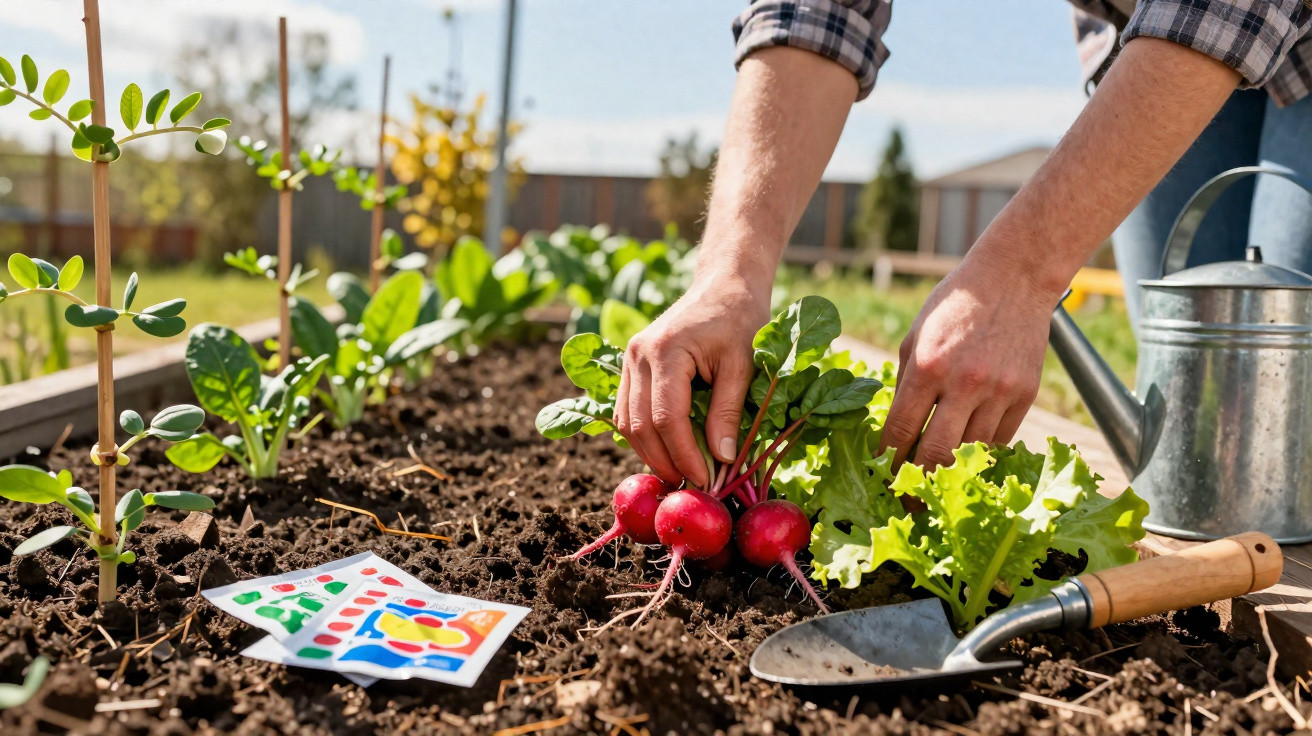
March marks the beginning of the gardening season, yet not everyone wants to wait until summer. The good news is that several vegetables grow so quickly that the first roots, leaves and pods can sometimes reach the plate in under 30 days. A few straightforward measures can turn your own vegetable bed into a small harvesting machine in record time.
Why March is a winning month for the vegetable bed
In March, the garden finally begins to emerge from its winter dormancy. Days lengthen, the sun becomes noticeably stronger and the soil gradually thaws. These conditions provide an ideal launchpad for many fast-growing vegetables.
Starting now gives you:
- the first harvests in spring, well before barbecue season
- fresh vitamins rather than imported supermarket produce
- a motivating start to the gardening year instead of months of waiting
Anyone who sows wisely in March can look forward to crisp radishes, tender salads and young greens as early as April or early May.
Before sowing: spring-clean the vegetable bed in March
Before the fast-growing vegetables get underway, the bed needs brief but thorough preparation. This is precisely the stage many gardeners overlook, only to be surprised by disappointing harvests later.
Clear away the old so new growth can get going
Over winter, leaves, dead plant material and broken twigs collect in the garden. Leaving them in place gives pests and fungal diseases a comfortable place to settle.
- remove wilted stems, leaves and remnants of previous crops
- compost or dispose of twigs and other coarse material
- lift and inspect any mulch, checking underneath for hiding slugs
Wake up the soil and feed it well
Once everything has been cleared, it is time for the key task: preparing the soil. Loose, nutrient-rich soil helps seeds germinate more rapidly and allows plants to grow much more strongly.
The following approach works well:
- gently loosen the soil with a garden fork or cultivator rather than digging it over excessively
- pull out perennial weeds such as couch grass and ground elder thoroughly
- work mature compost or well-rotted farmyard manure lightly into the surface
Humus-rich, loose soil acts like a turbocharger for young plants – their roots establish themselves more easily and reach water and nutrients sooner.
These four vegetables get off to a fast start in March
Many crops prefer warmth and only really feel at home from May onwards. However, a handful of hardy varieties can cope with cold nights and begin growing at moderate temperatures. These four are particularly suitable for anyone wanting quick results.
1. Radishes: the classic crop for impatient gardeners
Radishes are among the fastest vegetables of all. In suitable conditions, the first roots are often ready to pick after three to four weeks.
- sow in rows, leaving around 2–5 centimetres between seeds
- sow shallowly, at a depth of about 1 centimetre
- keep the soil evenly moist, otherwise they can become woody or hot
A useful trick is to sow a short row every week. This means the radishes mature in succession instead of all swelling up and becoming woody at once.
2. Loose-leaf and cut-and-come-again lettuce: leaves to snack on
Lettuce does not always have to be harvested as a full head. Loose-leaf and cut-and-come-again lettuces provide their first tender leaves within a few weeks, and continue producing more.
When sowing, remember:
- use finely crumbed soil because the seeds are very small
- do not sow too deeply: 0.5 centimetres at most, then firm the soil gently
- allow up to 30–40 centimetres between rows, depending on the variety
Those who pick individual leaves rather than cutting the whole plant can often harvest fresh lettuce from one row repeatedly for weeks.
3. Sugar snap peas and garden peas: quick pods for spring
Peas dislike heat but thrive in the mild conditions of spring. Seeds can go into the ground as soon as the soil is workable.
- sowing depth: around 2–3 centimetres
- spacing between rows: 30–40 centimetres
- provide support, using a simple wire mesh or twiggy sticks, for example
The first crisp pods usually arrive after six to eight weeks. For an earlier snack, choose sugar snap peas, which can be picked while still young and flat.
4. Spinach: harvested young in record time
Spinach enjoys cool conditions that are not too warm. In many areas, it can be sown directly into the bed as early as March. When grown for baby leaves, it needs very little time to develop.
- sowing depth: 1–2 centimetres
- plant spacing: roughly 10 centimetres, with 20–25 centimetres between rows
- sow much more densely for young leaves, then harvest early
Spinach offers more than speed: its iron, vitamins and secondary plant compounds make it one of the most nutrient-rich spring vegetables.
How to make March sowings succeed without frustration
Fast-growing vegetables forgive a surprising amount, but they respond badly to two things: overly wet soil and irregular care.
Water correctly: moist, not waterlogged
Freshly sown seeds must not dry out, as this can stop the seedling in its tracks. Constantly waterlogged ground, on the other hand, makes it weak and prone to fungal diseases.
- water carefully after sowing without washing the seeds away
- water lightly more often rather than heavily and infrequently
- on sunny days, water in the morning so foliage can dry during the day
Keep an eye on pests
Slugs and aphids are particularly fond of the first delicate leaves. Regular checks prevent problems later on.
- collect slugs in the evening or use barriers such as slug fences
- remove aphids early with a jet of water or soapy water
- encourage beneficial wildlife such as ladybirds and birds, for instance with hedges or flowering strips
Plan cleverly: more harvest from the same space
Organising the bed thoughtfully in March can extend the harvest season considerably. Quick crops can be combined with vegetables that take longer to grow.
| Crop | Role in the bed | Typical harvest time |
|---|---|---|
| Radishes | Gap-filler between slower-growing vegetables | 3–6 weeks after sowing |
| Loose-leaf lettuce | Early leaves, with space later available for other crops | 4–6 weeks after sowing |
| Peas | An early crop that provides shade | 6–8 weeks after sowing |
| Spinach | A preceding crop before warmth-loving varieties follow | 3–5 weeks (baby leaves) |
A classic example is sowing radishes and spinach in March, then planting tomatoes or peppers in the newly available spaces in May. This keeps the bed productive almost without interruption from spring through to autumn.
Practical extra tips for March gardeners
A few small aids can provide a clear advantage in spring:
- Simple horticultural fleece or a transparent cover over the bed retains warmth more effectively and protects against night frosts.
- If you only have a balcony or terrace, use window boxes or deeper containers – radishes, loose-leaf lettuce and spinach all grow surprisingly well in them.
- Place labels showing the date and variety in the rows, otherwise it is easy to lose track.
Terms such as “baby leaves” and “loose-leaf lettuce” may sound slightly technical at first. They simply mean that you do not harvest the entire plant: instead, you pick only the young, tender leaves and allow the rest to continue growing. This creates something like a living buffet that can be enjoyed over a longer period.
These four crops are also an excellent choice for gardening with children. The short wait keeps motivation high, while the plants’ development can be observed almost week by week. Children also often prefer eating vegetables they have pulled from the soil themselves – an incidental benefit that genuinely pays off in everyday life.

Comments
No comments yet. Be the first to comment!
Leave a Comment