
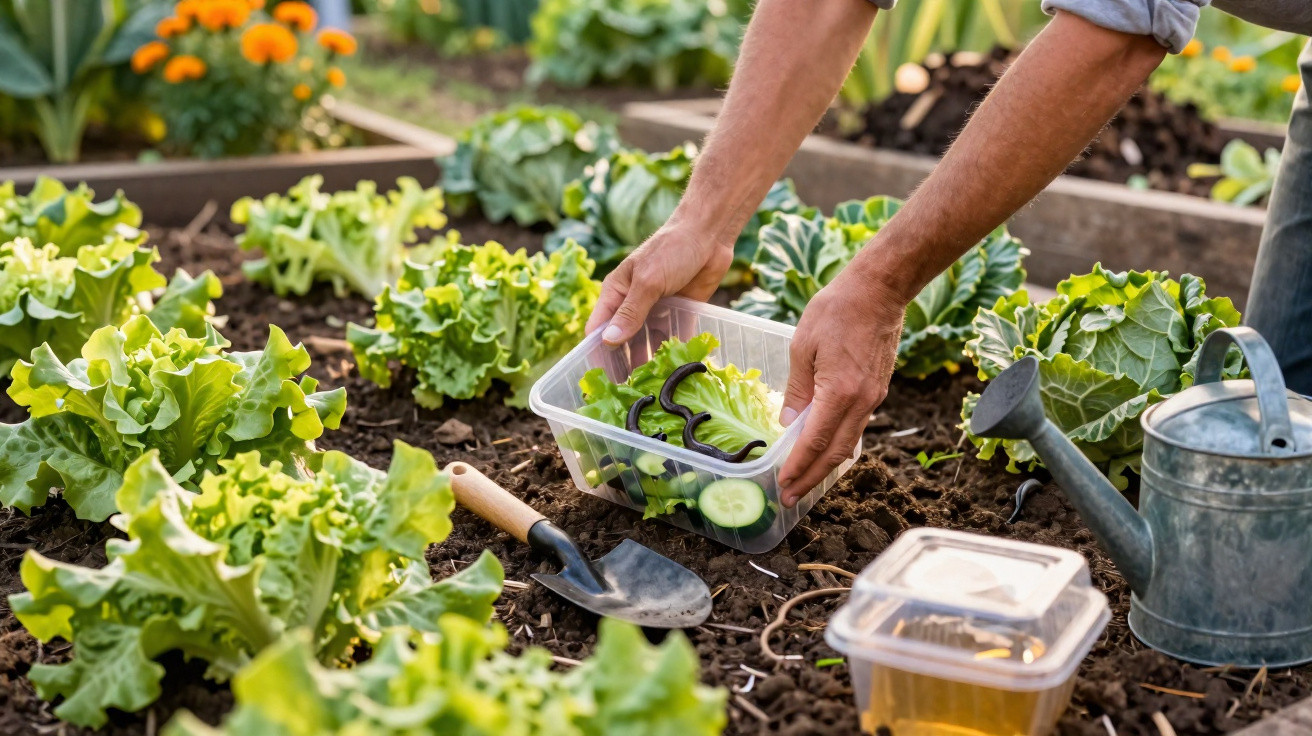
When it has rained overnight, the garden often needs a major tidy-up in the morning: freshly sown beds can look as though they have been cleared out, delicate leaves are full of holes, and some lettuce plants are reduced to a sorry stump. The culprit is usually not “bad” animals, but an imbalance in the garden. A simple homemade slug trap can ease the problem considerably – without poison and without killing anything.
Why slugs love your vegetable garden
As dusk falls, or when the ground is pleasantly damp after a shower, slugs emerge from their hiding places. They make straight for the areas offering the most tempting food.
They are particularly drawn to:
- tender lettuce leaves and other young vegetable plants
- strawberries and other sweet fruit
- newly sown plants whose foliage is still soft
- ornamental plants with soft leaves, such as hostas or dahlias
Essentially, they are simply doing what they always do in nature: eating organic matter and helping it to break down. In a carefully tended vegetable garden, however, that appetite can quickly cause extensive damage. One adult slug can consume around 40 per cent of its own body weight in plants each day. When there are several dozen of them, the balance soon shifts sharply against you.
Should slugs really be killed?
In frustration, many people reach for blue pellets, toxic sprays or beer traps. These methods may appear convenient at first, but they create a whole range of problems.
Slug poisons often affect not only slugs but also the animals that prey on them – and they can put children and pets at risk.
Dogs and cats will investigate anything lying around in the garden. Young children can also quickly put something in their mouths. Poison baits therefore have no place in a family garden. Even products described as “safe for pets” may have unpredictable side effects on other organisms.
Beer traps attract slugs from a wide area before drowning them, causing distress. Helpful beetles and other small creatures can also end up in them. Many amateur gardeners no longer want to treat living creatures this way and look for solutions that are kinder to both the garden and their conscience.
The salad-box trap: simple, inexpensive and cruelty-free
A smart alternative works without either poison or lethal methods. It uses an ordinary plastic container of the sort used for pre-packed salads or other food. The container becomes a sheltered bait station where slugs gather before being relocated well away from your vegetables.
What you need for the slug trap
- a clear plastic container, such as an empty supermarket salad box
- a very ripe piece of fruit or vegetable waste, such as a piece of apple, melon rind or wilted lettuce leaves
- a sharp knife, craft knife or sturdy scissors
- some damp soil or moss
- a small stone or thick piece of wood to prop it up
How to make a wildlife-friendly slug catcher
- Cut small openings into the sides of the container, about 2 centimetres above what will become its “floor”. The holes must be large enough for slugs to pass through easily, but not so large that everything dries out.
- Add a thin layer of damp soil or moss. This provides the cool, moist conditions in which slugs are comfortable.
- Put a piece of very ripe fruit or a wilted lettuce leaf in the middle. The sweet, slightly fermenting smell is especially attractive to them.
- Turn the container upside down, with its opening facing the ground, and position it in the bed. A shaded, damp corner near the plants that have suffered the most damage is ideal.
- Raise one edge of the container slightly with a stone. This creates a shallow entrance that slugs can use without difficulty.
The combination of moisture, darkness and a sweet scent works like a magnet for slugs – just in a controlled location.
After a few hours, or by the following morning, several slugs will usually be sitting in the container and feeding on the bait rather than your lettuces.
Why this method works so remarkably well
Slugs rely heavily on scent and moisture to find their way. Rotting fruit smells to them like a lavish buffet. At the same time, they seek protected, dark shelters so that they do not dry out during the day.
The clear container gives them exactly that:
- sweet, rotten aromas that draw them in
- consistently humid air provided by the damp soil
- protection from sun and wind
The transparent plastic lets light in, but it also slightly confuses the animals. They do not find the route back out as quickly, so they collect in the trap and can then be gathered easily. If you have particularly large numbers in the garden, set out several containers at once – roughly one for every 10 to 15 square metres of bed space.
Common mistakes gardeners make
For the salad-box trap to work reliably, it is worth watching out for the most frequent errors.
- Full sun: If the container sits in blazing midday sun, it will heat up considerably. The bait dries out and the animals suffer. Shaded, moist spots are a better choice.
- Bait that has fermented too far: Fruit that is badly rotting attracts not just slugs, but also ants, flies and other visitors. It should be “very ripe”, but not already slimy.
- The wrong release site: Taking the collected slugs straight to a neighbour’s vegetable patch only moves the problem elsewhere. A better option is a wild, densely vegetated area, such as a ditch, hedge or uncultivated strip well away from vegetable gardens.
How the slug trap fits into a thriving wildlife garden
The salad-box trap is not a miracle solution that resolves every issue at once. It is one tool in the wider toolkit of a nature-friendly garden. To be troubled by fewer slugs over the long term, strengthen their natural predators at the same time.
These include:
- toads and frogs, which eat many slugs
- ground beetles, which reduce eggs and young animals
- birds that nest in hedges and shrubs and search the garden for food
- hedgehogs that roam through piles of leaves and wild corners at night
Providing shelters – piles of leaves, stone banks, dead wood and dense hedges – attracts these beneficial creatures. You can also make your own garden less appealing to slugs: water less often in the evening, use more coarse mulch, and place barriers of coarse sand, grit or crushed eggshells around especially vulnerable plants.
Practical everyday tips for the vegetable garden
Many amateur gardeners find that gardening becomes much more relaxed when they establish a regular “slug routine”. It could look like this:
- bait the containers and distribute them around the edges of beds in the evening before rain or during damp weather
- check the traps early in the morning and empty any filled containers
- take the slugs to a suitable, natural area
- replace bait when it has dried out or gone mouldy
If you grow particularly vulnerable crops – for example, newly planted rows of lettuce or young kohlrabi and courgette plants – you can place the containers directly beside their rows. This sends hungry visitors into the bait shelter before they reach the bed.
Combining the method with other strategies
The salad-box trap’s great advantage is its flexibility. It is suitable for small urban gardens as well as large self-sufficiency plots. The system can be combined with many other gentle approaches:
- slug fences around especially valuable beds
- raised beds with smooth outer sides
- robust plants that slugs tend to avoid, used as a border around sensitive varieties
- targeted hand collection in edge areas during damp weather
Those who combine several of these measures skilfully will usually see noticeably less damage after just one season. There is no need for harsh chemicals, poison bait or the bad feeling that comes with killing animals.
For many people, the homemade salad-box trap becomes a small symbol of a different way of gardening: one based on observation, simple resources and respect for the creatures that share the garden – even when they sometimes nibble the wrong leaves.
Comments
No comments yet. Be the first to comment!
Leave a Comment