
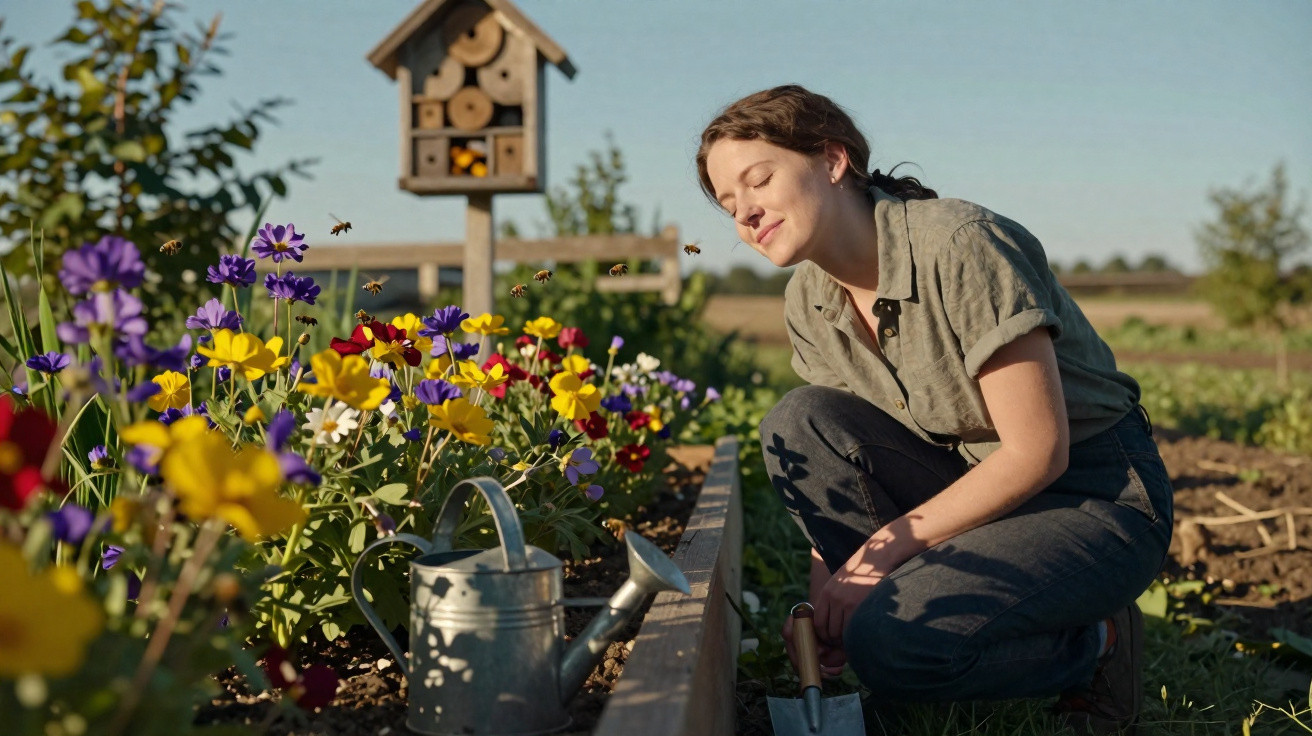
Hearing bees near the garden flowers during the day usually shows that the space is lively, healthy and appealing to pollinators. Their gentle buzzing suggests there is nectar, pollen and plants in an active flowering stage. For anyone tending beds, pots and fruit trees, the presence of these insects is generally welcome news.
What does hearing bees in the garden mean?
Hearing bees in the garden means the flowers are providing food. In daylight, particularly when conditions are sunny and mild, they visit petals, stamens and flower centres in search of nectar and pollen. This activity is part of plants’ natural life cycle.
Buzzing should not automatically be regarded as a danger. Most of the time, bees are focused on the flowers and have no interest in people. They are drawn to the garden because it offers available food, minimal disturbance and a range of flowering species.
Why is this a positive sign for plants?
Bees are beneficial because they contribute to pollination. When they land on one flower before moving to another, pollen grains are carried on their bodies. This helps many plants produce fruit, seeds and further flowers more effectively.
- Pollinated flowers are likely to produce better-formed fruit.
- Vegetable patches can become more productive when pollinators are nearby.
- Fruit trees benefit from visits while they are flowering.
- The garden develops greater ecological balance.
- The presence of helpful insects suggests less use of harsh pesticides.
In gardens containing tomatoes, squash, passion fruit, citrus trees, basil, lavender and ornamental flowers, this work can make a difference. The wider the plant variety, the more likely the garden is to attract pollinators throughout different times of the year.
When does bees’ buzzing require attention?
Buzzing around flowers is normal, but the situation is different if there is a large concentration of bees in roofs, walls, boxes, ceiling voids or holes in the ground. In these circumstances, a swarm may have settled or be seeking shelter, so people should avoid approaching it.
Care is also needed when children, older people, allergy sufferers or pets regularly pass close to the area. If the bees are only on flowers, keeping a respectful distance is enough. Where there is a hive in a thoroughfare, the safest option is to contact beekeepers, the fire service or the local environmental authority.
How can you make the garden more welcoming to pollinators?
To attract bees without creating unnecessary risk, a garden should provide a range of flowers, water in a safe location and fewer chemical products. The aim is to keep pollinators on the plants rather than in busy areas around the home.
- Grow flowers in different colours and forms.
- Add aromatic species such as lavender, rosemary and basil.
- Avoid insecticides while plants are flowering.
- Put out a shallow dish with stones and clean water during dry weather.
- Keep flowers away from doors, windows and eating areas.
Plant selection matters too. Native species are usually better suited to local insects. Flowers that have been heavily modified, with little nectar or a faint scent, may look attractive to people but offer less value to bees and other pollinators.
A garden visited by bees is usually in balance
The sound of bees during the day shows that the garden supplies food and temporary shelter for important insects. Their movement improves pollination, supports the plant cycle and brings more life to beds, pots and flowering trees.
The best approach is to watch without interfering. If bees are simply visiting flowers, they show that the space is working well. With varied plants, limited chemical use and a respectful distance, the garden becomes more productive, fragrant and connected to nature’s natural rhythm.
Comments
No comments yet. Be the first to comment!
Leave a Comment