
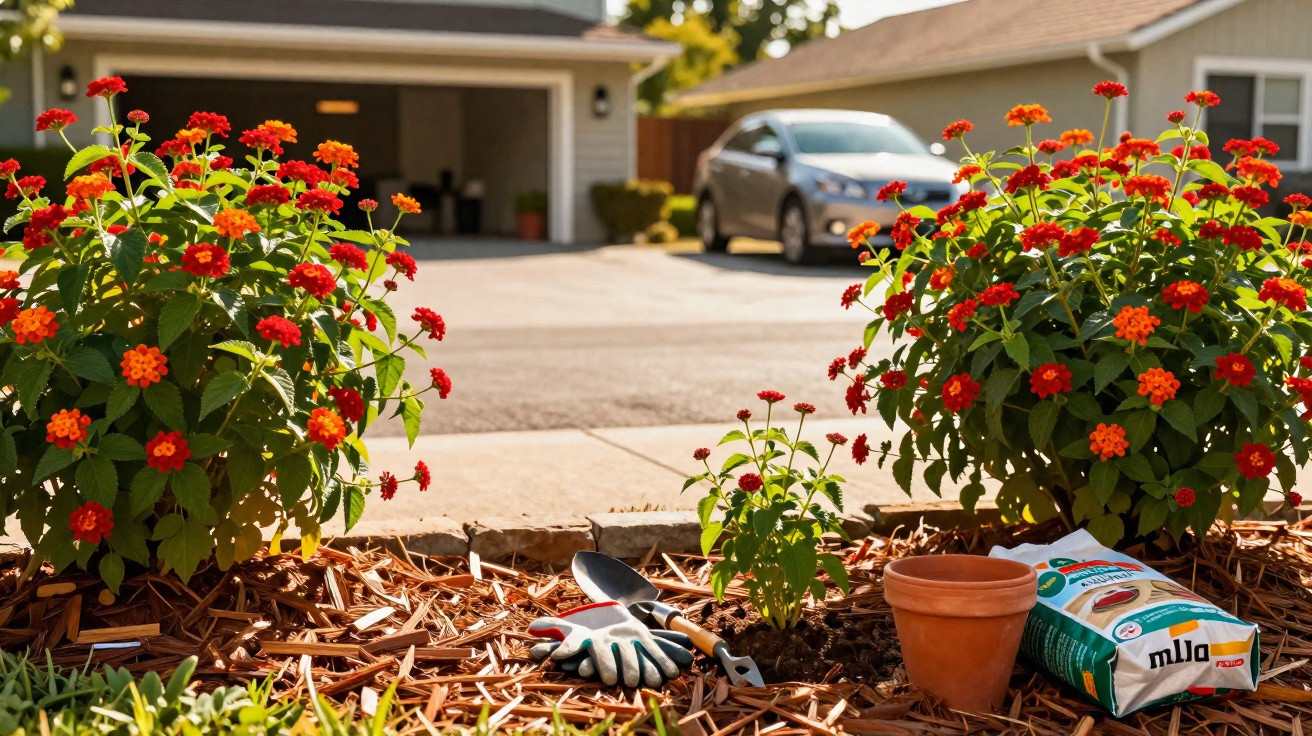
A modest-looking shrub can create a genuine wow factor.
Many homeowners spend money on paving, tarmac and lighting, yet the strip beside the driveway often remains stark and lifeless. Heat, passing vehicles and de-icing salt quickly cause conventional bedding plants to struggle in this spot. This is precisely where a heat-loving ornamental shrub shows its strengths, turning even the harshest concrete surface into a warm, summery ribbon of flowers.
A shrub for exceptionally hot, challenging locations
The red Lantana camara ‘Hot Blooded’ originates from warm regions and belongs to the verbena family. It performs at its best in full sunshine and beside heat-soaked tarmac, conditions in which many other plants have already given up. Its foliage is deep green and lightly aromatic, forming a dense, compact cushion-shaped shrub.
From May until October, its flowers provide a striking display of colour. They begin yellow, shift through warm orange and finally become deep red. Every shade can be seen on the same shrub at once. Planted alongside a driveway, it creates a lively, almost flame-like border that gives every arriving car a visual welcome.
“The shrub loves heat, drought and even being close to tarmac – exactly where other plants fail, it really starts to thrive.”
Why so few plants succeed beside a driveway
From a gardening perspective, the edge of a driveway is one of the most demanding areas around a home. The soil is heavily compacted and vehicle tyres compress it even further. In summer, tarmac or paving heats the surrounding area, while in winter de-icing salt ends up exactly where plants are supposed to grow.
Many perennials and shrubs respond with scorched foliage, fungal issues or simply stopped growth. Anyone who has tried lavender, roses or ground-cover plants will know the pattern: everything looks promising at first, then the plants become sparse, brown and unattractive.
What makes the red Lantana so distinctive
Lantana ‘Hot Blooded’ develops into a rounded shrub measuring roughly 60 centimetres in both height and width. This keeps it low enough not to obstruct car doors or garage access, while ensuring it does not block the view along the driveway. At the same time, it is large enough to form a clearly defined, colourful border.
- Approx. 60 × 60 cm mature size – ideal for narrow strips
- Flowering period from May to October
- Intense colours ranging from yellow to orange and red
- Tolerant of heat, drought and reflected sunlight
- Fragrant foliage that deer generally avoid
Another advantage is that this variety is sterile. It does not produce viable seeds, so it will not self-seed uncontrollably around the garden. The border stays neatly defined without the constant need to remove young plants. Its flowers also provide plenty of nectar for bees and butterflies.
Best for warm regions – a seasonal highlight in cooler climates
In areas with mild winters, this shrub can remain in the same position for several years. It gradually becomes slightly woody, but produces fresh new growth from the base in spring. Where winters are harsher, it is more often grown like a summer bedding plant or protected using specific measures.
The plant copes with brief light frosts, but once temperatures reach around minus eight degrees, the base dies back. In more exposed locations, gardeners therefore often use the shrub as an annual flowering feature beside the driveway or grow it in a container.
How to plant red Lantana beside the driveway
Choose a position that receives at least six hours of direct sunlight each day. In partial shade, the shrub flowers less freely and often develops a looser habit. The soil must drain freely, as waterlogging along compacted edges can quickly lead to root rot.
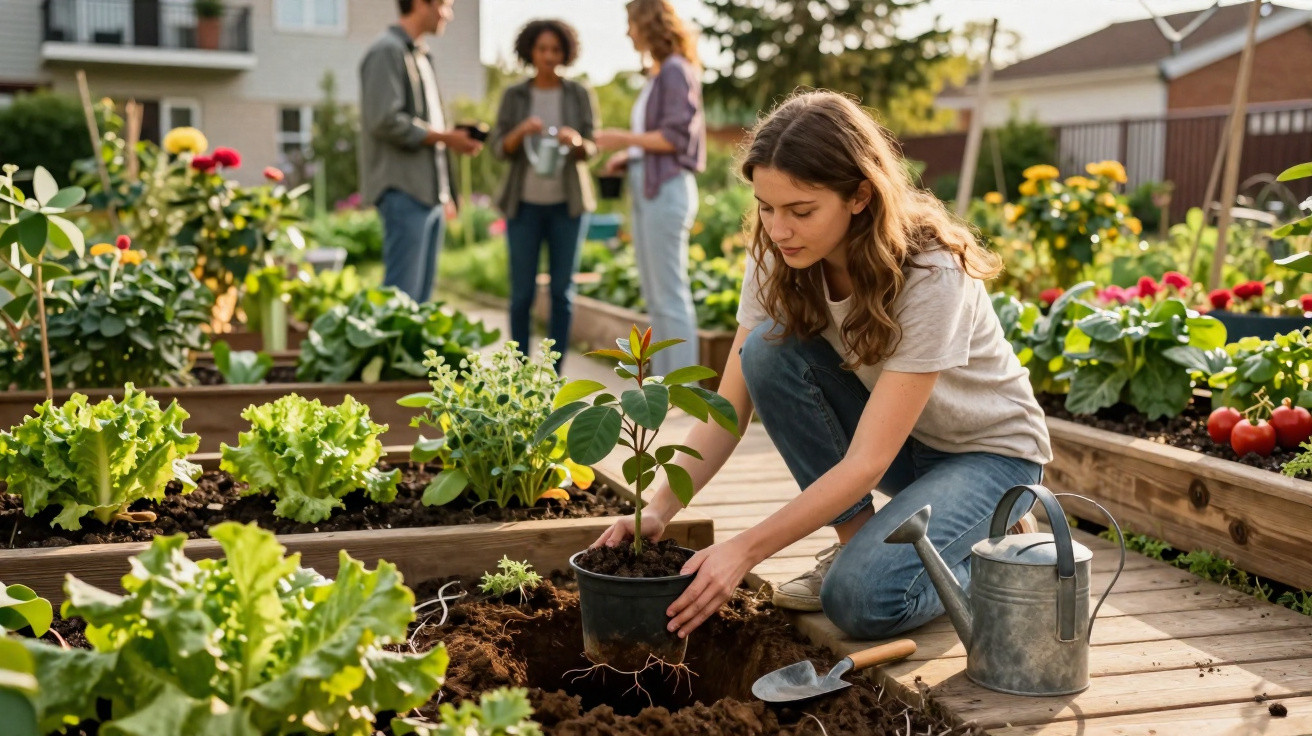
- Dig a planting hole two to three times wider than the root ball.
- Loosen the soil thoroughly at the bottom of the hole.
- Improve heavy soil with gravel or expanded clay until it has a loose, crumbly texture.
- Position the root ball so that its top sits level with the soil surface.
- Water thoroughly, then mulch with decorative chippings or gravel.
For a continuous border that is full but not overcrowded, allow 60 to 90 centimetres between plants. Choose spacing closer to 60 centimetres for a particularly dense edge. For a looser, more contemporary appearance, leave 80 to 90 centimetres between each shrub.
Suitable materials and colour combinations
The shrub looks especially harmonious when the mulch colour complements the driveway surface. Pale limestone gravel creates a Mediterranean touch, while dark basalt chippings emphasise the brilliance of the red flowers. It makes a striking contrast against grey concrete, whereas reddish paving produces a warm, almost southern European feel.
For even greater impact, combine Lantana with low ornamental grasses, such as fountain grass in pots placed on the opposite side. This introduces movement and makes the driveway look like a designed front garden rather than simply a vehicle access route.
Summer care: minimal effort, maximum impact
During its first summer, the shrub needs regular watering until its roots have spread sufficiently deeply. On particularly hot days, tarmac and paving absorb heat and release it again during the evening, so the soil dries out more quickly than expected.
“Once established, the shrub is reliably drought-tolerant and copes remarkably well even with extended periods of heat.”
From its second year onwards, watering requirements drop considerably. A deep watering is worthwhile only during prolonged dry spells, so that flowering does not slow down. The red Lantana has only moderate nutrient requirements. One application of slow-release fertiliser or a little compost in spring is enough for many plants throughout the entire season.
Winter protection and pruning
In milder areas, it is enough to cut the shrubs back hard at the end of winter. This stops them from becoming overly woody and straggly. The plant then produces numerous young shoots, which carry the greatest number of flowers.
In areas with more severe frosts, there are two approaches:
- Leave it in the border: Cut the stems back close to ground level and cover the root zone thickly with mulch, leaves or bark pieces.
- Grow it in a container: Move it in autumn to a bright, unheated garage or stairwell, then return it to the driveway in spring.
Both options have their appeal: in a border, the effect remains more natural, while container growing gives complete control and allows the shrub to be repositioned whenever needed.
Caution: beautiful but toxic – how to handle it safely
All parts of Lantana, especially its berries, are considered toxic to people and pets. In households with young children or dogs that roam freely, it is therefore important to select the location carefully. It is less suitable immediately beside a play area or anywhere animals regularly chew plants.
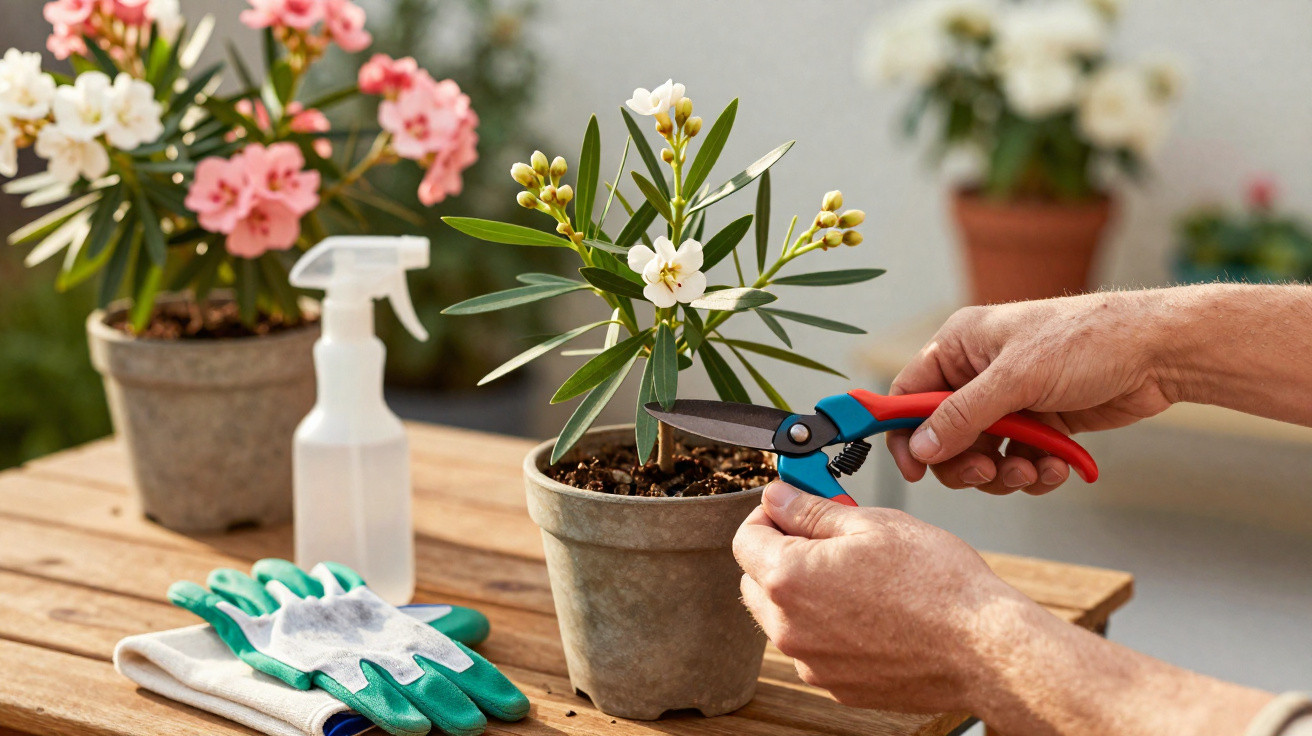
Wearing gloves when pruning is advisable, as the plant sap can irritate the skin of sensitive individuals. Dispose of plant material in household waste or through the local green-waste collection, rather than necessarily adding it to an open compost heap if pets can reach it.
Where the shrub performs best
Red Lantana is particularly well suited to small front gardens, sloping driveway banks and garage approaches. In these places, it fulfils several roles at once: colourful planting, structural greenery and a nectar source for insects. As a result, small plots feel more lively and individual without creating extra maintenance work.
The plant is also a good choice for holiday homes. Anyone visiting only at weekends needs robust plants that can manage short dry spells without difficulty. Combined with gravel areas, containers and a small number of bold plants, it creates a modern, low-maintenance style that still feels welcoming.
For anyone generally interested in hardy plants that cope with heat and drought, red Lantana can be a useful starting point. Some Mediterranean subshrubs and particular ornamental sage cultivars have similar requirements. In mixed planting schemes, always ensure that every species has comparable needs for sunshine, soil and water. Only then will the driveway area remain attractive not just shortly after planting, but for many years to come.
Comments
No comments yet. Be the first to comment!
Leave a Comment