
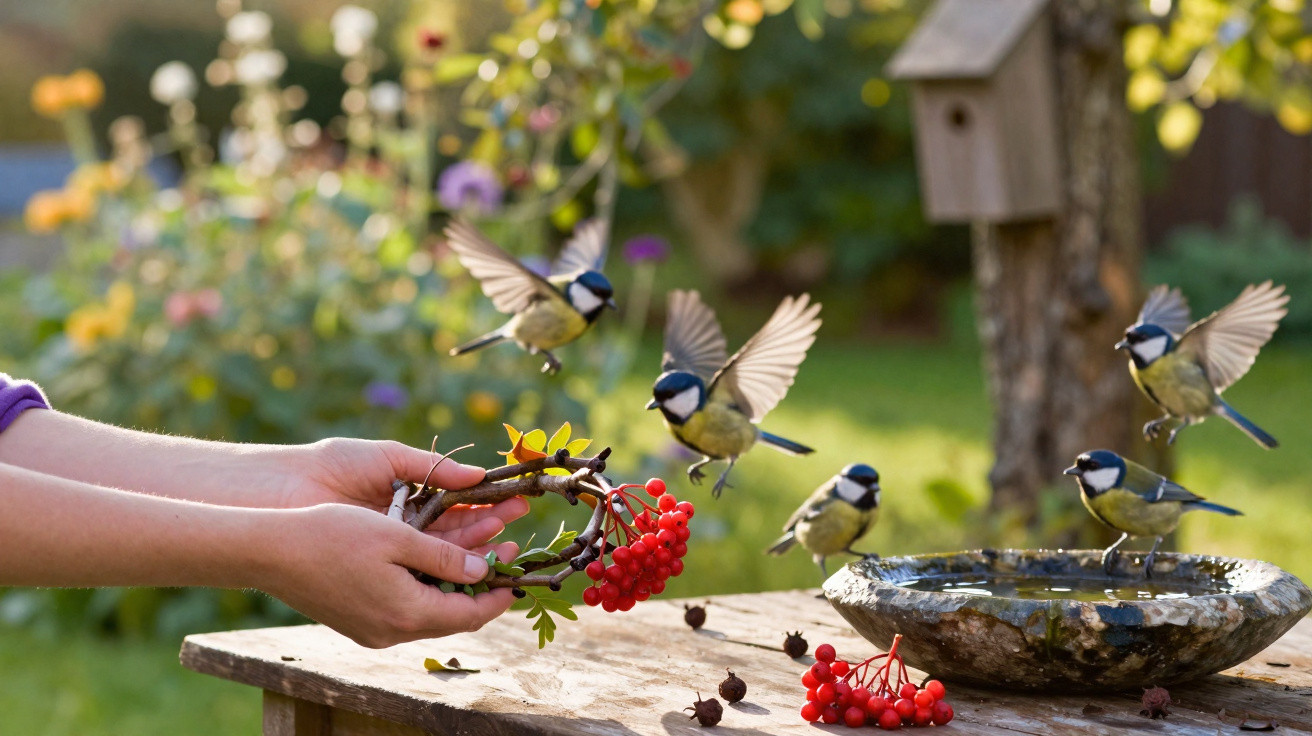
Many gardeners are frustrated by aphids and caterpillars, even though the answer is sitting right outside the window – it simply needs attracting.
Anyone with a garden or balcony knows the issue: as soon as the weather turns milder, pests appear and start on ornamental plants and vegetable beds. Chemical treatments often cause more harm than good. Yet a remarkably simple, natural alternative is already perched in the trees: tits. By using an inconspicuous, frequently overlooked fruit, you can deliberately attract these small birds and keep your green space far less affected by pests.
Why tits are so valuable in the garden
Tits are popular garden visitors: lively, inquisitive, recognisable by their striking plumage and characteristic calls. Behind their endearing appearance is an exceptionally efficient pest hunter.
A family of tits can consume several thousand insects and larvae while raising its young – straight from your plants.
Great tits and blue tits, in particular, feed largely on insects and their larvae throughout spring and summer. This includes many garden “problem pests”:
- Aphids on roses, fruit trees and perennials
- Caterpillars feeding their way through vegetable leaves
- Small beetles and their larvae on fruit trees and ornamental shrubs
- Spiders and other small creatures that can multiply rapidly
Gardeners who regularly host tits often find within a few weeks that their roses, fruit trees and beds look noticeably healthier. There are fewer chewed leaves and fewer curled shoots – without poisons or sprays, simply because there is more bird activity.
The overlooked fruit that tits can hardly resist
When people think about feeding birds, sunflower seeds or fat balls usually come to mind first. However, berries play an important part in a tit’s diet, particularly during the colder months. They are sweet, easy to eat and provide a quick source of energy.
Particularly popular choices include:
- Berries from black elder
- Rowan berries
- Juniper berries
Although these berries grow on shrubs and trees in many gardens, they are rarely considered specifically as bird food. They are, however, very suitable for feeding stations when conditions outside are cold and little natural food is available.
Berries provide readily available energy – ideal in winter, when insects are scarce and tits need every calorie boost.
Conveniently, anyone with berries in their own garden can offer them purposefully at a feeding station. Those without them can find suitable mixes in many garden centres – the important thing is that the fruit is suitable for wild birds and untreated.
How to set up an inviting feeding station for tits
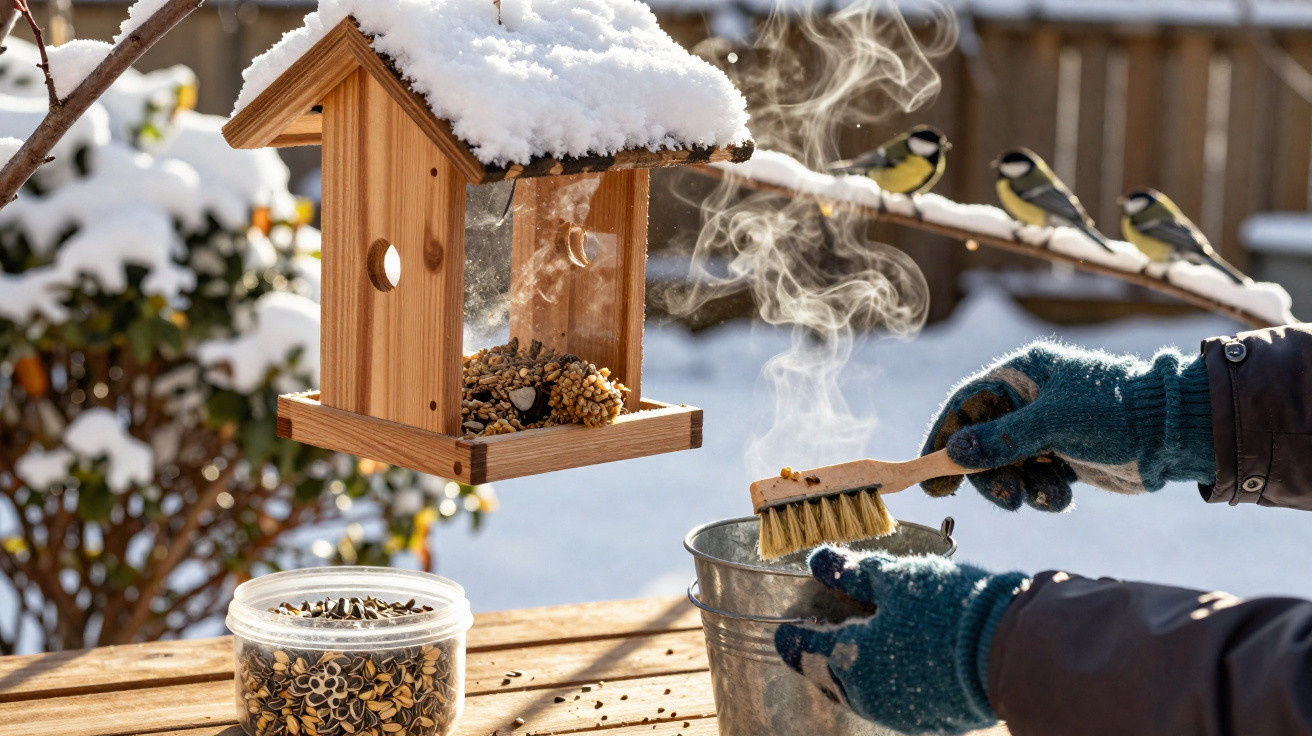
It does not take much equipment to persuade tits to accept your invitation, but it does require some awareness of what they need. A simple feeder tube or small feeding tray is perfectly adequate – positioning is what matters.
Choosing the right spot
- Visible but not exposed: Tits like a clear view, but also need to be able to escape quickly into bushes if danger appears.
- At least 1.5 to 2 metres high: This makes access considerably harder for cats.
- Sheltered from the wind: Draughty corners tend to be poorly used, while calmer spots are much more appealing.
- Away from food on the ground: Do not leave scraps on the ground, as these attract rats and magpies.
Fill the feeding station with a mixture of berries and, during the cold season, some fat-based food or seeds if desired. Crucially, feed only when temperatures are low and do not continue far into spring, so birds do not lose the habit of searching for natural food.
Offering berries properly
You can provide berries in several ways:
- Loosely in a dish
- Attached to small twigs or strings
- Mixed with fat-based food pressed into the crevices of tree bark
Many tits approach unfamiliar food cautiously. Once the first bird arrives and feeds, others will generally follow soon afterwards. This “group effect” is clearly noticeable in the garden.
Nest boxes, water and safety: making tits regular visitors
Anyone who wants tits to remain in the garden rather than simply visit for a quick meal should offer more than a snack. Three elements are key: nesting opportunities, water and protection from predators.
A nest box suited to tits
Tits are cavity nesters. In natural woodland, they use decayed tree hollows, but these are often lacking in built-up areas. That is where the traditional nest box becomes useful.
Key points to consider:
- An entrance hole that is small enough: For tits, a diameter of roughly 26 to no more than 28 millimetres is considered ideal. Larger openings also allow starlings or sparrows inside.
- Secure mounting at a height of 2 to 3 metres: This offers eggs and young birds better protection from cats and martens.
- A slight forward tilt: This prevents rain from running inside.
- A quiet location: Do not place it directly above the patio or beside paths that are constantly used.
A single nest box can be enough for a family of tits to settle in year after year and “do its duty” in your garden.
A water source as a magnet
Many people underestimate the importance of water – not only for drinking, but also for cleaning feathers. A shallow bowl of water, cleaned and refilled regularly, often attracts birds at least as strongly as a feeding station.
A textured, shallow dish no more than five centimetres deep is ideal, with a stone in the middle to act as a perch. This allows even smaller birds to bathe and drink safely.
Reducing risks: protecting your feathered helpers
Once tits start visiting your garden regularly, they take on an important role – so they must not become easy prey. The main risks in domestic gardens are cats and other birds, including magpies and crows.
Keeping cats away without falling out with the neighbours
Many cats roam through gardens and climb trees. A few precautions are enough to reduce the danger to tits significantly:
- Do not install feeding stations and nest boxes close to ground level
- Protect trunks with smooth guards or thorny collars to stop cats climbing them
- Avoid dense climbing plants or hedges immediately beside the feeding station, from which cats could leap out
Smart deterrents for hungry corvids
Magpies and other corvids are regarded as skilful egg thieves and may raid nests. To help protect tits, use:
- Moving “bird scarers” made from old CDs or shiny foil that reflects in the wind
- Hanging ribbons or rotating features that create unsettled light reflections
- Nest boxes with a small entrance hole that reliably excludes larger birds
It is also important not to create open piles of food where large birds can feed freely. Small, protected feeding stations designed for smaller birds work far better.
More natural helpers in the garden: how everything works together
Tits are one component of a thriving, wildlife-friendly garden. Helping them also indirectly supports other beneficial creatures. Mixed hedges containing native shrubs provide berries for birds, nectar for insects and shelter for hedgehogs. Less poison means more food for everything that eats pests.
In practical terms, it is worth deliberately leaving some areas of the garden a little untidy over the year: a few dried perennials through winter, piles of leaves beneath shrubs and old fruit trees with hollows. All of this creates habitat for insects – and therefore food for birds such as tits.
Anyone who deliberately watches a tit inspect a fruit tree leaf by leaf and pick off caterpillar after caterpillar soon understands that the small effort of providing berries, a nest box and a water bowl pays off – in the form of a lively garden where plant protection flutters quietly and chirps cheerfully.
Comments
No comments yet. Be the first to comment!
Leave a Comment