
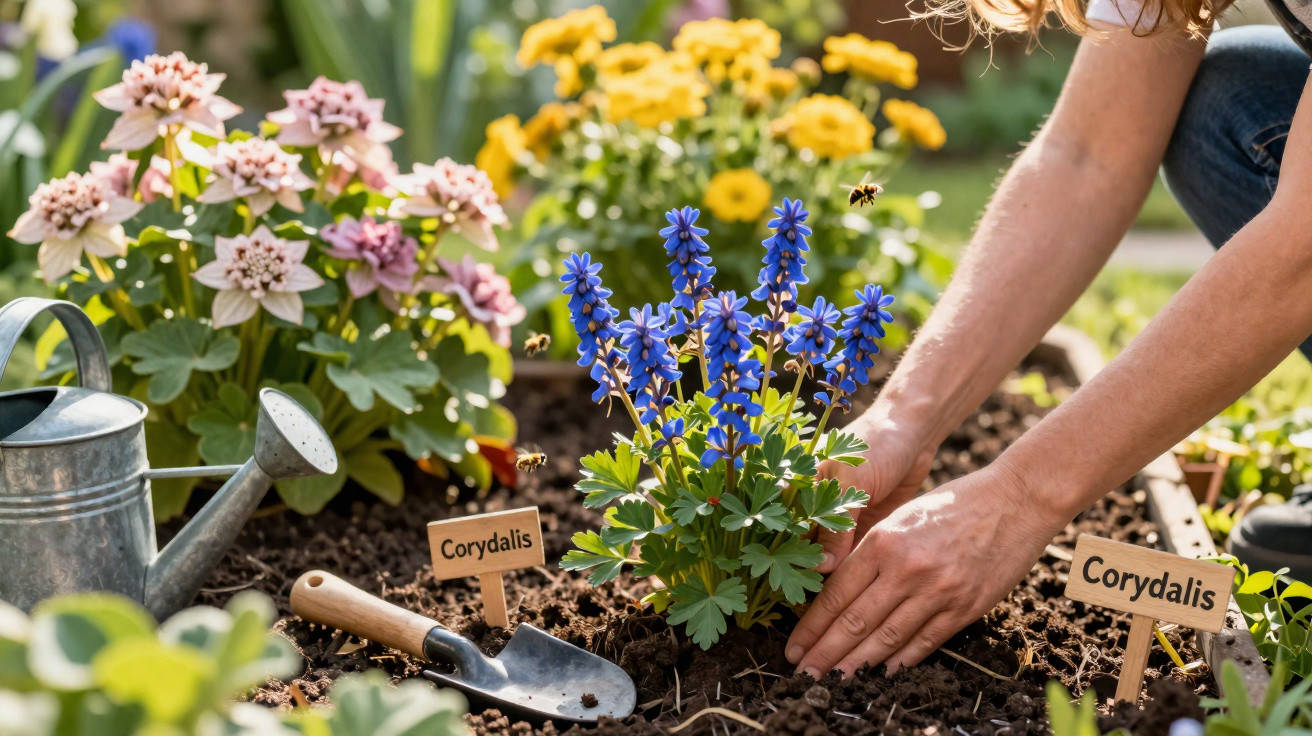
Many amateur gardeners look for plants that offer more than good looks and also benefit wildlife. One little-known perennial does precisely that: Corydalis ‘Spinners’, a rare blue-flowering variety that consistently attracts bees and butterflies while remaining remarkably easy to care for.
A rare blue flower that turns beds into an insect buffet
Corydalis ‘Spinners’ is one of those plants that perfectly combines visual appeal with ecological value. This perennial belongs to the Corydalis genus, stays fairly compact and flowers early in the year – just when many insects are urgently searching for nectar.
“This perennial provides valuable nectar in early spring, when little else is flowering in the garden – a real gift for bees.”
Its blooms open in dense clusters and shine in an almost electric blue. They also release a noticeable honey scent that attracts more than just people: bees, bumblebees and butterflies make a beeline for the plant. In wildlife-friendly gardens where pesticides are avoided, Corydalis ‘Spinners’ quickly becomes a regular stop for numerous pollinators.
Anyone growing fruit trees, berry bushes or vegetables benefits twice over: more pollinators in the garden generally mean better fruit set on apples, cherries, courgettes and strawberries. This small perennial therefore acts as a boost for the garden’s entire ecosystem.
Corydalis ‘Spinners’ in the border: a honey-scented floral display
The plant gets going in March or April. Within days, numerous flower stems emerge from its loose, finely divided foliage. Its intense blue stands out even next to strong yellow or white spring flowers. In partly shaded spots that might otherwise look rather gloomy, this perennial creates a striking trail of light.
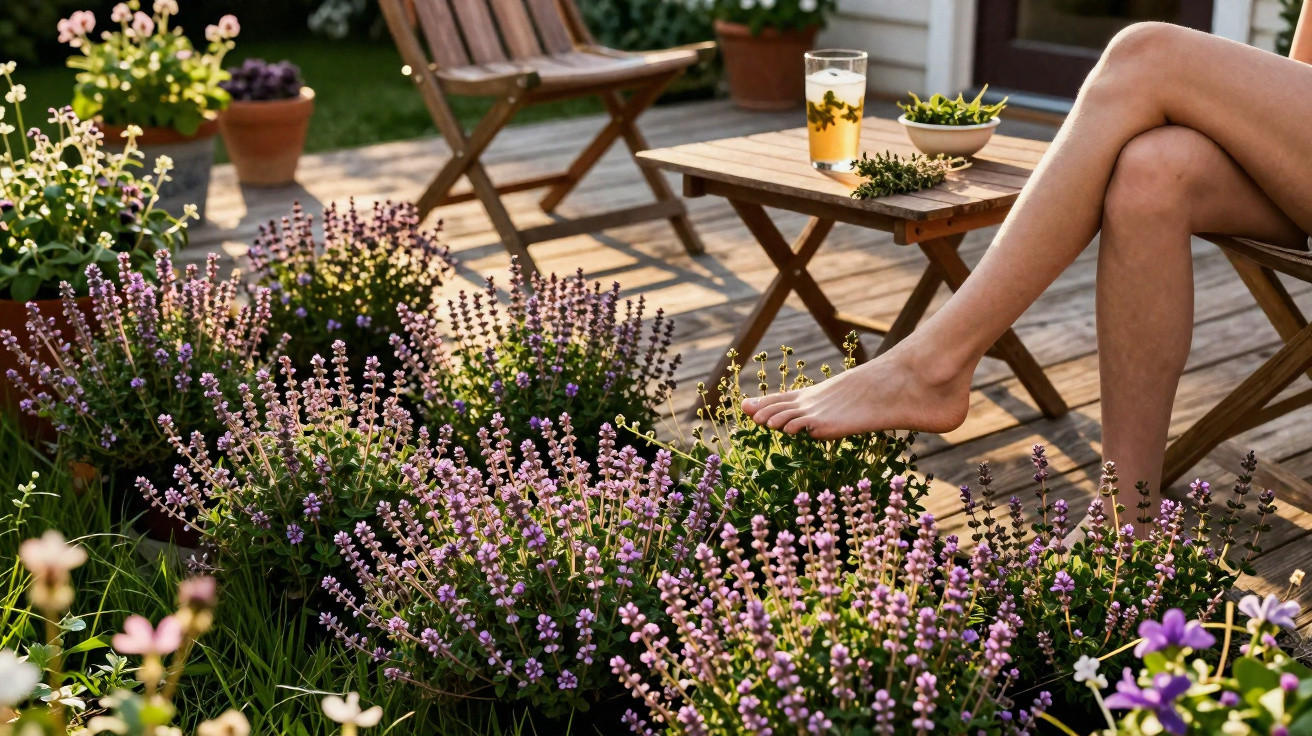
The honey fragrance is clear but never overpowering. Sit beside the bed with a cup of coffee and, before long, you will often hear a steady hum. Particularly on sunny mornings, whole clusters of wild bees and bumblebees can be seen on the flowers – an impressive sight that underlines how dependent these creatures are on early nectar sources.
Fine foliage and intriguing colour contrasts
Corydalis ‘Spinners’ owes its decorative qualities to more than its flowers alone. The foliage is delicately cut and somewhat resembles soft fern fronds. Its leaves are a fresh, light green, which makes the blue flowers appear even more vivid. Many varieties also produce darker reddish stems, creating an appealing three-part contrast of blue, light green and red-brown.
After flowering, the foliage remains attractive for quite some time before dying back noticeably in summer, as is typical of many Corydalis plants. At that point, other perennials take centre stage in the border. In a well-planned perennial bed, the Corydalis retreat is therefore barely noticeable.
Position and soil: where blue Corydalis thrives
Despite its refined appearance, Corydalis ‘Spinners’ proves surprisingly tough in everyday garden conditions. Gardeners who follow a few basic principles rarely encounter problems with it.
- Soil: loose, humus-rich and slightly moist, but never waterlogged
- Position: partial shade, such as beneath deciduous trees or shrubs
- Water needs: keep evenly moist in spring; tolerates drier conditions in summer
- Temperature: hardy, although sensitive to prolonged waterlogging in cold weather
- Maintenance: low; usually very reliable once established
The best locations receive sunshine on the soil in spring, then gain shade from tree foliage or tall perennials in summer. It performs particularly well beneath apple trees, along woodland edges or in partly shaded perennial borders.
Planting, watering and mulching for a successful start
Taking a little care when planting is worthwhile. Loosen the soil thoroughly and enrich it with well-rotted compost. Improve heavy clay soil with sand or fine grit so surplus water can drain away more easily. The delicate rhizomes are especially sensitive to persistent wet conditions in winter.
Water thoroughly after planting. A thin layer of leaves or bark mulch helps retain moisture and gradually feeds the soil with nutrients. Avoid waterlogging at all costs – the root area must not sit in water during winter.
Propagation and long-term care
With a few years of patience, Corydalis ‘Spinners’ can be carefully divided. However, its rhizomes break easily, so this must be done gently. The best time to divide the perennial is immediately after flowering, while the soil is still moist but not wet.
Routine care is generally limited to removing old foliage after it has died back in summer and adding a little compost in autumn. Mineral all-purpose fertilisers are unnecessary and may do more harm than good, as they can stress the fine root system. One light application of compost each year is entirely sufficient.
Suitable border companions for the blue insect magnet
Well-chosen planting partners enhance the effect of this perennial even further. Particularly harmonious combinations include:
- spring cyclamen or snowdrops as low, carpet-forming plants
- Hosta species, which follow later with their large foliage
- hostas, pulmonarias or Rodgersia for partly shaded areas
- ornamental grasses, which take the visual lead in summer and autumn
Anyone wishing to support bees more deliberately can combine Corydalis ‘Spinners’ with other early-flowering plants such as pulmonarias, crocuses or wild tulips. This creates an uninterrupted nectar supply from February to May.
More biodiversity in your garden: why this perennial matters
Many insect species are suffering from habitat loss and the severe decline of flowering plants in agricultural landscapes. This makes domestic gardens increasingly important. Every square metre that provides flowers, nesting sites and shelter acts as a small refuge.
“Anyone who plants Corydalis ‘Spinners’ creates not only an eye-catching feature, but also makes a tangible difference to biodiversity right outside their own front door.”
The perennial flowers at a time when lawns are often still short and borders remain empty. This is precisely when overwintered wild bees, the first bumblebee queens and early butterflies are looking for food. A garden that offers something early in the year gives these animals a crucial head start.
This type of planting can make a real difference, especially in densely built-up residential areas. A few square metres beneath a garden tree, planted with Corydalis, pulmonarias and spring cyclamen, can turn a previously bare corner into a lively strip of mini habitat.
Practical advice and common mistakes with Corydalis ‘Spinners’
A few recurring issues are easy to prevent:
- Too much water in winter: Improve drainage rather than watering continuously.
- A full-sun position: Direct midday sunshine can weaken the plant in high summer.
- Overzealous weeding: Removing every wilting leaf in summer can damage the unseen rhizomes.
- Heavy foot traffic: Paths running through the planted area compact the soil and break the finer roots.
Gardeners who keep these points in mind will have a reliable, long-lived companion in Corydalis ‘Spinners’. Beginners in particular benefit from its combination of low maintenance requirements and high value for wildlife.
For many people, Corydalis remains a marginal plant in the range offered by perennial nurseries. Yet anyone who gives it a chance soon sees how strongly it can change the overall feel of a garden: fewer sterile spaces, more flowers and more humming. It is therefore perfectly suited to the growing trend for gardens that are not only decorative, but consciously wildlife-friendly.
Comments
No comments yet. Be the first to comment!
Leave a Comment