
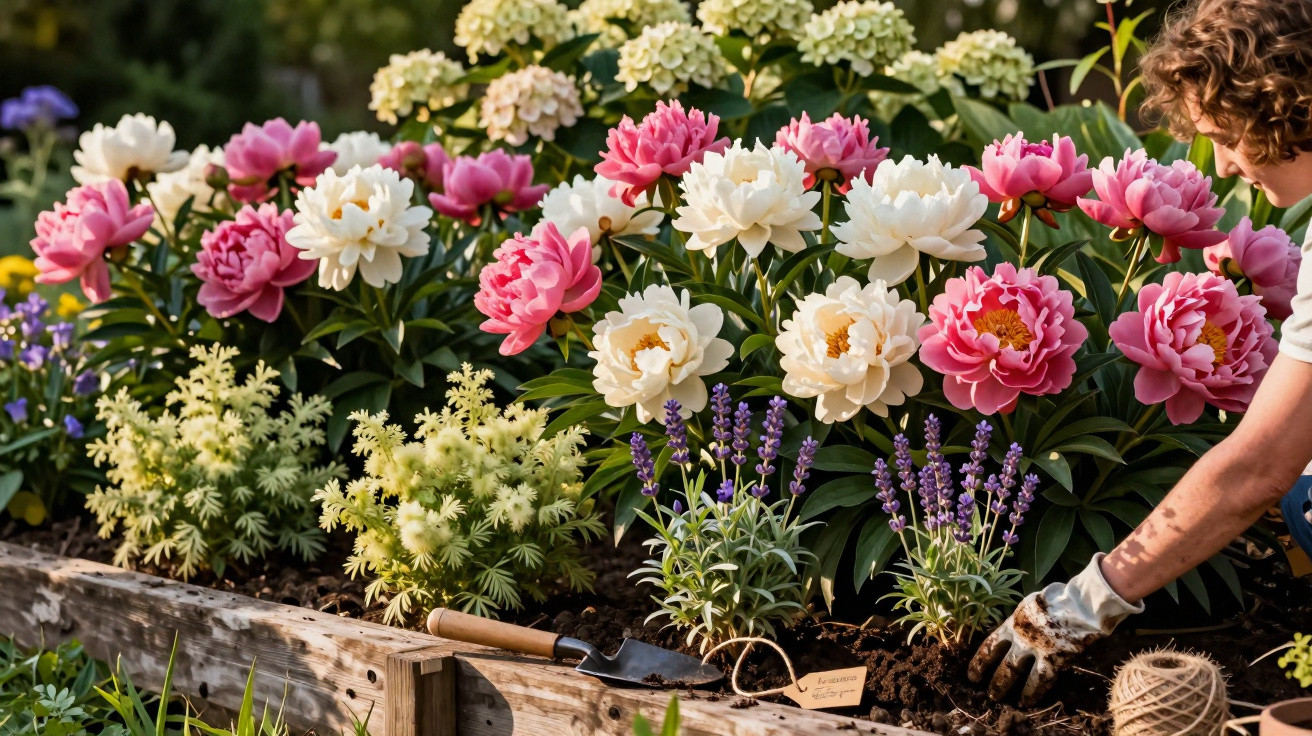
Many amateur gardeners wonder why their own peonies look attractive but never quite spectacular. The flowers are there, yet the overall effect is missing. This is where a clever planting combination makes the difference: the perennials, shrubs and fragrant plants surrounding the peony determine whether a border looks pleasant – or resembles a painting.
What peonies need before you plant around them
Peonies are among the toughest perennials for the garden. Once established, they generally want just one thing: to be left undisturbed. Even so, they have clear requirements that must be considered when planning a border.
- Light: Full sun to, at most, light partial shade.
- Soil: Deep, humus-rich and well-drained.
- Moisture: Never waterlogged during winter.
- Spacing: Room around each perennial, with no crowding.
If the bed around peonies is planted too densely, moisture lingers for longer. This creates favourable conditions for fungal diseases such as the dreaded grey mould, which can turn buds brown and destroy entire sets of flowers. Overzealous care does more harm than good here.
“Peonies flower most beautifully when they have sunshine, space and well-aerated soil – rather than bulky competitors pressing right up against them.”
Before heading to the garden centre, it is therefore worth making a quick assessment: does the intended neighbouring plant suit the peony's position and soil, or will it eventually become a rival rather than a partner?
Perfect border companions: plants that make peonies shine
Alchemilla: an understated talent for a striking display
One of the finest companions is Alchemilla, commonly known as lady’s mantle. This hardy perennial forms dense cushions of softly textured foliage, topped in early summer by a haze of yellow-green flowers.
Its restrained flower colour is the key: it makes the delicate pastel shades of many peonies glow beautifully. Nothing competes, and the planting feels completely harmonious. In cut-flower arrangements, lady’s mantle also gives large peony blooms a relaxed, natural setting.
Bellflowers and other perennials with nodding blooms
Perennials with bell-shaped flowers, including many Campanula varieties, are visually excellent additions to a peony bed. They usually stay compact, do not push upwards, and allow the peonies’ large rounded flowers to take centre stage.
There is one small drawback, however: some varieties are more susceptible to pests. That does not mean they should be avoided, only that they are best combined with “bodyguards” that help repel pests.
Hydrangeas as an impressive backdrop
For gardeners wanting to showcase peonies against a structured background, hydrangeas make an effective choice at the rear of the border. Their large rounded flower heads echo the peonies’ shape without overwhelming them.
Spacing is essential: hydrangeas should not be planted directly within the peonies’ root zone. Given some distance, they provide light shade during the hottest months without casting too much shade over the perennials. They are ideally planted from autumn through to spring.
A flowering sequence: colour from spring to late summer
With thoughtful combinations, a peony border can remain interesting for almost the entire season. A simple succession of flowering plants works particularly well:
- Before the peonies: Bearded irises, which usually put on their display shortly beforehand.
- Alongside the peonies: Lady’s mantle, bellflowers and alliums.
- After the peonies: Daylilies (Hemerocallis), which carry the border through summer.
This prevents empty periods in the bed. As peony flowers fade, daylilies or hydrangeas quietly take over the leading role.
Lavender as a fragrant shield: attractive and useful
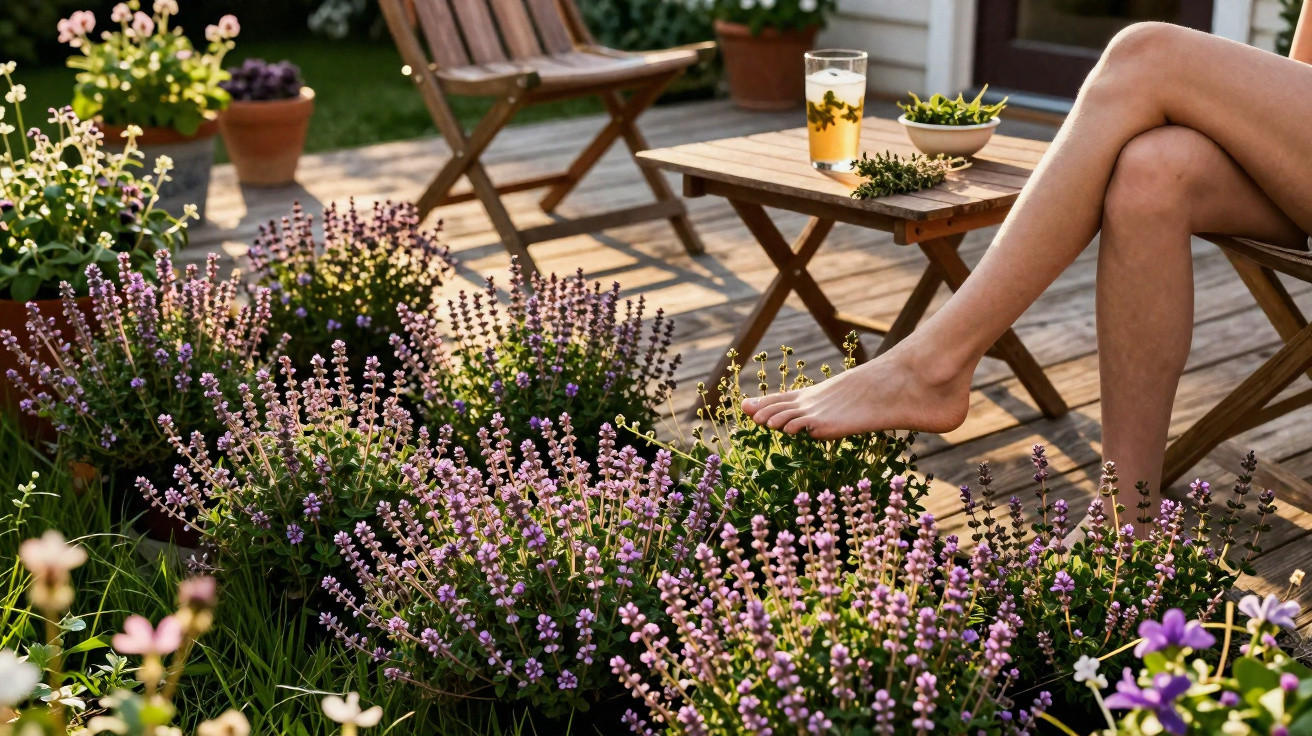
Lavender is much more than a decorative Mediterranean plant. In a peony border, it serves two purposes at once: it looks attractive while acting as a natural protective barrier.
Lavender enjoys precisely the conditions appreciated by most peonies: free-draining soil and full sun. It is particularly well suited to planting as a low row along the front edge of a border.
“Lavender surrounds peonies with a scented barrier that keeps many pests at bay – entirely without chemicals.”
Its strong scent deters numerous pests, including:
- Mosquitoes
- Flies
- Fleas
- Clothes moths
- And often wildlife such as deer, which prefer to keep their distance
Allium species, or ornamental onions, work in a similar way. Their striking spherical flower heads are an ideal visual match, while they also release a mildly sulphurous scent that many insects avoid.
Plants to keep away from peonies
Where there are dream combinations, there are also classic mistakes. Some plants are simply unsuitable for peonies because they undermine their growing conditions or compete too heavily for space.
| Problematic planting companions | Why they cause problems |
|---|---|
| Very tall, bulky grasses | They block light, crowd the perennial and spread vigorously. |
| Plants for permanently damp, heavy soils | They keep the surrounding area too wet and encourage fungal diseases. |
| Shallow-rooted plants with aggressive root systems | They compete strongly for water and nutrients. |
When peonies are combined with particularly delicate perennials, closer attention is needed. Bellflowers prone to slugs or aphids can still grow in the same bed if they are protected on either side – for example, by lavender and alliums acting as a protective ring.
How to plan a harmonious peony border
A convincing border rarely happens by accident. By following a few basic principles, gardeners can get the very best from even a small number of peonies:
- Start with the peonies: Choose positions for the perennials first, then plan the companion plants around them.
- Plan the height layers: Put peonies in the middle, lower plants in front and taller ones behind at a suitable distance.
- Allow for air: Leave an open area around every perennial so air can circulate.
- Choose colours deliberately: Pair pastels with soft green companions, and calm strong colours with quieter foliage.
Anyone unsure can use simple colour combinations as a guide: pink peonies with lady’s mantle and purple lavender look elegant, while white peonies combined with blue-violet bellflowers create a more classically romantic effect.
Practical advice for care, pruning and lasting impact
Even the most attractive arrangement loses its appeal when peonies flower less generously year after year. Three points determine their long-term performance:
- Do not plant too deeply: The buds on the root tubers should sit just beneath the soil surface, otherwise flowers may fail to appear.
- Do not keep moving them: Peonies dislike repeated relocation. Once planted well, they should remain in place for years.
- Remove spent flowers: Cut off faded blooms promptly so the plant conserves its energy.
Gardeners who also choose healthy border companions often need very little spraying or heavy feeding. The combination of airy planting, free-draining soil and fragrant protective plants works like a natural defence system.
In this context, the term “companion plant” refers to a plant that visually supports a main plant, improves its microclimate or helps keep pests away. Such plants are not merely decorative; they form part of a small ecosystem within the border.
In practice, this means that when buying new plants, it is worth considering more than just whether their flowers are attractive. Think briefly about the role each one can play within the planting scheme – backdrop, gap-filler, fragrant protection or colour partner. In a peony border especially, that consideration rewards gardeners for many years with lavish, almost theatrical floral displays.



Comments
No comments yet. Be the first to comment!
Leave a Comment