
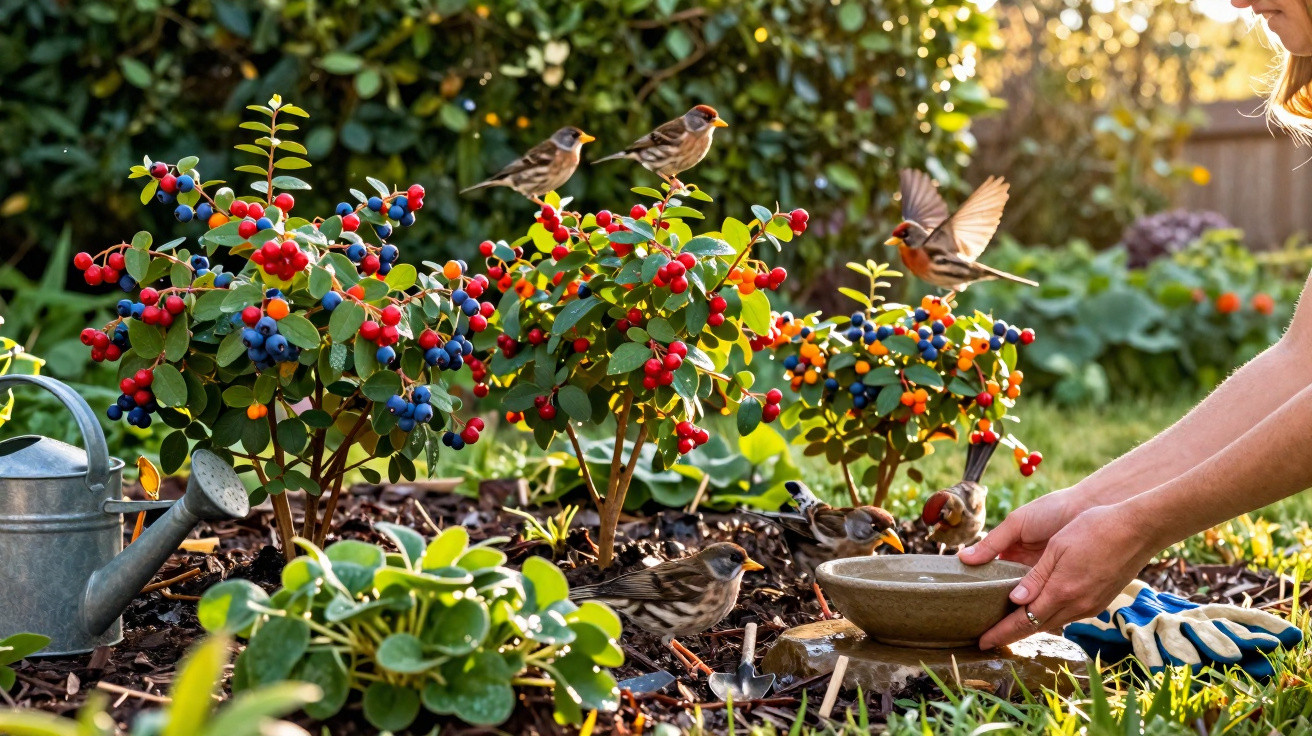
A natural approach can make your garden far more appealing in the long term.
Who does not enjoy seeing tits, robins and blackbirds flitting through their own patch of greenery? The first thought is usually to buy an attractive bird feeder from a garden centre. That may work in the short term, but birds often disappear again just as quickly. It is much more effective to shape the garden into a genuine habitat, providing natural food, shelter and water.
Why artificial feeding stations are often only a temporary solution
Bird feeders are useful during severe winters and periods of scarcity, but they have limited value as a permanent solution. They usually provide birds with a rather narrow diet that depends heavily on people. If the food supply stops, the birds move on.
“Birds only stay when a garden feels like a small habitat – not like a petrol station by the roadside.”
A wildlife-friendly garden offers something throughout the year: buds, berries, insects, spiders and seeds. This is the food their bodies are adapted to eat. Turning your outdoor space into a living buffet does more than create attractive photo opportunities; it provides meaningful support for wildlife.
Three berry bushes that turn any garden into a bird buffet
Why berry bushes are better than any feeding station
Many native species prefer to eat where their food grows: directly on a bush, protected by its branches. They can feed, hide and rest at the same time, which reduces stress and gives them protection from cats and birds of prey.
Even a small number of plants can make a considerable difference. A trio of berry-bearing shrubs is often enough to keep a garden appealing over the long term.
Which shrubs genuinely attract birds
The key is to choose species that produce plentiful fruit and supply food for a long stretch of the year. Particularly popular options include:
- Rowan / mountain ash: Bright red berries that appeal to thrushes, starlings and blackbirds.
- Elder: Flowers for insects in early summer and dark berries in late summer make it a versatile choice.
- Dog rose or wild rose: Rosehips in autumn, plus hiding places among its thorny stems.
Other strong choices include firethorn, blackthorn and privet. These offer food to numerous species, often well into winter.
“The rule of thumb is that at least three different berry bushes create a continuous buffet for many months.”
If space allows, plant the shrubs in a loose row or as a mixed hedge. This adds structure to the garden, creates a windbreak and improves the microclimate for both people and animals.
A dense hedge provides an essential safe retreat
Why shelter can matter even more than food
A garden may contain abundant food, but many bird species will avoid it if cats, martens or birds of prey have an unobstructed route everywhere. Birds need a network of secure hiding places close to the ground and at medium height.
The simplest option is to let part of a hedge or thicket grow dense and slightly wild on purpose. Rather than a precisely clipped feature, it should be an impenetrable area that even you can barely get into.
- Thorny shrubs such as hawthorn or barberry provide extra security.
- Old wood, piles of twigs and fallen leaves create additional cover at ground level.
- Birds use these spaces as refuges when danger threatens and as places to sleep.
How an unremarkable bush becomes winter accommodation
A dense hedge is particularly valuable during the colder months. It slows the wind, retains a little warmth and shields wildlife from wet weather. Small songbirds will huddle deep among the branches.
Removing every leaf with care and cutting every hedge “neatly” in autumn takes away their winter hotel. A better approach is to leave at least one area uncut until late winter. This makes the harsh season easier to survive not only for birds, but also for insects and small mammals.
“A seemingly ‘untidy’ corner of the garden is often the most valuable place for wildlife.”
Even the best food is only half as useful without water
A shallow dish, a big impact
When people think about garden birds, food is often their immediate concern, while water receives far less attention. Yet birds drink and bathe every day. Clean, shallow water sources have become rare, particularly in densely built-up residential areas.
A simple shallow dish is sufficient. Ideally, it should have an edge where birds can stand without immediately being submerged up to their bellies. Deep ponds and water butts are less suitable because they present a drowning risk, especially for young animals.
| Suitable options | Problematic options |
|---|---|
| Shallow terracotta dish | Smooth, deep bucket |
| Plant-pot saucer | Open water butt with no escape route |
| Stone slab with a hollow | Very slippery plastic bowls |
Minimal effort when it is done properly
Maintenance does not have to be difficult. Changing the water every few days and briefly scrubbing the dish with a brush prevents germs and algae. Chemical additives have no place in a bird bath.
In summer, garden birds benefit from fresh water every day, and even more often in hot weather. During frost-free spells in winter, you can put out a dish for a short time and remove it again as soon as it freezes over.
How the three elements work together
Food, shelter and water: the formula for success
One berry-laden shrub, one untidy hedge and one simple water dish are often all that is needed. Together, they form a small but functioning mini ecosystem.
“Anyone who combines these three points can turn a ‘normal’ garden into a lasting meeting place for birds.”
The shrubs provide food, the hedge offers protection from predators and weather, and water supports hygiene and hydration. At the same time, more insects establish themselves, benefiting insect-eating birds such as tits. Gradually, the garden becomes more full of life.
How your view of the garden changes
Anyone who embraces this natural style of gardening will soon see their outdoor space differently. A perfectly mown lawn can suddenly appear dull, while a corner with wild plants and berry bushes is full of activity. Children can watch fledglings begging for food, sparrows dust-bathing in sand and blackbirds searching through leaves for worms.
Practical tips for creating a bird-friendly garden
Step by step towards more life in your greenery
The transformation does not have to happen overnight. Even modest changes have an effect:
- Mark out an area that is deliberately allowed to remain natural.
- Choose three suitable berry bushes and plant them in autumn or early spring.
- Prune part of a hedge or shrubbery less severely.
- Place a shallow dish in a partly sunny location that is easy to observe.
- In autumn, do not clear away every fallen leaf and twig; leave some in place.
If you wish, you can later add nest boxes, sandy areas for dust baths or wild corners with nettles where butterfly caterpillars live. All of this creates more food for birds.
Risks and points to consider
More wildlife in the garden also brings responsibility. Avoid providing cats with direct jumping routes to the bird bath or shrubs. Thorny plants or strategically placed branches can serve as barriers.
It is also worth checking the label when selecting plants. Many ornamental varieties sold in garden centres produce berries, but these may have little nutritional value or be difficult for birds to reach. Native species adapted to the local climate are the better choice.
After a few months, there is usually a noticeable difference: more birdsong, more movement and fewer quiet, “sterile” spaces. The garden feels more alive not only for wildlife, but for people too – all without an expensive catalogue bird feeder.

Comments
No comments yet. Be the first to comment!
Leave a Comment