
Many amateur gardeners realise far too late that something is wrong with their snake plant. Its leaves droop, the colour turns yellowish, the pot develops an odd smell – and suddenly the supposedly indestructible plant is beyond saving. Anyone who recognises the early signs can often still rescue their houseplant.
What a healthy snake plant should look like
Before looking for faults, it helps to know what a genuinely vigorous plant looks like. You can only spot problems in time if you understand what is normal.
- Leaves: firm, upright and free from creases
- Colour: rich, deep green with distinct markings
- Pot: compost dry at the surface, with no musty smell
- Growth: new leaf tips appearing regularly from spring onwards
“If a snake plant looks tired, soft or discoloured, there is almost always a care mistake behind it – especially when it comes to watering.”
Typical warning signs: how the plant shows it is dying
Yellow leaves – usually caused by too much water
Yellowing leaves are the classic symptom. A few older outer leaves will gradually turn yellow, and that is normal. It becomes worrying when:
- several leaves in the centre of the plant turn yellow at once,
- the discolouration starts at the base of a leaf and moves upwards,
- yellow areas feel soft and mushy,
- the pot or compost smells unpleasant.
In this case, the root area has usually remained wet for too long. The roots start to rot, bacteria and fungi spread, and the plant is poisoned from within.
Brown patches: from dry tips to rotting marks
Not all brown discolouration means the same thing – where it appears on the leaves provides important clues about the cause:
- Brown tips and edges often indicate irregular watering, very dry central-heating air or a build-up of salts from tap water.
- Large brown patches in the middle of the leaves may point to fungal infection, sun scorch from direct midday sun through glass, or pest damage.
Frequently giving a snake plant “just a little” water creates constantly changing moisture levels in the pot – and this often leads to dry tips and edges.
Wrinkled, shrivelled leaves: severe thirst
The plant stores water in its thick leaves. When they begin to sink in, curl up or look dried out, it has lacked water for quite some time. Common signs include:
- leaves that feel thin rather than fleshy,
- a surface that looks creased,
- loss of the plant’s stable shape, causing it to bend easily.
This drought stress is serious, but can often still be reversed. Unlike waterlogging, the roots generally do not rot; instead, they tend to dry out.
Mushy leaves at the base: red alert
If the area directly above the compost becomes soft, slimy or can almost be crushed between two fingers, the situation is critical. Rot has then reached the leaf rosette. The pot often smells rotten, the plant may topple over, or it may almost come away from the compost when touched.
“Soft, foul-smelling leaf bases are the clearest sign: the snake plant is sitting in completely wet, airless compost and its roots are rotting away.”
Root check: what is really happening below the compost
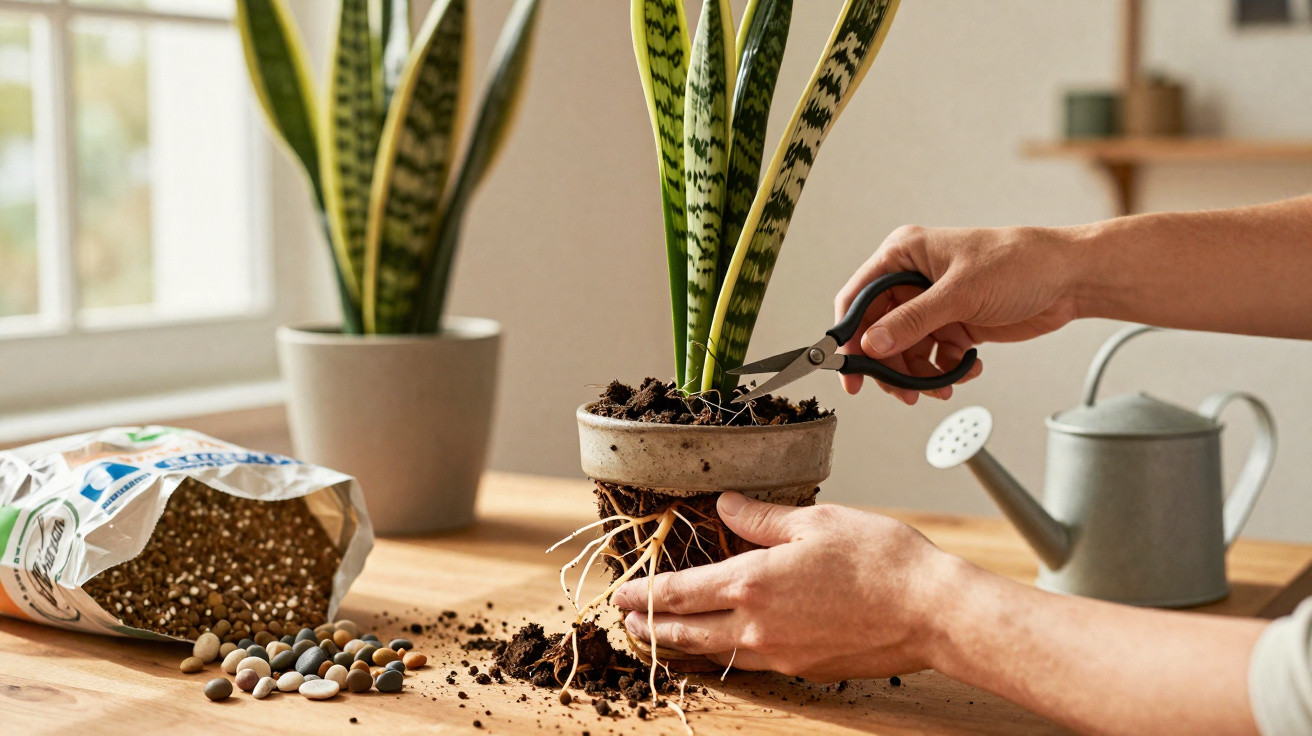
A look at the roots reveals whether a plant can still be saved. Gently squeeze the sides of the pot, carefully lift out the plant and inspect the root ball.
What healthy roots look like
- Colour: white to pale beige
- Smell: neutral to slightly earthy
- Texture: firm, not slimy and not crumbly
- Structure: lots of fine roots around the rhizomes
Warning signs of a dying plant
- dark brown to black roots
- slimy, disintegrating strands
- a strong musty smell similar to rotten eggs or rubbish
- hollow-feeling, dried-up remnants rather than strong roots
- hardly any roots, with only bare rhizomes remaining
If most of the roots are affected, the plant must be cut back radically and repotted. Without intervention, it will die completely within a short time.
The role of compost: drainage determines life or death
The snake plant is a succulent and hates having wet feet. Ordinary potting compost often holds moisture for too long.
“A loose, coarse and free-draining compost is the best life insurance for this houseplant.”
How to recognise unsuitable compost
- The surface forms a hard crust after watering.
- Water sits on top instead of draining away.
- The compost smells musty or becomes mouldy.
- When squeezed, it feels like a heavy, wet mass.
Better growing medium for snake plants
A mix that dries quickly and contains plenty of air pockets is ideal. One possible recipe is:
- 1 part cactus compost or very loose potting compost
- 1 part coarse sand or fine gravel
- 1 part perlite or pumice
A pot with a large drainage hole is always essential. Without an outlet, an invisible pocket of water forms at the bottom of the container, which will eventually kill any snake plant.
Healthy versus dying plant: a direct comparison
| Feature | Healthy snake plant | Severely damaged plant |
|---|---|---|
| Leaf firmness | taut, upright, stable | soft, mushy or severely bent |
| Leaf colour | strong green, clear patterning | yellowish, brown, faded markings |
| Roots | pale, firm, neutral smelling | dark, slimy, foul smelling |
| Growth | new leaves appear regularly during the year | no new leaf for months |
| Moisture in the pot | compost dries noticeably between waterings | permanently wet or bone dry for months |
First aid: how to rescue a struggling snake plant
In cases of waterlogging and root rot
- Remove the plant from the pot immediately and take off all of the old compost.
- Cut away every dark, soft root with clean scissors.
- Trim mushy leaf bases back to firm, healthy tissue.
- Leave the plant to dry in the air for several hours.
- Place it in fresh, well-draining compost, without planting it too deeply.
- Water lightly only after a few days, then wait longer until the compost is dry at the top.
If root damage is extensive, it is often only possible to use the healthy leaf sections. These can be cut into pieces and inserted into fresh compost as cuttings – with some patience, a new plant will grow.
In cases of severe lack of water
A careful approach is needed here. A completely dried-out root system cannot cope with a sudden “water shock”.
- Initially water only lightly, so that the compost becomes evenly moist but not soaking wet.
- Water moderately again after two to three days.
- Remove wrinkled leaves if they have dried out completely – their appearance will not recover.
- Watch for new, plump leaf tips: these show that the plant is becoming active again.
Position, light and temperature: silent threats in the background
The snake plant is considered an expert at coping with shade, but it grows much more strongly and becomes more resistant to stress in a suitable position.
The right spot indoors
- Bright, indirect light is ideal – for example, near a window but away from direct midday sun.
- Permanently very dark corners result in weak, soft growth.
- Intense direct sunlight can cause brown scorch marks.
Sudden changes in temperature also affect the plant. Draughts from a window in winter or a place directly beside a radiator can easily trigger stress symptoms.
Fertiliser – less is more
The plant needs very few nutrients. In spring and summer, a light cactus fertiliser once a month is entirely sufficient. During cooler months, it is better not to fertilise at all. Too much fertiliser damages the roots and causes brown tips.
A practical care routine to prevent gradual decline
Anyone wanting to keep their snake plant healthy for a long time will benefit from a simple, consistent routine:
- Water only when the upper layer of compost is clearly dry.
- Rather than giving frequent small sips, water less often but a little more thoroughly.
- Check the decorative outer pot regularly for standing water and pour it away immediately.
- Repot the plant every two to three years so that the compost remains loose.
This prevents the usual sources of problems – especially constant wetness and compacted compost – from the outset. Occasionally wiping dust from the leaves also improves light absorption and reduces the risk of pests.
When it is still worth fighting – and when it is not
One final realistic point: not every snake plant can be rescued. If only a mushy remnant remains in the pot and there are no firm leaf sections left, it is usually time to say goodbye. If a few stable green areas are still present, however, attempting a rescue in fresh compost is almost always worthwhile.
For beginners in particular, this plant offers a valuable lesson: anyone who learns from it how too much or too little water appears visually will spot problems more quickly in other houseplants later on. A nearly lost snake plant can therefore become a particularly valuable experience in caring for greenery in the living room.


Comments
No comments yet. Be the first to comment!
Leave a Comment