
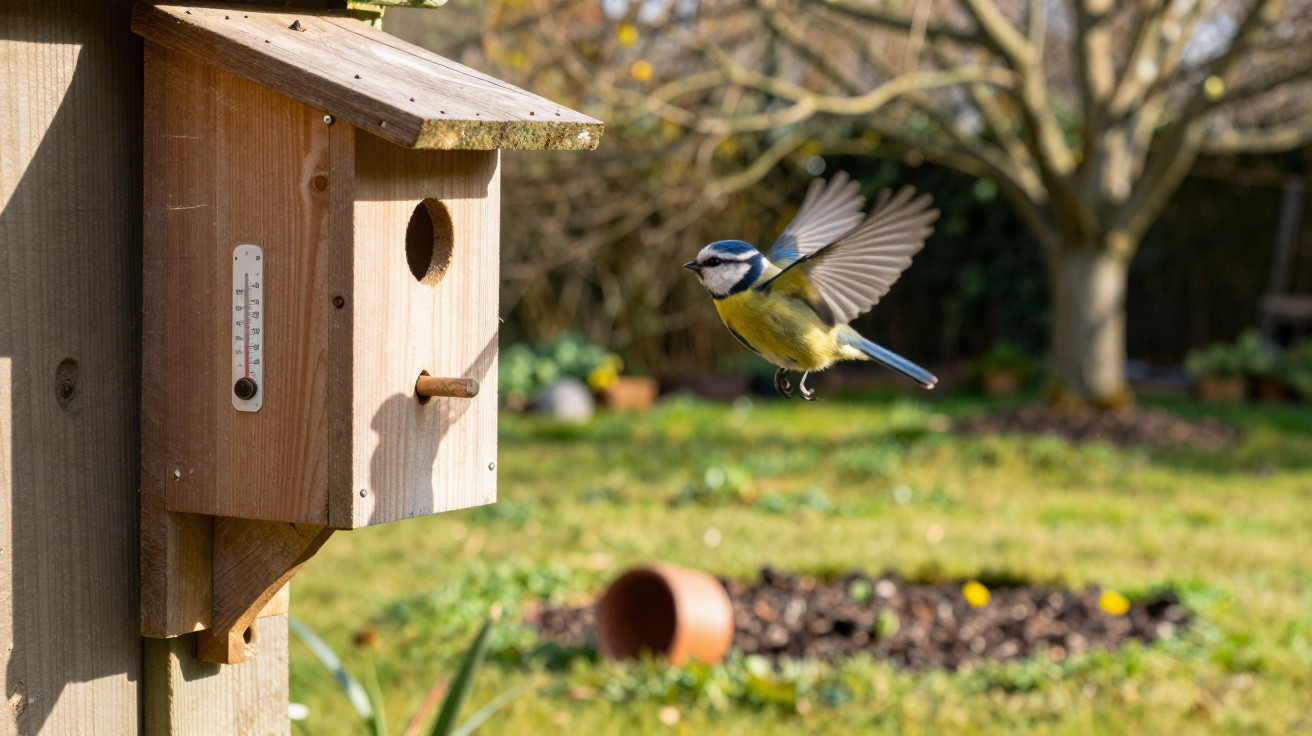
This disappointment is common: these small birds assess a potential home with surprising selectiveness. One poorly considered feature, sometimes impossible to spot from the patio, can be enough to make them reject the site.
Tits need a secure shelter in which to lay eggs, incubate them and feed their young over several weeks. Natural cavities are becoming scarcer in old trees, while renovated building façades provide few accessible cracks or holes. Putting up a nest box can genuinely help, provided the box does not become a hot, noisy place or one exposed to predators.
Entrance-hole diameter: the detail that can make everything fail
The entrance hole is the first feature a tit will assess. If it is too wide, larger birds, predators or unwanted visitors can get inside and disturb the brood. If it is too narrow, the bird simply cannot enter.
For a blue tit, an opening of 25 to 28 mm is usually ideal. The larger great tit generally favours a diameter of around 30 to 32 mm. Avoid nest boxes with a perch beneath the entrance: tits do not need one, while certain predators can use it to gain access.
A scorching position can doom the brood
A nest box facing south and left in full sun all day can become stifling as soon as the first warm spells arrive. Nestlings cannot escape the heat, and adults may abandon a site that is too dangerous. What seems like a cosy refuge can instead become an overheated little box.
Ideally, position the entrance towards the east or south-east, where it will receive gentle morning light without the intense afternoon heat. A lightly shaded location, sheltered by tree foliage or a building wall, provides a better balance. Tilt the nest box very slightly forwards so that rainwater cannot collect inside.
Height and quiet surroundings make tits feel safe
A nest box set too low is more likely to attract cats, curious children and passing animals. Ideally, install it between 2 and 5 metres high, on a tree trunk, sturdy post or a little-used wall. Its support must not shake or move with every gust of wind.
Keep it away from busy patios, frequently used doors and windows where repeated movement may alarm the birds. Leave a clear flight path in front of the entrance so parents can come and go quickly. Nearby branches can still serve as useful lookout points, but they must not give a cat easy access to the nest.
An overly tidy garden leaves parents without food
An empty nest box does not necessarily indicate a manufacturing flaw: it may point to a garden with too little food. While nesting, tits mainly catch caterpillars, spiders and small insects to feed their young. Closely mown lawns, constantly trimmed hedges and pesticide use greatly reduce this food supply.
Allow part of the garden to grow naturally, with long grass, native plants and a few dense shrubs. Where it is safe to do so, retain dead wood, fallen leaves and small wild corners where insects can thrive. This unobtrusive abundance can determine whether a nest box is ignored or becomes home to an active brood.
Habits that drive birds away
Opening the nest box to check whether it is occupied is a risky mistake during spring. Although curiosity is understandable, repeated disturbance can lead adults to leave their eggs or chicks. Instead, watch the parents’ quick comings and goings from a distance, without lingering close to the entrance.
Also, do not place a bird feeder directly beneath the nest box. Seed attracts many birds, creates disturbance and may draw predators into the garden’s most sensitive area. Keep the water source and feeder several metres away, in a visible space that remains separate from the future nest.
Before deciding that tits are simply fussy, check these essential points:
- an entrance hole suited to the species you hope to welcome;
- untreated, sturdy rough wood free from toxic products;
- an east- or south-east-facing position, away from scorching sunshine;
- a stable fixing between 2 and 5 metres high;
- no perch or branches that cats can use as access routes;
- an insect-rich garden without pesticides;
- cleaning carried out only in autumn, after the birds have left.
The right time to install and clean your nest box
You do not necessarily need to wait for warmer weather before putting up your nest box. Autumn and winter give tits time to find the location, inspect the shelter and sometimes sleep in it on cold nights. By spring, they will already recognise it as a familiar and potentially safe refuge.
After the breeding season, remove the old nest once you are certain that it is empty. Brush the interior with very hot water, using no detergent or scented product, then allow it to dry completely. This simple step helps limit parasites and gives future occupants a better chance of returning the following year.
A nest box never guarantees immediate occupancy, which is perfectly normal: tits choose a site according to its safety, available resources and the peace of the surrounding area. However, by correcting an oversized entrance hole, unsafe orientation or an excessively tidy garden, you significantly improve your chances. Your garden may then become the discreet refuge that tits urgently need.

Comments
No comments yet. Be the first to comment!
Leave a Comment