
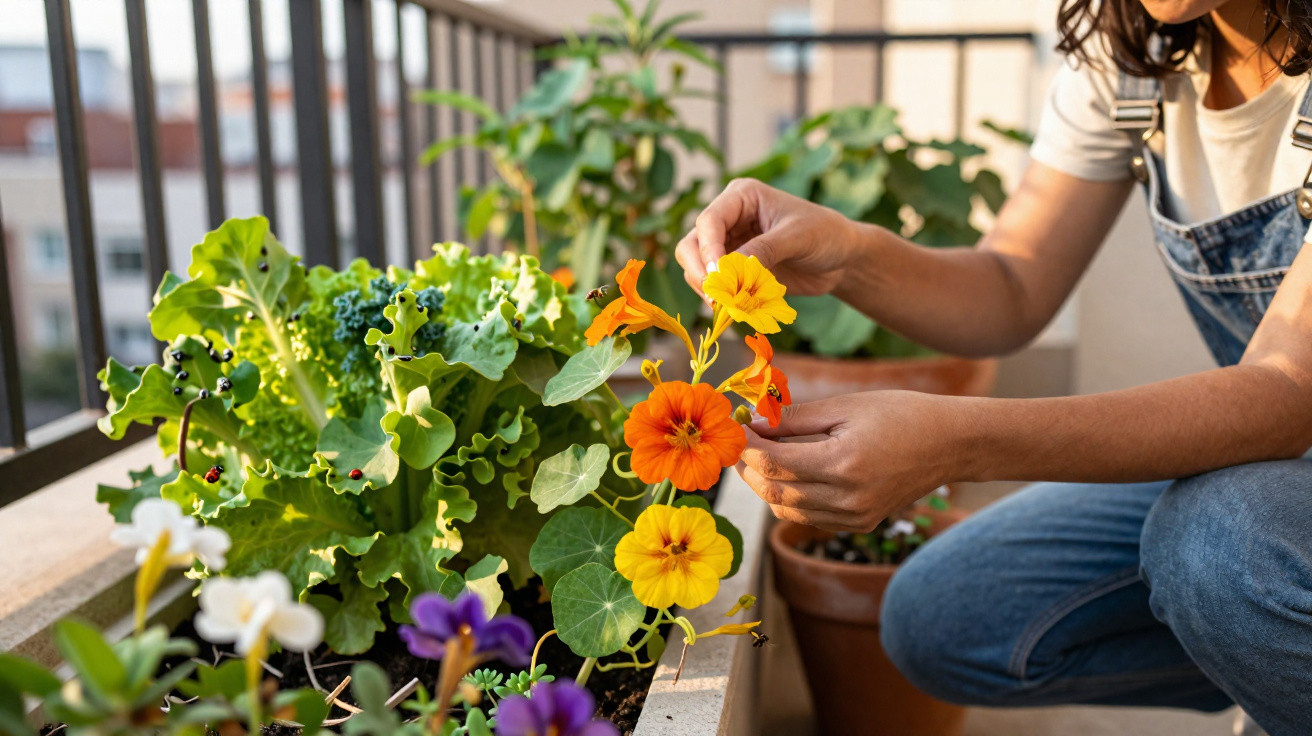
When planning a vegetable garden in spring, most people first think of tomatoes, courgettes and lettuce. Yet an old technique that earlier generations used as a matter of course is now attracting fresh attention: sowing one simple flower among the beds can protect vegetables, attract pollinators and lead to noticeably better harvests - all without chemicals.
Why this old gardening wisdom is making a comeback
For a long time, artificial fertilisers and sprays dominated the home garden. As a result, many of the natural relationships between plants were overlooked. Now, more gardeners are returning to mixed planting, healthy soil and beneficial insects rather than poisons. This is exactly where nasturtiums show one of their greatest strengths.
In the past, bright, trailing or bushy nasturtiums appeared in almost every cottage garden, growing alongside beans, peas, lettuce and brassicas. Today, more gardeners are once again buying their seeds, not merely for their appearance but because they perform several jobs in the vegetable bed at once.
Nasturtiums combine the roles of ornamental plant, pest trap and pollinator magnet - making them a small multi-tool for the vegetable garden.
Best timing: why starting in March matters so much
Once the hardest frosts have passed and the soil begins to warm, the busiest period in the garden gets under way. From March, nasturtiums can be started indoors or sown directly, depending on the region and weather conditions.
An early start gives the plants an advantage: they develop strong roots, plenty of foliage and their first flowers before the vegetable plants become properly established. Their protective barrier is therefore already in place when aphids, caterpillars and other pests arrive.
- From March: start seeds in pots on a windowsill or in a cold frame
- From April/May: sow directly outdoors in warmer areas
- From a soil temperature of around 10 °C: germination is much more reliable
The hidden shield: nasturtiums as sacrificial plants
The key benefit of this flower is that it acts as a deliberately planted “sacrificial plant”. Its leaves and shoots are extremely appealing to aphids, particularly black aphid species that often attack peas, beans or young shoots.
How nasturtiums draw pests away from vegetables
Rather than settling on French beans, broad beans or young brassica plants, aphid colonies tend to move onto the nasturtiums instead. In the most literal sense, the plant takes the trouble upon itself.
The idea is straightforward:
- Aphids fly in and search for an appealing food source.
- To them, nasturtiums resemble a buffet advertised in neon lights.
- The aphids gather on this plant and largely leave the vegetables alone.
This means vulnerable crops remain far better protected. A close look often reveals nasturtiums covered in black aphids, while the beans and peas growing beside them are still remarkably clear.
Natural pest control without chemicals
The effect does not stop there. Wherever aphids are plentiful, their natural predators soon follow: ladybirds, lacewings, hoverflies and their larvae. They find an abundant food supply on the nasturtiums and multiply rapidly.
Nasturtiums act like a feeding station for beneficial insects - anyone who grows them is breeding their own pest controllers.
Over time, a balance develops between large aphid numbers and plenty of predators. The infestation spreads far less readily to the remaining vegetables and can often be controlled entirely without sprays. If preferred, heavily infested nasturtium shoots can simply be cut off and disposed of in household rubbish - removing the main concentration of aphids at the same time.
Better harvests: flowers as a signal for bees and more
Nasturtiums offer far more than a pest trap. Their large, striking yellow, orange and red flowers stand out from a distance, not only to people but especially to bees, bumblebees and other pollinators.
A colourful landing strip in the vegetable garden
Among lush green beds, the flowers look like vivid landing points. They provide generous amounts of nectar and pollen, which is why they receive constant insect visits. Placing the plants strategically among vegetables turns the entire area into an attractive destination for pollinators.
The insects do not stay exclusively on the nasturtiums. They naturally visit nearby flowers too:
- tomatoes in beds or containers
- strawberries at the edge of the bed
- pumpkins, courgettes and cucumbers
- fruit trees close to the garden
More pollination generally means more fruit, better-developed pods and a noticeably larger overall yield - particularly in dry or still years, when pollen is not distributed effectively on its own.
Works on a city balcony as well as in a large garden
Whether it is a small back yard, a raised bed on a patio or an extensive kitchen garden, the effect is similar. In densely built-up urban neighbourhoods, flowering plants for pollinators are often scarce. Combining nasturtiums with vegetables creates a genuine refuelling stop for insects - and brings improved harvests in return.
How to use nasturtiums effectively in vegetable beds
Choosing the right position between the rows
Position has a major influence on the result. Rather than putting nasturtiums in an arbitrary corner, it pays to distribute them thoughtfully.
- Along bed edges: as a colourful border that intercepts pests
- Between rows: especially among beans, peas, brassicas and cucumbers
- Near fruit trees: as an attraction point for pollinators
- In raised beds: trailing varieties that fall decoratively over the edge
As a rough guide, place a small cluster of two to three seeds every 30 to 40 centimetres. This creates a loose network throughout the bed without allowing the nasturtiums to smother the vegetables.
Watering, soil and care - it could hardly be easier
Nasturtiums are considered undemanding. They cope with many soil types, provided the ground does not become waterlogged. During their early growth stage, they benefit from regular but moderate watering. The soil should remain lightly moist rather than soggy.
Important: water at the roots rather than constantly soaking the leaves - this reduces fungal risks for every plant in the bed.
In rich, heavily fertilised soil, nasturtiums mainly produce lush green growth and may develop fewer flowers. Anyone prioritising blooms and insect friendliness should avoid overfeeding them. A little compost is usually quite enough.
What many people do not know: cooking, health and choosing varieties
Alongside all their advantages in the bed, nasturtiums bring further benefits. Every part of the plant is edible: the leaves, flowers and even the still-green seeds.
- Leaves: mildly hot, similar to cress, and ideal for salads
- Flowers: attractive edible decoration with a peppery flavour
- Seeds: can be pickled as “false capers”
Nasturtiums are also valued in herbal medicine, partly because of their pungent mustard oils, which may have an antibacterial effect. For the home garden, the main point is simple: sowing them provides not only a defence system and better yields, but also an interesting kitchen ingredient.
When selecting a variety, it is worth considering its growth habit and colour. Trailing types are ideal for climbing along fences or canes, while compact bushy varieties remain more like colourful cushions in the bed. This makes it possible to choose the right “tool” for each garden setting.
Nasturtiums as part of a living garden
Anyone who consistently includes nasturtiums in their plans from March soon notices the difference: less trouble with aphids, more buzzing among the beds, stronger harvests and a clear visual improvement. The plant almost compels gardeners to see their plot not as a sterile production space, but as a small ecosystem in which every species has a role.
That is why it is worth checking the seed box once more before the rows of carrots, beans and tomatoes are finally decided. From March, a few handfuls of seeds from this old-fashioned, almost forgotten flower can alter the course of the entire vegetable-gardening season in a remarkably simple way.
Comments
No comments yet. Be the first to comment!
Leave a Comment