
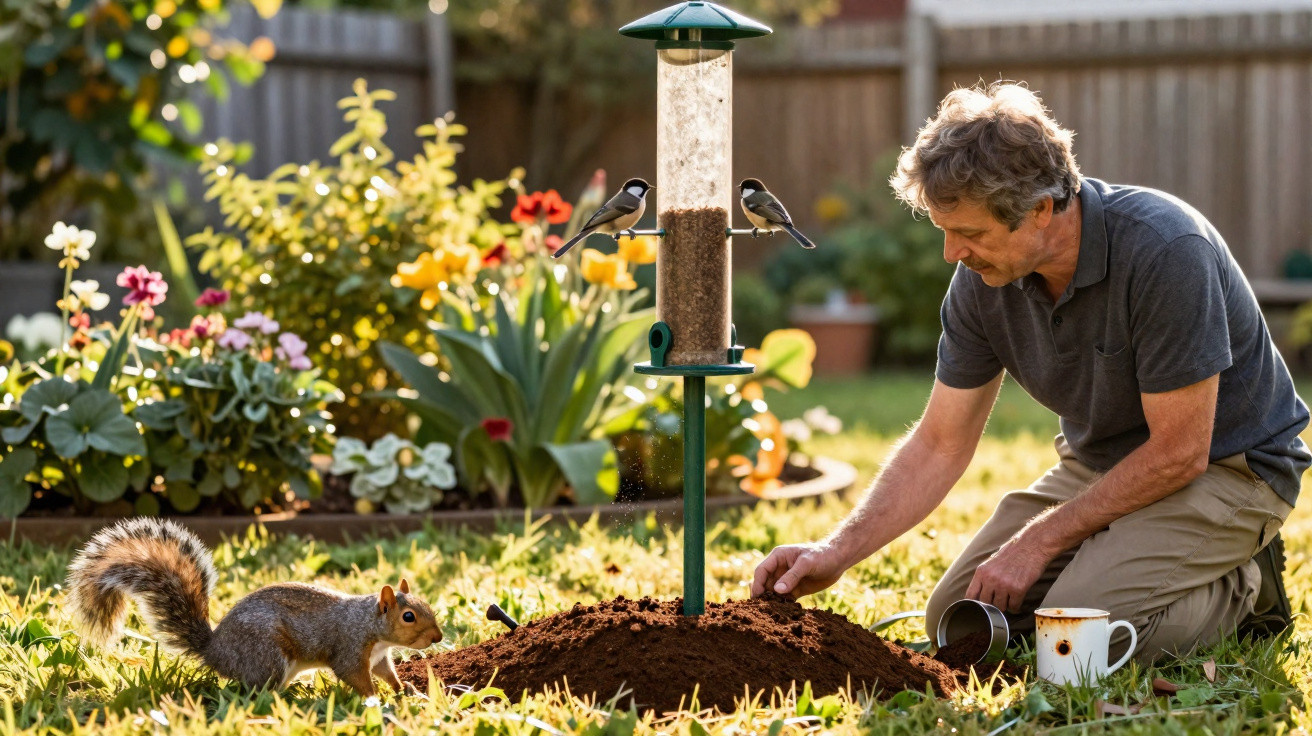
Coffee grounds may seem an unlikely answer, yet this tip is appearing in more and more gardens. Sprinkling a little coffee grounds around bird feeders could deter squirrels, which can make a real difference when seed vanishes within minutes.
Why gardeners are so drawn to this idea
During winter, a generously stocked bird feeder can become a genuine battleground. Birds arrive to peck at the food, only for a squirrel to appear and empty almost all of it. That is frustrating, particularly when you feed wildlife in your garden regularly and the cost mounts up.
The appeal of this tip lies in how straightforward it is. There is no need to buy a specialist product: you simply use the remains from your morning coffee. It is resourceful, inexpensive and easy to try at home.
The idea mainly relies on scent. Many gardeners find that squirrels dislike coffee’s strong smell, so they either come closer less often or give up sooner. As a result, the bird feeder can remain available to birds for longer.
Can coffee grounds really keep squirrels away?
Yes, although it is important to be realistic. Coffee grounds are not a magic barrier. A very hungry or particularly determined squirrel may still decide to have a go.
However, the smell can be enough to disrupt its usual routine. Often, that is all that is needed: a little discomfort may encourage it to look elsewhere in the garden. This is where the tip can prove useful.
It is also commonly described as a gentle approach. The aim is not to harm the animal, but simply to steer it away from the feeder. That distinction matters, especially for anyone who enjoys garden wildlife.
How to use coffee grounds around a bird feeder
The method could hardly be simpler. Use used coffee grounds, preferably once they are thoroughly dry. Scatter them in a ring around the base of the bird feeder, taking care not to put any directly onto the seed or feeding tray.
A commonly suggested amount is a layer around 2 to 3 cm deep around the base. There is no need to apply much more than this. The objective is to make a scented area, rather than a thick covering.
A practical guide is as follows:
- 1 cup of dry, used coffee grounds for a small bird feeder
- 2 to 3 cups for a wider area around a stand or pole
- 1 replacement each week, or after heavy rain
Rain quickly reduces the smell, and it also compacts the grounds. To retain their effect, they therefore need replacing regularly. Left in place for too long, they lose almost all usefulness.
Precautions to take for birds
This point is important. Coffee grounds contain caffeine, so they must never be mixed into the seed or placed where birds feed directly.
The right approach is straightforward: put them around the bird feeder, never inside it. Keep the table or tray clean as well. Clearing away leftover seed reduces mess and helps prevent other unwanted visitors from being attracted.
If the feeder stands on a support, make sure rain cannot wash the grounds up towards the food. Leaving a small safety gap is always sensible. It is better to be cautious than to feed birds something unsuitable.
Why squirrels cause so many problems in gardens
Squirrels are lovely to watch; there is no denying that. However, some of them, especially the grey squirrel, can become highly intrusive. They quickly identify a garden’s weak spots and return time after time.
They do not always stop at bird feeders. They may also nibble seeds, bulbs, fruit and sometimes even young shoots. In some cases, they can damage trees and structures around the home too. In short, they know how to make their presence felt.
This is why so many gardeners look for straightforward solutions. They want to protect birds without fitting an elaborate system. Coffee grounds meet that need well, at least as something worth trying.
Is this coffee grounds tip worth trying?
Yes, particularly if you are after a natural, quick and low-cost solution. There is little to lose by giving it a try. If it works in your garden, you may finally be able to watch tits, robins and sparrows enjoy their seed in peace.
What makes the method especially appealing is its common-sense approach. You make use of an everyday waste product, protect the bird feeder and retain a respectful attitude towards animals.
If you want to take things further, pair this tip with a well-designed feeder positioned at a suitable height. Avoid leaving seed on the ground too, as squirrels love an easy route. It is best to give them as few shortcuts as possible.
Ultimately, this small kitchen habit can change the feel of a garden. A little coffee, a little patience and, sometimes, the bird feeder finally becomes a peaceful spot for birds again.

Comments
No comments yet. Be the first to comment!
Leave a Comment