
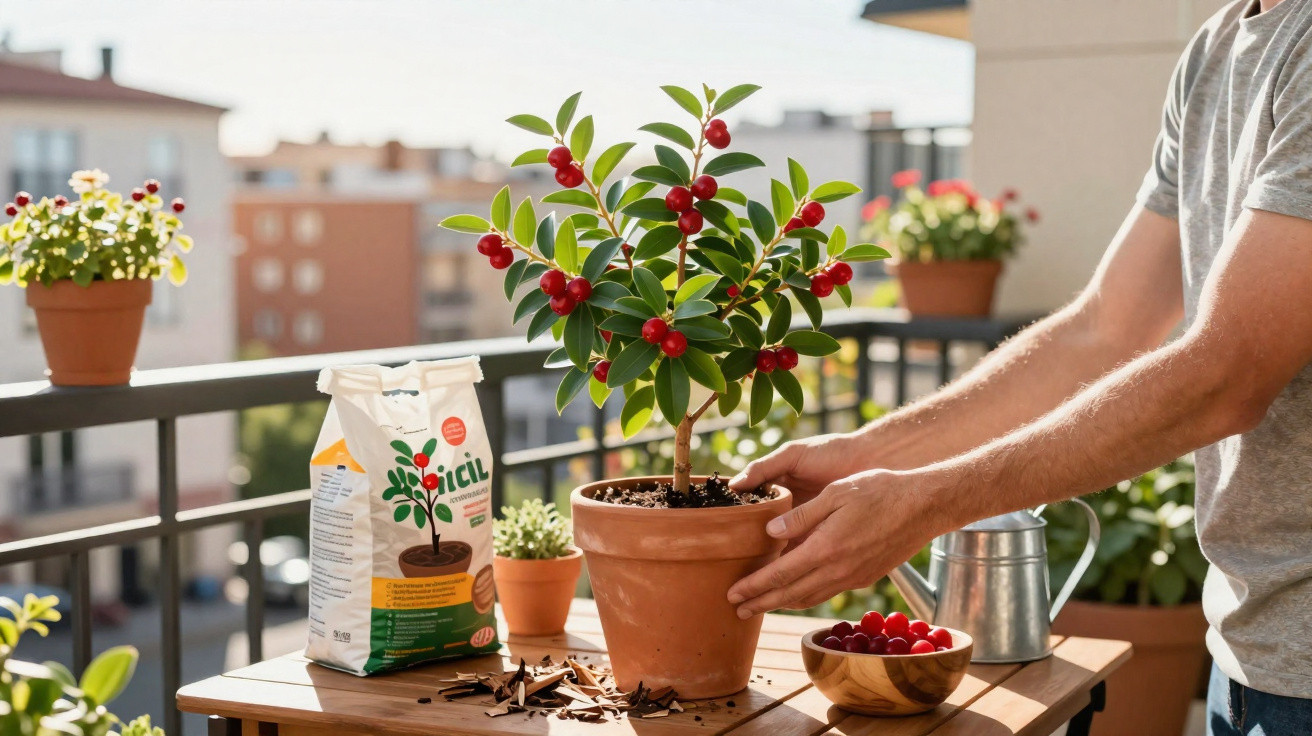
While many amateur gardeners are still dreaming of growing their own lemon tree, another exotic fruit shrub is quietly making its way into pots and containers. Murtilla, also known as Chilean guava, is ideal for compact city balconies, remarkably hardy and produces aromatic berries with notes of wild strawberry, kiwi and a hint of holiday sunshine.
A fruit shrub made for city balconies
Murtilla (Ugni molinae) originates in the temperate forests of the Andes. It grows there as a low, evergreen shrub – characteristics that make it particularly well suited to container growing in central Europe.
The shrub generally stays below 1.50 metres, has a compact habit and needs very little room – ideal for a balcony or small terrace.
For anyone short on space but unwilling to forgo home-grown fruit, this plant offers a surprisingly practical solution:
- compact growth and a bushy shape
- suitable for medium-sized pots and containers
- evergreen, making it attractive even in winter
- no elaborate pruning technique required
Its dense canopy even provides a little screening and adds structure to areas that might otherwise contain only herbs or a single olive tree.
Flavour notes of strawberry, kiwi and guava
Things become especially exciting once the first berries ripen. Visually, they resemble tiny reddish-purple spheres – rather like red miniature blueberries. Their flavour, however, is unexpectedly layered and remarkably complex.
Many gardeners describe the taste as a combination of:
- wild strawberry
- kiwi
- guava
- a gently spiced, warm finish
When allowed to ripen fully, the berries develop pronounced sweetness balanced by delicate acidity, making them perfect for eating straight from the shrub. They also work well in desserts, jams and flavourful sauces.
An evergreen ornamental plant with a fragrant bonus
The fruit is not its only attraction. The foliage remains on the shrub throughout the year. Small, firm, glossy dark-green leaves give the container a tidy, almost refined appearance.
From late spring, usually from May onwards, the flowers take centre stage. Murtilla then produces numerous delicate, whitish-pink bell-shaped blooms. Their sweet, subtle scent is clearly noticeable on a balcony or terrace and irresistibly attracts pollinators such as bees.
Fruit shrub, fragrant plant and evergreen focal point in one – that is murtilla’s real strength.
Easy to care for, provided the compost is right
Despite its exotic origins, this plant is surprisingly undemanding. The key factor is using the correct compost in its pot. Its roots are sensitive to lime. Those using hard tap water and ordinary garden soil will often find that the plant starts to languish.
The ideal compost for murtilla
This shrub has requirements similar to those of rhododendrons or blueberries. Its container should therefore be filled mainly with acidic compost. A proven mix includes:
- at least 60–70% peat-based compost or rhododendron compost
- mixed with a little high-quality compost
- a good drainage layer at the base of the pot, using expanded clay or gravel
A slightly acidic pH level encourages strong growth and healthy foliage. The plant does not tolerate waterlogging, so excess water must always be able to drain away freely.
How frost-hardy is the shrub really?
Its origins in the cooler parts of South America are an advantage here. Established plants can withstand short periods of temperatures down to around minus ten degrees Celsius. While this is sufficient in the ground in many areas, growing it in a pot is more challenging because the roots are exposed to the cold.
For container-grown plants, the following winter protection measures are useful:
- wrap the pot in horticultural fleece or a hessian sack
- stand the container on wooden battens or a polystyrene board
- move it as close as possible to a sheltered house wall
With a little winter protection, murtilla can manage perfectly well in many regions without a conservatory.
How to grow plenty of berries in a pot
For the shrub to be productive as well as attractive, watering and pruning are crucial. Its root system is relatively shallow and reacts badly to drying out.
Watering and mulch to boost yields
During summer, the compost should never be allowed to dry out completely. It should always feel lightly moist, but never wet. As waterlogging can eventually cause root problems, it is better to water smaller amounts more frequently. Low-lime rainwater is particularly beneficial for the shrub.
A mulch layer over the compost is especially effective, for example using:
- pine bark
- wood fibre
- linen or hemp bedding
Mulch limits evaporation, keeps the roots pleasantly cool and gradually makes the compost more acidic – exactly the conditions this plant prefers.
Gentle pruning for more flowers
There is no need for any sophisticated pruning skills. Once a year, ideally between late February and early March, a quick check with the secateurs is enough:
- remove dry, dead branches
- trim back overly long shoots slightly
- thin out branches that cross in the centre
This keeps the shrub compact and encourages better branching. More branches mean more flowers, and therefore more fruit.
A late harvest that extends autumn
By the time tomatoes have long been cleared away and conventional strawberries are a distant memory, murtilla is only just getting started. Its berries usually ripen from October into early winter and, depending on the location, may continue until the first harder frosts.
Anyone picking fresh fruit from their own balcony in late autumn soon understands why this shrub is considered an insider tip.
The berries are picked by hand. Ripe fruit comes away easily and has an intense fragrance. It can be:
- eaten straight away
- made into jam and jelly
- used in fruit sauces for desserts
- added as a topping for yoghurt and porridge
A small berry with major benefits for urban nature
Alongside its culinary appeal, the shrub also offers ecological value. Its flowers attract bees and other pollinators, which is particularly important in densely built-up urban areas. The berries, meanwhile, provide food for birds and insects – provided people do not eat them all first.
Combining several different plants on a balcony creates a kind of miniature mosaic habitat. Murtilla works particularly well alongside herbs, ornamental grasses and other berry shrubs, such as blueberry or lingonberry. They all benefit from similar soil conditions, while the overall effect is varied and full of life.
Practical tips for beginners
Anyone planting this shrub for the first time can get plenty right by following a few straightforward guidelines:
| Aspect | Recommendation |
|---|---|
| Position | Bright, partially shaded to sunny, sheltered from cold winds |
| Pot size | At least 25–30 litres for mature plants |
| Compost | Acidic, loose and well drained |
| Feeding | Organic berry fertiliser or compost in spring |
| Watering | Keep evenly moist; avoid hard water and waterlogging |
| Winter protection | Wrap the pot and place it in a sheltered spot |
Many garden centres now stock the plant seasonally, especially in spring. Buying smaller plants saves money, although it requires a little more patience before the first worthwhile harvest.
Why this exotic shrub is worthwhile for balcony owners
Its combination of compact growth, appealing appearance and aromatic fruit makes this shrub an exciting alternative to traditional container plants. Unlike citrus trees, it requires neither intense sunshine nor winter accommodation with consistently above-zero temperatures.
Murtilla offers a gentle introduction for people new to growing fruit on a balcony: little pruning, manageable care and the rewarding feeling of having something unusual in a pot. Anyone already considering a balcony refresh in spring can use this Andean shrub to create an accent that brings lasting visual and culinary enjoyment.

Comments
No comments yet. Be the first to comment!
Leave a Comment