
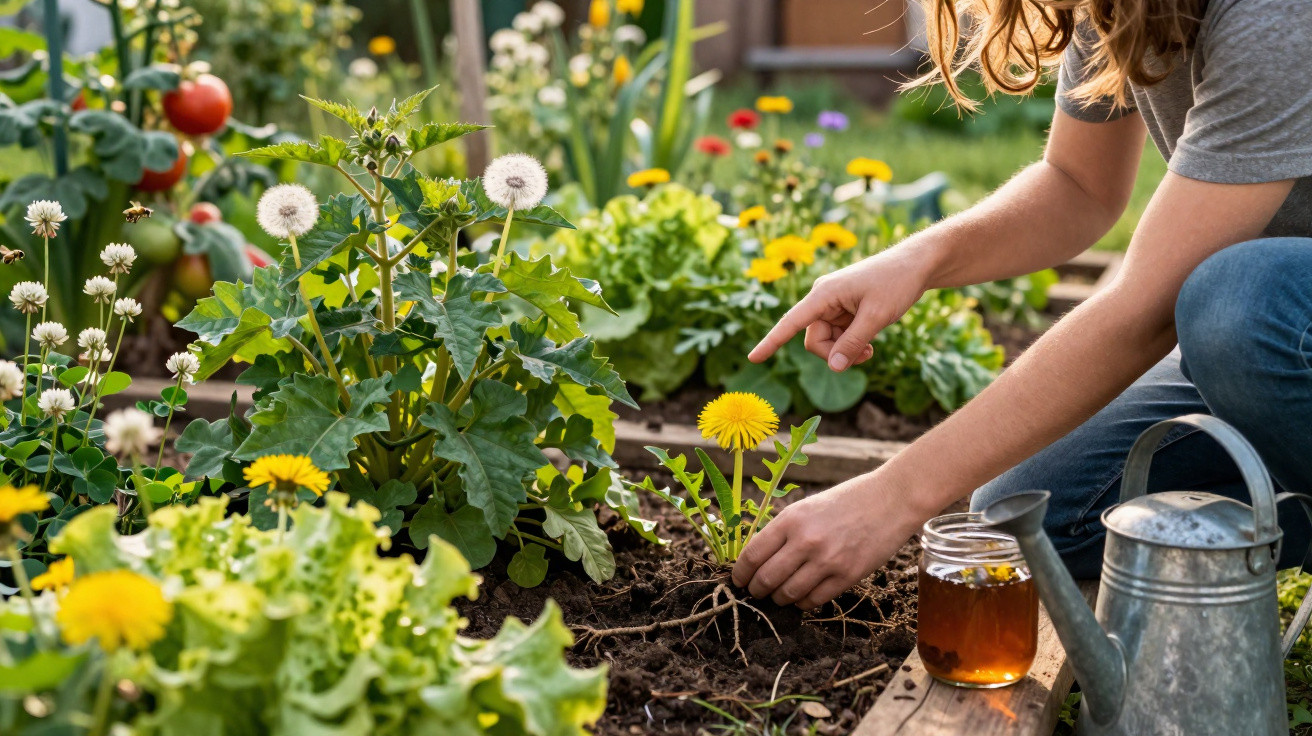
Anyone who is first to pull every piece of “weed” from the ground in March and April is not alone in that instinct. For decades, the rule was that only a neat, “clean” garden could be a good garden. However, research and practical wildlife-friendly gardening paint a different picture. Three plants in particular, often treated as enemies, can make a vegetable garden more stable, fertile and resilient.
Why reaching for the hoe can often backfire
The familiar scene: the bed has just been prepared, the first young plants are in place, and dandelions, clover or nettles suddenly appear between them. The fight begins immediately: pull them out before they “take over everything”. This reaction comes from an era when chemical fertilisers and herbicides dominated, and every self-seeded plant was seen as a nuisance.
That is precisely where the misunderstanding lies. Many of these wild plants work for the soil free of charge, attract pollinators and even provide nutrients for the kitchen and compost heap. Removing them without thought means losing quiet helpers that would otherwise cost plenty at the garden centre.
A garden without a single “wild” plant may look tidy – but it is often poorer in nutrients, insects and life.
Dandelion: the garden’s hidden soil engineer
Dandelions are regarded as the very definition of a “weed”. Yellow flower, seed head – and many amateur gardeners instantly see red. Yet underground, this very plant performs hard work that no spade can carry out as thoroughly.
A deep taproot for compacted soil
Its powerful taproot breaks through hard layers of soil, loosens compaction and creates channels for air and water. Where a spade merely scratches the surface, a dandelion pushes many decimetres down into the ground.
- Better aeration of the soil
- Improved water absorption during heavy rain
- Other plants’ roots can make their way through more easily
This is particularly useful for amateur gardeners: the amount of dandelion present reveals a great deal about soil quality. If only isolated plants appear, the soil is usually well structured. If dandelions cover entire areas, this points to severe compaction or an excess of organic material, especially animal-based matter – a free soil test right outside the door.
An early flower that helps save bees
While fruit trees and ornamental beds are often still in bud in spring, dandelion flowers are already fully open. Their nectar and pollen provide one of the first substantial food sources for honey bees, solitary bees, bumblebees and hoverflies.
After long, wet winters in particular, insects need energy reserves to build colonies and establish nests. A lawn where a few islands of dandelions are allowed to flower directly supports the pollination of the neighbouring vegetable bed.
Free wild vegetable packed with goodness
Dandelion is not only useful for the soil; it is also a proper vegetable:
- Leaves: for savoury salads or briefly steamed like spinach
- Flower buds: a base for aromatic “dandelion jam”
- Stems: cooked as a delicate spring vegetable
The plant contains plenty of fibre, beta-carotene, folic acid, iron and calcium – a free, local superfood that appears in the bed all by itself.
Clover: the small fertiliser factory in your lawn
Many gardeners fight clover in the lawn relentlessly, although it once naturally belonged in every seed mix. It was only with the rise of synthetic fertilisers that it was labelled an “unwanted weed”, helping bags of lawn feed sell more easily.
Nitrogen from the air rather than a bag
Bacteria live on clover roots and fix nitrogen from the air, making it available to plants. This nutrient then becomes accessible to the surrounding area as well – including the vegetable bed when clover grows nearby.
Clover replaces some of the expensive, energy-intensive nitrogen fertiliser – without plastic packaging or transport.
A lawn containing clover often looks greener and more vigorous without constant feeding. In a vegetable garden, clover can be used as underplanting to nourish the soil and protect it from drying out.
Benefits in heat and drought
Unlike many lawn grasses, clover develops deeper roots. As a result, it stays green for longer in dry summers and can draw water from lower soil layers.
- Lawn areas with clover dry out less quickly
- Ground cover protects soil from intense sunshine
- Less watering is needed during hot spells
For gardens increasingly affected by drought, this offers a clear site advantage – especially where water is expensive or scarce.
A flowering carpet for pollinators
Clover’s white and pink flowers are a magnet for insects: bees, bumblebees and many butterfly species use them as a food source. Anyone who does not keep the lawn cut to an exact short height, but instead leaves patches of clover standing, will automatically support pollinators for fruit trees, berry bushes and courgettes too.
Nettles: prickly helpers with a turbo effect
Few plants have a worse reputation than nettles. They sting, they spread – yet they are among the most important building blocks of an ecological garden.
An indicator of nutrient-rich soil
Nettles mainly grow where soil is rich in nitrogen and minerals, often near compost, manure or old sheds. Anyone with a patch of nettles in the garden knows that the soil there contains plenty of nutrients. This can be put to targeted use.
If they are allowed to grow in selected areas, the plants draw excess nutrients from the ground, store them in their stems and leaves, then release them again as they rot down or are made into plant feed.
A home for dozens of animal species
Life thrives around nettles. Countless insect species feed on them, lay their eggs on them or use them for shelter. Around 30 species depend directly on nettles – when nettles disappear, so do they.
These include striking butterflies such as the peacock butterfly, small tortoiseshell and red admiral. Even a small strip of nettles at the edge of the garden is often enough to ensure these butterflies appear regularly – and, as a bonus, also contribute to pollination in the vegetable garden.
Nettle feed as natural fertiliser and a protective shield
Nettles can be used to make one of the natural garden’s strongest “secret weapons”: nettle feed. To make it, roughly chop the plants, cover them with water and leave them to ferment for several days or weeks.
| Use | Effect |
|---|---|
| Diluted as watering feed | Boosts growth and provides plenty of nitrogen |
| Sprayed onto leaves | Makes plants more resistant to pests |
| Applied directly to infestations | Deters aphids and mites |
Anyone who tolerates a small nettle corner beside the compost heap has a continual source of liquid feed and valuable compost material.
How to manage these plants wisely in the garden
This is not about allowing dandelions, clover and nettles to run wild everywhere. What matters is giving them space deliberately – while setting clear boundaries.
Practical day-to-day tips for vegetable beds
- Dandelions: Let a few plants flower, but pull them out selectively from beds before they set seed fully, especially when they are directly beside young plants.
- Clover in the lawn: Set the cutting height to around 5–7 cm, avoid lawn fertilisers that are extremely high in nitrogen, and deliberately leave patches of clover.
- Nettles: Allow them in one clearly defined area, for example behind the compost heap; cut the plants before seeds form and use them for liquid feed or compost material.
The question is not “How do I get rid of them?”, but “Where do they help me most?”
Why a wilder garden often works more reliably
Many gardens have been so thoroughly “tidied” over the years that hardly any room remains for self-seeded plants. Immaculate ornamental lawns, borders without a single “outsider”, everything neatly covered in bark mulch – it may look orderly, but it removes many buffer zones from the system.
Dandelions loosen the soil, clover supplies nitrogen, and nettles support beneficial insects while filling the watering can with natural fertiliser. Those who exclude all of this and instead rely on artificial fertiliser, pesticides and sterile surfaces become dependent on products that cost money and often reduce biodiversity in the garden.
The effect on the whole system is particularly interesting: more flowers from clover and dandelions bring more pollinators, nettles attract predators of aphids, and the soil becomes more alive through roots and dead plant material. Many pests are therefore naturally kept under pressure, without any spraying being needed.
Especially in a time of climate change, dry spells and insect decline, it is worth taking a fresh look at what was long dismissed as “dirt in the bed”. Anyone who plans intelligently for these three plants not only saves fertiliser and effort, but also creates a garden less likely to falter when conditions are not ideal.


Comments
No comments yet. Be the first to comment!
Leave a Comment