
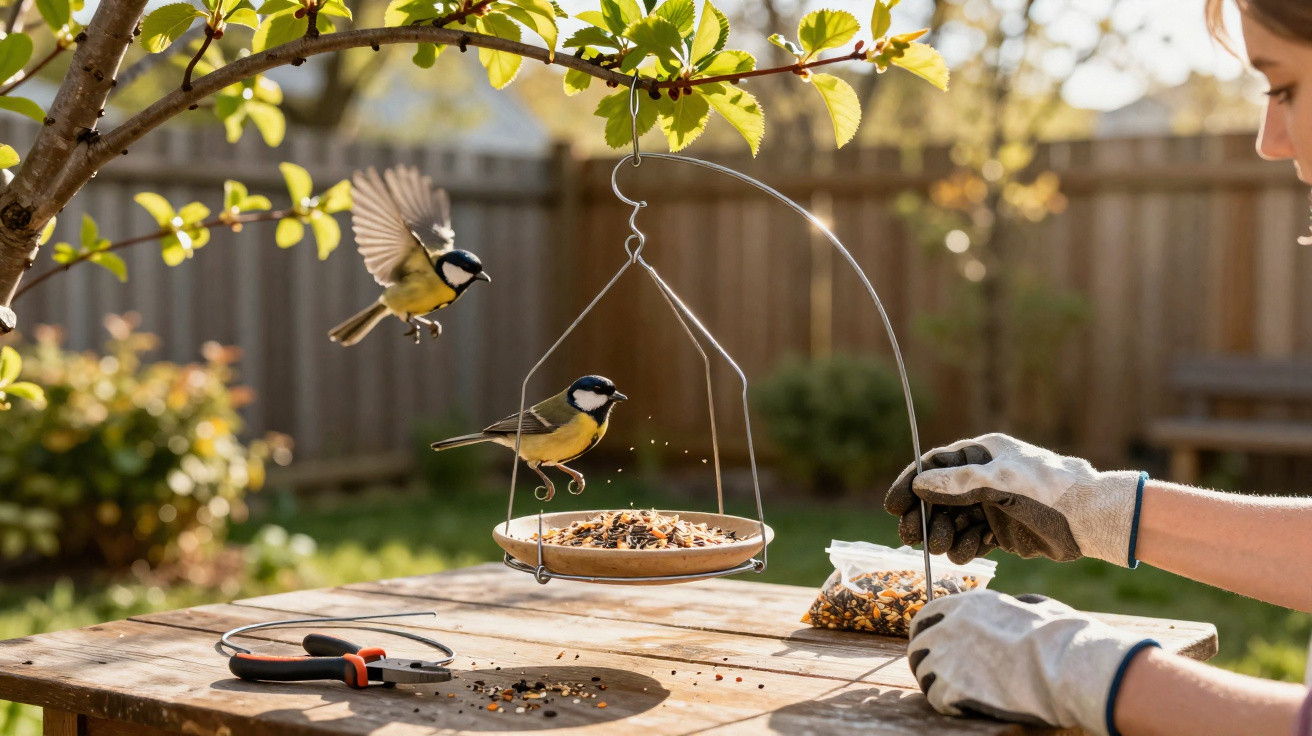
Yet this everyday object can be turned into a sturdy, practical and free hanging bird feeder in just a few minutes. Before spending money on an expensive model from a garden centre, take a look at what is already in your home: the next useful thing you do for birds may be hiding there.
When cold weather limits natural supplies, small birds need energy sources that are both accessible and safe. A homemade feeder is no substitute for their natural habitat, but it can provide valuable extra food when seeds, insects and berries are scarce. Above all, it lets you turn waste into a lively viewing point right outside your window.
An unwanted hanger can become a useful refuge
The best option is a slim wire hanger, often brought home from the dry cleaners. Because it is flexible, it can be straightened and reshaped without specialist equipment. However, avoid hangers that are heavily rusted, brittle or coated in flaking plastic.
This wire can hold a small amount of food, provided you do not overload it. A cut apple, a few pieces of fruit or a shallow container of seeds is more than enough. The aim is not to make a large structure, but to create a subtle, secure support for garden birds.
Get your work area ready before you begin:
- a clean, rust-free wire hanger;
- wire cutters or combination pliers;
- round-nose pliers for making loops;
- thick gloves to prevent cuts;
- half an apple, suitable bird seed or a clean bottle base;
- a file or strong tape to cover a metal end.
Making the wire hanger bird feeder takes only a few careful steps
First, gently untwist the section close to the hanger hook. Then unfold the wire until you have one long stem that is as straight as possible. Take your time: pulling too sharply can create a weak point or send the metal end towards your hands.
After straightening the wire, retain the top hook or use the pliers to shape a new one. This hook will allow you to hang the feeder from a branch or a fixed support. Make sure it is properly closed so that wind cannot knock your creation to the ground.
Two easy designs can feed visiting birds
To offer fruit, shape the lower part of the stem into a tight spiral measuring roughly five centimetres across. Leave a vertical point protruding from the centre of the spiral, then push half an apple onto it. The fruit will stay in position while remaining easy to replace once it starts to spoil.
For seeds, make a horizontal ring that can hold a small container instead. A carefully cut plastic bottle base can be suitable, as long as any sharp edges are smoothed or covered. Make two small holes opposite each other, thread the hanger wire through them and tighten it with the pliers to secure the dish.
Never leave an uncovered sharp point within reach of birds or children. Bend every end inwards and turn it into a closed loop. This simple measure prevents needless injury and helps the support withstand repeated movement.
Choosing the right spot prevents the most serious hazards
A bird feeder placed too low can quickly become a hunting ground for cats. Hang it more than 1.5 metres above the ground, on an open branch or beneath an overhang, away from a ledge that is easy to reach. Birds need a clear view of danger and enough space to leave without striking a window or another obstacle.
Keep it some distance from windows, particularly those that reflect the sky or trees. A collision with glass can be fatal, even if it appears minor. If you place the feeder close to the house for easier viewing, add visible markers to the window to reduce this danger.
Food choices and hygiene make all the difference
Unsalted sunflower seeds, small pieces of apple and plain peanuts appeal to many species. Do not use bread, milk, salty foods, cooked meal leftovers or mouldy products. They can cause digestive problems or attract pests into your garden.
Do not overfill the feeder: a small, fresh amount is better than a large supply that becomes damp. Wash the container regularly in hot water and dry it before adding more food. If several birds seem unwell, or droppings build up, take the feeder down temporarily and disinfect it carefully.
Finally, adjust feeding to the season and to local guidance. During milder spells, birds generally have access to more natural food and should keep their normal foraging habits. In winter, your recycled hanger can provide welcome support; when warmer days return, use it occasionally with fresh fruit before putting it back in the shed.
This simple project costs nothing, cuts down on waste and turns a quiet part of the garden into a daily spectacle. You may be surprised by how quickly tits, sparrows or robins find this new feeding spot. A single length of wire, a little care and a few seeds may be all it takes to create a cheerful appointment outside your window.

Comments
No comments yet. Be the first to comment!
Leave a Comment