
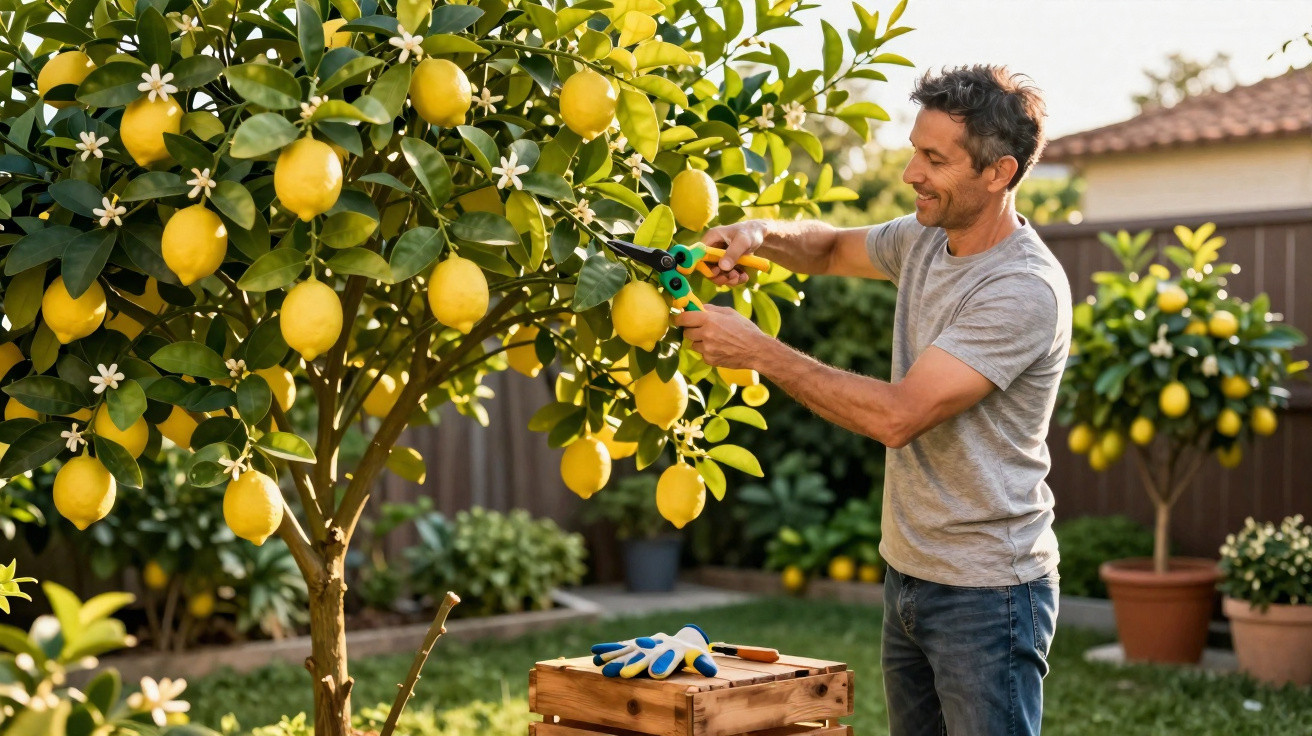
Many amateur gardeners do not realise how much a single, well-timed pruning session can determine whether a lemon tree struggles or produces baskets full of fruit.
There is a brief window between the end of winter and spring when citrus trees such as lemons, oranges, mandarins and grapefruits can be given a real boost with just a few careful cuts. Reaching for the secateurs now strengthens the trees, helps prevent disease and can result in considerably more fragrant fruit in summer.
Why pruning before spring is so beneficial
Citrus plants behave differently from many traditional fruit trees. They do not enter a complete dormant period in winter; instead, their growth merely slows down. As daylight hours lengthen and temperatures become milder, sap begins to rise, buds swell and the first flower buds form.
“Anyone who waits to prune until the tree is already covered in buds is effectively removing part of their own harvest.”
Pruning shortly before this surge in growth directs the tree’s energy straight into healthy new shoots. In this transitional period, pruning wounds can heal well without severe frost interfering. The plant therefore enters the season strongly and responds with vigorous new growth.
More flowers, more fruit: the principle behind it
Citrus fruit develops mainly on young, one-year-old shoots. These later carry clusters of flowers that go on to produce fruit. If old, exhausted branches are left untouched, they take up light and space while yielding very little.
A carefully planned cut provides:
- more young fruiting wood
- improved light penetration throughout the canopy
- foliage that dries more quickly after rain
- more evenly coloured, more aromatic fruit
The canopy becomes more open, allowing sunlight to reach the centre of the tree as well. This encourages flowering and ripening. At the same time, fungi are less likely to spread through shaded, damp areas.
Protecting citrus trees from disease through pruning
Thick, neglected canopies are ideal hiding places for pests such as scale insects and aphids. They shelter in branch forks, behind old dead twigs and within matted foliage.
Removing these trouble spots achieves three things at once:
- Weak or infested shoots are removed from the tree.
- Air circulates more freely, so moisture is less likely to build up.
- Inspection and organic treatments, such as soft-soap solution or oil-based preparations, become easier to carry out.
Fungal diseases and other damage can also spread more rapidly in dense growth. Where light and air can circulate, they have a much harder time establishing themselves. If necessary, larger pruning wounds can be covered with a wound sealant to stop pathogens and moisture from taking hold there in the first place.
Step by step: pruning lemon trees and other citrus plants
Before cutting into the wood, take a calm look at the whole plant. The aim is a sturdy, well-lit tree with a balanced shape - not a radically stripped framework.
1. Remove dead and diseased wood
First, cut away any branches that are clearly dead, badly damaged or visibly diseased. Signs include:
- brown, dry wood that snaps easily
- black, sunken patches or sap seepage
- foliage heavily coated in sooty deposits, which indicate sooty mould fungi
Cut these areas back to healthy wood. The cut surface should look pale and fresh rather than grey or brownish.
2. Thin out the canopy
The second stage concerns the tree’s structure. There should not be a dark, completely overgrown area in the middle of the canopy. Remove individual weak or crossing branches so the main limbs are clearly visible again.
“As a rough rule, you should be able to see through the tree from the outside without it looking bare.”
It is particularly useful to remove shoots growing inwards. They shade the centre, rub against other branches and create wounds where disease can later take hold.
3. Control the length while retaining the shape
Anyone growing their citrus plant in a pot also needs to keep its size in check. Overlong shoots may be shortened, ideally just above an outward-facing bud. The branch will then continue growing in the desired direction.
Do not remove too much, however. Around one third of the total leaf mass is a useful general limit. Severe thinning drains the tree’s energy and delays the development of young shoots.
How the right tools make all the difference
Clean cuts heal better, do not tear and offer pathogens fewer entry points. It is therefore worth checking your equipment:
- Sharp secateurs for thinner branches
- Loppers for thicker wood
- A small hand saw for older, woody sections
Clean the blades before use and, ideally, disinfect them - especially after cutting diseased branches. This prevents germs from being transferred from one tree to another.
Common citrus pruning mistakes - and how to avoid them
Many citrus tree problems stem from well-intentioned but incorrect pruning. Three common mistakes occur time and again:
| Mistake | Consequence | Better approach |
|---|---|---|
| pruning too late in the year | flower buds are lost and the yield drops sharply | schedule pruning for late winter to very early spring |
| cutting back too heavily | the tree becomes weak and puts out shoots later | remove no more than around one third of the canopy |
| only trimming the top | the canopy centre remains dense and disease persists | thin selectively and improve the structure from the inside |
What still matters after pruning
Even the best pruning will have little effect if the tree is later kept in unsuitable compost or suffers from a lasting nutrient deficiency. Shortly after pruning, it is therefore worth reviewing its position and care:
- a bright location, sheltered from wind where possible
- specialist citrus compost or a very free-draining growing medium
- regular feeding with citrus fertiliser from spring onwards
- avoid waterlogging consistently, while watering evenly
Freshly pruned trees respond well to a moderate initial feed as soon as the first new leaves appear. This ensures enough energy is available to support the many new shoots and flowers.
Why being brave with the secateurs is worthwhile
Many gardeners hesitate because they worry about “taking too much off”. As a result, their plants gradually become unproductive, bear fewer and fewer fruits, and become more vulnerable to pests. Those who are willing to make thoughtful cuts, on the other hand, are usually rewarded in the same season.
A well-maintained lemon or orange tree has a dense but not overcrowded canopy, plenty of flowers in spring and fruit distributed evenly from the outer edges to slightly further inside. Care also becomes easier, as you can reach into the canopy, spot pests early and pick fruit conveniently.
With a little practice, annual pruning takes scarcely more than a few minutes per tree. Anyone who takes the step of shaping their citrus plants before spring will soon see how one carefully planned intervention can make the difference between decorative greenery and a plentiful harvest.




Comments
No comments yet. Be the first to comment!
Leave a Comment