
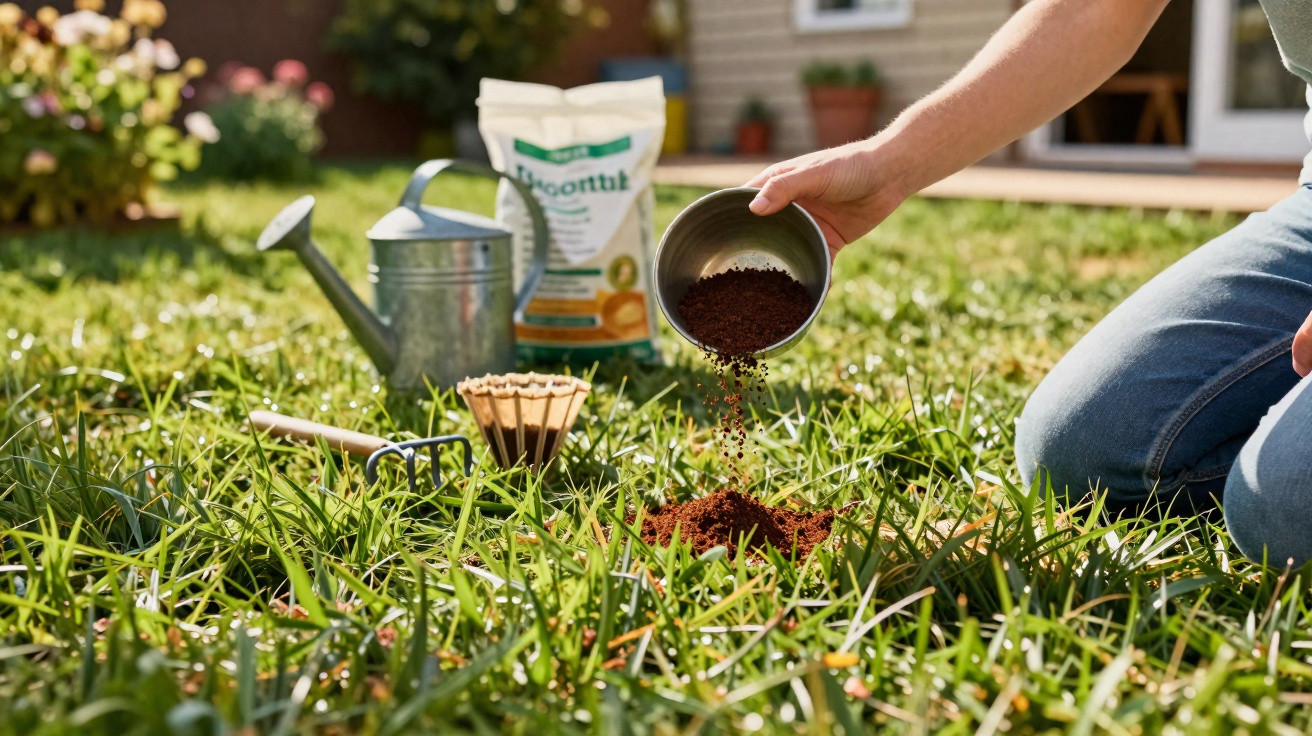
While lawn owners curse bare patches and dandelions, a valuable resource is being thrown into the bin every morning: coffee grounds. What looks like ordinary breakfast waste can improve the soil, encourage thicker grass and considerably reduce the need for costly lawn fertilisers. Used correctly, this unassuming leftover can make a noticeable difference to the lawn in spring – without chemicals or magic.
Why coffee grounds can noticeably improve your lawn
Coffee grounds are far more than brown residue from the filter. On average, they contain around two per cent nitrogen, alongside phosphorus, potassium and various trace elements such as magnesium. This is precisely the combination grass needs to grow a rich green colour and fill bare patches more quickly.
When a fine layer is spread across the lawn, several useful processes take place in the soil:
- Improved growth: Nitrogen supports leaf growth, helping the lawn become thicker and more robust.
- Richer colour: The nutrients promote a deeper green rather than pale blades of grass.
- Fewer weeds: A dense grass cover leaves little room for unwanted plants.
“Coffee grounds act like a gentle, natural fertiliser: a denser lawn, fewer weeds and less time spent on your knees.”
There is also an effect on soil life. Tiny organisms in the ground use coffee grounds as food. Earthworms are attracted to them too, pulling the particles down into deeper layers while aerating the soil in the process. It is similar to giving the lawn a very light, regular aeration – only free of charge.
The pH value is another consideration. Coffee grounds are mildly acidic. On very lime-rich, more alkaline soils, this can be useful because it softens extreme values slightly. However, care is needed: on soils that are already acidic, an excessive amount may weaken the lawn. Well-rotted coffee grounds from the compost heap are a better choice in that case.
Gardeners also report that a thin, dry layer on the surface can disturb some small pests, including ants around vulnerable young plants. It is not a miracle cure, but it can be a minor additional benefit.
How to use coffee grounds on your lawn properly in spring
For coffee grounds to benefit the lawn, preparation and quantity both matter. The most common mistake is tipping damp grounds straight from the coffee machine on to the ground. They then stick together, form clumps and prevent water and air from getting through.
Drying coffee grounds correctly
First, the coffee grounds must dry out completely. A baking tray, serving tray or simply baking paper on the worktop is ideal. Spread them out thinly, stir them from time to time and leave them for two days until the material is crumbly. This gives mould little chance to develop and makes the grounds easy to distribute.
The right amount per square metre
A standard lawn needs only a moderate dose:
- approximately 40–50 grams of dry coffee grounds per square metre for ongoing care
- up to 70 grams per square metre when mixed with compost
- no more than two full-dose applications across the whole lawn each year
If you are unsure, begin with less and watch how the lawn responds. Bare areas will usually recover within a few weeks, provided the rest of the care routine is suitable.
The best times of year
Two periods are particularly suitable:
- Spring: As soon as the lawn starts growing again and temperatures remain consistently above around 8 °C.
- Early autumn: After summer heat, to strengthen the lawn ahead of winter.
The method is straightforward:
- choose a lawn that is slightly damp, but not muddy or frosty
- scatter dry coffee grounds in a very fine veil
- gently work them in using a rake or leaf rake
- let rainfall or light watering do the rest
“Distribution is crucial: it is better to apply very thin layers frequently than one thick layer all at once.”
Common mistakes and limits of coffee grounds in the garden
Useful as coffee grounds can be, they cannot do everything. Above all, overdoing it reverses the benefit. Thick layers that are still damp become compacted, create a crust-like surface and allow hardly any water or air to reach the roots. The result can be yellow or brown patches that look scorched.
Trials using extreme quantities – amounts in the kilogram range per square metre – clearly show that hardly any grass grows under those conditions. That is far beyond the quantities produced in everyday life, but it demonstrates that more is not automatically better.
On soils that are already very acidic, such as in areas with heavy rainfall and little lime, use coffee grounds sparingly. Too much can lower the pH value further and weaken the lawn over time. In these situations, it is worth mixing the grounds into the compost heap first, then applying them later as part of a balanced compost.
Lawn care steps that greatly boost the effect
Coffee grounds alone will not turn a neglected patch of grass into a golf-course lawn. They work as one part of a wider care routine. Combining them with a few straightforward measures produces noticeably faster results.
Overseeding, light scarifying and targeted weeding
Three measures work particularly well alongside coffee grounds:
- Annual overseeding: Spread fresh lawn seed in a thin layer during spring or early autumn, ideally after scarifying.
- Light scarifying: Once a year, cut into the thatch layer so oxygen and nutrients can reach the roots more effectively.
- Targeted removal of problem weeds: Dig out individual nuisances such as dandelions completely, including the root.
“Anyone who overseeds after scarifying and then uses coffee grounds in small doses gives the lawn a genuine fresh start.”
The combined effect is clear: the lawn closes over, weeds lose the gaps they need and the need for chemical products falls noticeably. Spending one or two hours per year on these tasks saves many frustrating weed-removal sessions in high summer.
Practical kitchen tips for collecting coffee grounds
An average household produces a surprisingly large amount of coffee grounds. Anyone using filter coffee or a French press can easily collect 30 to 50 grams each day. Over a few weeks, that adds up to enough material for an ordinary lawn area.
A practical approach is to:
- spread the grounds on a tray or plate after every brew
- leave them to dry by an open window or on the balcony
- collect them in an old screw-top jar or bucket and store them somewhere dry
Coffee capsules are only of limited use. Although their contents are similar, the capsules need to be opened laboriously and the grounds separated cleanly. Those who already own a capsule machine can use a small amount in selected spots, but should not underestimate the effort involved.
When other fertilisers are better – and how to combine them
Coffee grounds do not replace a lawn fertiliser with a precisely balanced nutrient mix. Heavily used areas, such as family lawns used by children or dogs, will often need an additional organic or organic-mineral fertiliser.
Useful combinations can look like this:
- in early spring: a conventional organic lawn fertiliser
- in late spring: a thin layer of coffee grounds as a “snack” between feeds
- in autumn: another moderate fertiliser with an emphasis on potassium, plus some coffee grounds or compost
For an entirely natural approach, coffee grounds can also be mixed with grass cuttings and leaves in the compost heap. This creates a versatile compost that can be spread over beds and lawns the following year. Its effect develops a little more slowly, but lasts longer.
Ultimately, the difference does not come from expensive specialist products from the garden centre, but from a few sensible steps – and a look in the coffee-grounds container after breakfast.





Comments
No comments yet. Be the first to comment!
Leave a Comment