
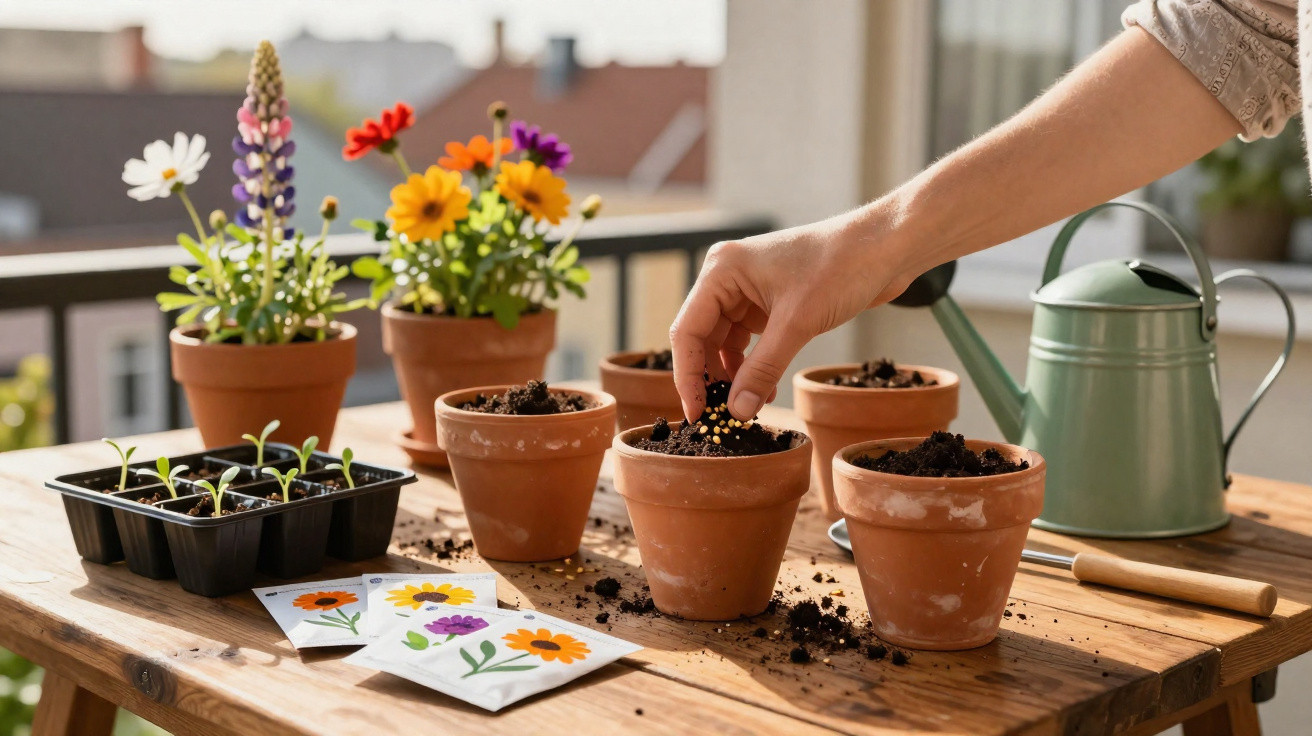
In March, many amateur gardeners are eager to get started. The first warm sunshine arrives while the soil remains cool, and packets of seeds are waiting to be opened. This is the moment that shapes how colourful beds, containers and window boxes will look from May until autumn. Choose suitable varieties and follow a few straightforward tips, and this in-between month can become the launchpad for a long flowering summer.
Why March is such an exciting month for flower sowing
March is a true transitional month: daylight noticeably increases, the light becomes stronger and the ground gradually thaws, yet frost can still occur overnight. That combination is exactly what makes it so appealing. Many annual flowers can be started especially successfully now – indoors on a windowsill, in a cold frame or, in milder areas, straight into the bed.
There are broadly three ways to sow:
- warm indoor sowing on a windowsill, in an unheated conservatory or beneath an indoor propagator lid
- sowing with simple cold protection, for example in a cold frame or beneath a polytunnel
- direct sowing outdoors, once the soil is no longer frozen or waterlogged
Sensitive varieties prefer temperatures of around 18 to 24°C, while others grow well at 15 to 21°C. A stable, gently warm setting encourages rapid germination and sturdy young plants.
Fine, clean seed compost, evenly moist but never soaking soil, and plenty of light are half the battle for healthy flower seedlings in March.
The 7 best flowers to sow in March
1. Pot marigold – an easy classic with edible flowers
Pot marigolds are among the most rewarding annuals to grow. They are an excellent choice for beginners, as there is very little that can go wrong. They suit vegetable plots, herbaceous borders and window boxes alike.
- Sowing: from March directly into the bed in mild areas; otherwise, begin them in small pots
- Position: full sun to partial shade
- Germination time: usually 7–14 days
Their bright yellow to orange flowers attract numerous insects and can also be eaten. The petals add bold colour and a mildly spicy flavour to salads, herb butter and rice dishes.
2. Cosmos – airy summer clouds in pink and white
Cosmos bring an airy feel to every bed. Their finely divided foliage and large, open flower heads create what looks like a veil of colour over the planting.
- Sowing in March: in shallow trays or module trays, covered with only a thin layer of compost
- Germination temperature: around 18–22°C; a bright windowsill is ideal
- Pricking out: move seedlings into individual pots after emergence and lightly pinch out the shoot tips
Lightly pinching them out helps cosmos branch more freely and produce considerably more flowers. Once planted out, they prefer sun and fairly poor soil that is not overly rich in nutrients – this makes them less likely to flop and helps them flower for longer.
3. Sunflowers – an uncomplicated source of summer cheer
Sunflowers are the essence of summer. Sown indoors or in a sheltered outdoor spot in March, they gain an early start.
- Sowing: one seed per pot, 2–3 cm deep
- Germination time: one to two weeks
- Planting outdoors: from roughly 30 cm tall, after the risk of frost has passed
Those with only a balcony or terrace should choose compact cultivars bred specifically for containers. They need plenty of water and a sturdy pot, as wind can easily catch them.
4. Lupins – colourful flower spires with a soil benefit
With their tall flower spikes, lupins make a striking statement while still looking natural. They are particularly well suited to wildlife-friendly garden designs.
- Preparation: soak the seeds in water for 24 hours
- Sowing in March: in deep pots at around 15–21°C
- Transplanting: into the bed after the last frosts
Lupins develop deep taproots and do not tolerate transplanting particularly well. It is therefore better to raise them in larger, deep pots from the outset and avoid disturbing the rootball when planting out. With the help of root-nodule bacteria, they enrich the soil with nitrogen – especially useful alongside nutrient-hungry vegetables.
5. Flowering tobacco – fragrant evening blooms for seating areas
Flowering tobacco fills warm summer evenings with an intense scent. Plants can reach up to 1.5 metres in height and work well behind low-growing annuals or in large containers.
- Sowing: scatter over the surface only; do not cover with compost, as the seeds are dust-fine
- Germination: provide warmth and plenty of light, and do not allow the compost to dry out
- Later position: a sheltered site in sun or partial shade
To enjoy its fragrance, plant flowering tobacco near a terrace, seating area or open window. Many varieties open their flowers mainly in the evening as temperatures fall.
6. Celosia – fiery bursts of colour for window boxes
Celosias stand out for their feathery or flame-shaped flower heads. They bring vivid colour to pots and window boxes while remaining relatively compact.
- Sowing in March: in individual pots, preferably compostable ones
- Light germinator: press seeds gently onto the surface without covering them with compost
- Warmth: keep consistently warm, as they are sensitive to cold
Sowing in biodegradable pots offers a practical advantage: later, the plants can be placed in the bed or larger containers together with the pot, so their fine roots are not damaged.
7. Buenos Aires verbena – floating flower clouds for insects
Tall verbena, with its violet flower clusters, seems to hover over the bed like a haze and is a magnet for bees and butterflies.
- Cold treatment needed: place seeds in the fridge for around two weeks
- Sowing: then scatter them over moist seed compost and press down only lightly
- Position: later, choose a sunny and fairly dry spot; ideal for herbaceous borders
Its see-through habit makes Buenos Aires verbena ideal for planting among roses, grasses or perennials without obscuring them. In many gardens, the plants self-seed, creating a natural, slightly wild appearance.
The essential foundation: correct sowing techniques in March
Whatever flower variety you choose, a few basic March rules prevent most problems:
| Step | What to consider |
|---|---|
| Choose seed compost | Fine-textured, structurally stable, low in nutrients and as free from germs as possible |
| Sow the seeds | Avoid sowing too densely; use rows or leave spaces between seeds |
| Watering | Use a spray bottle or fine rose so the seeds are not washed away |
| Covering | Cover dark germinators with a thin layer of compost; simply press in light germinators |
| Ventilation | Air a mini greenhouse briefly each day to prevent mould |
Waterlogging is the enemy of every sowing: water small amounts more often rather than heavily and infrequently.
Hardening off young plants: the step often forgotten
One of the most common mistakes happens just before planting out: tender young plants are moved directly from the windowsill into strong sun and wind, then scorch or bend over. A short acclimatisation period is much better.
- put the pots outdoors for one to two hours on mild days
- protect them from wind and intense midday sun
- gradually extend the time they spend outside over a week
After hardening off, plants cope far better with the move into beds or larger containers and continue growing without shock.
How balcony and terrace gardeners can make the most of March
March is especially worthwhile for people without a garden. Many of the varieties listed grow extremely well in boxes and pots if a few points are considered:
- select adequately sized containers, ideally with good depth
- provide effective drainage using broken pot pieces or expanded clay
- use high-quality container or potting compost
- feed regularly later in the year, as nutrients are limited in pots
Pairings such as pot marigolds with Buenos Aires verbena, or cosmos with celosias, add structure and height to small spaces while still attracting plenty of insects – an important contribution to urban wildlife.
Common problems and how to avoid them
In March, cold weather and fungal diseases can occur at the same time. Two issues are particularly common:
- Seedlings “falling over”: Thin stems collapse at the base. This is usually caused by fungi in conditions that are too wet and poorly ventilated. Solution: water less, improve ventilation and, if needed, mix a little sand or vermiculite into the seed compost.
- Leggy plants: Shoots become long, thin and prone to falling over. This indicates too little light combined with too much warmth. Solution: move them somewhere cooler, choose the brightest available spot and, if necessary, use a grow light.
Sowing a few spare seeds early in the year makes it easier to compensate for losses caused by these problems and to refill individual pots if necessary.
More benefits from flowering plants: from insects to the kitchen
Many flowers offer more than good looks: pot marigolds and sunflowers provide edible flowers, while Buenos Aires verbena, flowering tobacco and cosmos are genuine insect magnets. Combining several of these varieties supports wild bees and butterflies for months.
One practical approach is to create a strip of flowering plants close to the vegetable garden. This keeps pollinators nearby and can partly draw pest insects away from sensitive crops. March marks the starting point: every seed sown becomes a building block for a lively, species-rich garden that provides colour from spring through to autumn.

Comments
No comments yet. Be the first to comment!
Leave a Comment