
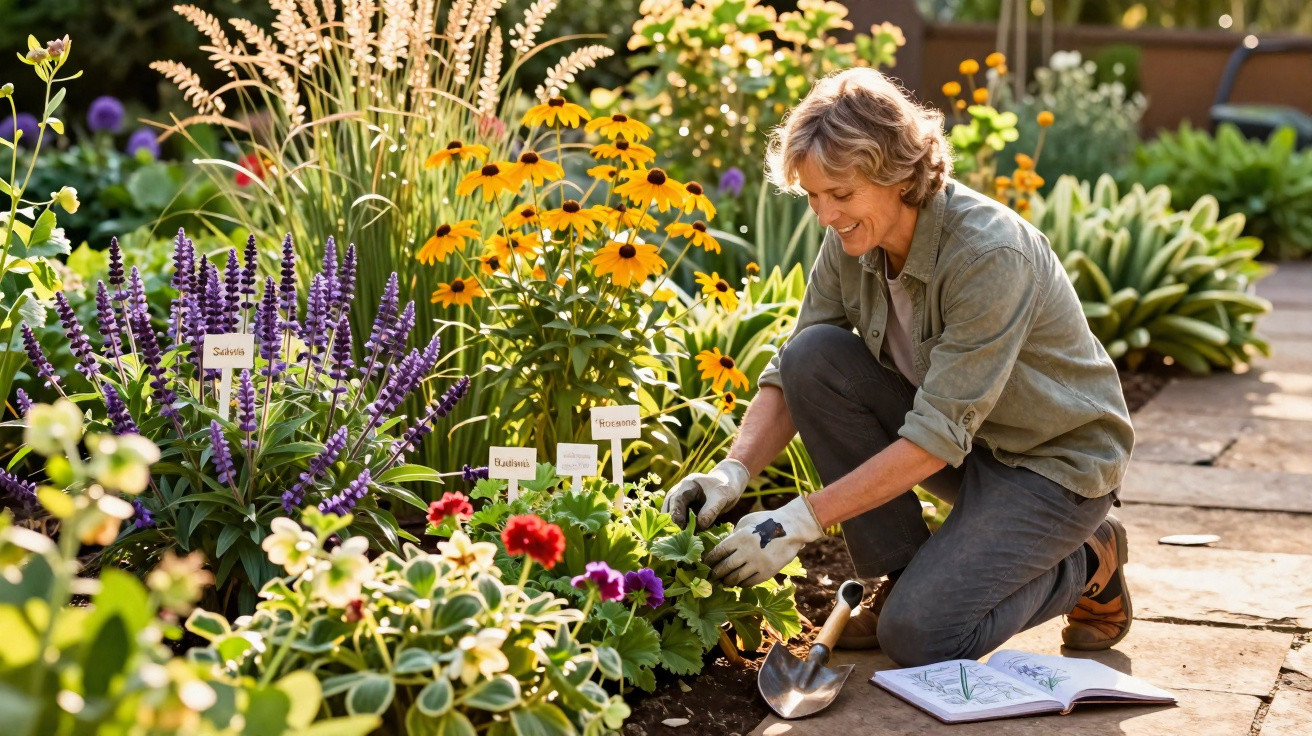
Some perennials disappear after just a few seasons – these do not.
They have provided colour, structure and reliability in gardens for decades.
Anyone who regularly browses plant catalogues will know the issue: every year brings new “must-have” perennials that supposedly do everything – only to vanish from the range three years later. Yet there is a select group of proven long-term performers that have succeeded in professional and home gardens for years. Here, we take a closer look at 15 of them: outstanding perennials that have come through wind, weather and the stresses of garden life with flying colours.
How these long-lasting perennials were chosen
The plants featured here come from the award lists of respected perennial organisations and have been trialled in gardens over many years. The deciding factor was not a short-lived wow factor, but something closer to a real-world endurance test.
Only perennials that remained tough, low-maintenance and adaptable over many years earned a place in this selection.
The key criteria assessed were:
- Adaptability: can they cope with heat, periods of rain and minor lapses in care?
- Maintenance requirements: is cutting back or occasional division all they need?
- Health: low susceptibility to fungal diseases and pests
- Longevity: do they remain dependable in the same position for many years?
- Tolerance of challenging conditions: poor soil, drought, shade or waterlogging, depending on the species
The result is a list of 15 perennials that perform reliably in modern, climate-adapted gardens – from a full-sun gravel bed to a shady corner beside the house.
Profiles of 15 tried-and-tested perennials
Siberian Russian sage (Salvia yangii)
Height: 60–120 cm, spread: 60–90 cm. Position: full sun. Soil: well-drained, preferably stony or poor. Flowering: July to September.
Its silvery-blue stems and lavender-blue flower spikes create that characteristic shimmering summer effect in a border. This perennial copes remarkably well with drought and is excellent for gravel gardens and water-wise planting schemes. A spring cut-back is enough; through summer, it largely looks after itself.
Feather reed grass ‘Karl Foerster’ (Calamagrostis × acutiflora)
Height: 120–170 cm, spread: 50–75 cm. Position: sun to partial shade. Soil: well-drained, including clay soils. Flowering: summer, with winter structure.
This ornamental grass stands upright in the border like a column. It rarely flops, even in heavy rain, and offers structure from its first spring growth until winter. It is ideal for framing beds or bringing crisp lines to modern urban gardens. Cut it down close to ground level once in spring – and that is all it needs.
Christmas rose and Lenten rose (Helleborus × hybridus)
Height: 15–60 cm, spread: 30–60 cm. Position: partial shade to shade. Soil: humus-rich and well-drained. Flowering: March to June.
These perennials begin flowering while the rest of the garden is still dormant. They thrive beneath trees and shrubs, where they form dense clumps over the years. A good initial planting position is important. Once planted, they should be moved as little as possible; in return, they will flower generously for decades.
Catmint ‘Walker’s Low’ (Nepeta × faassenii)
Height: 60–90 cm, spread: 75–110 cm. Position: sun to partial shade. Soil: free-draining. Flowering: June to September.
Almost a classic for path edges and in front of roses, it produces countless blue-violet flowers, lightly scented foliage and plenty of bee activity. Cut it back firmly after the first flush and it will often flower for a second time. It favours dry, poor ground and also handles heat well.
Cranesbill ‘Rozanne’ (Geranium ‘Rozanne’)
Height: around 50 cm, spread: up to 60 cm. Position: sun to partial shade. Soil: loose and well-drained. Flowering: summer to autumn.
Many gardeners regard ‘Rozanne’ as one of the most dependable long-flowering perennials. Its violet-blue, subtly veined blooms appear for weeks, weaving around taller perennials and grasses. It works as ground cover, fills gaps and forgives the occasional missed watering.
False indigo (Baptisia australis)
Height: 90–150 cm, spread: 90–150 cm. Position: sun to partial shade. Soil: well-drained. Flowering: early summer.
In appearance, Baptisia resembles a small shrub more than a perennial. After a quiet establishment period during its first few years, it remains faithfully in the same place for decades. It produces blue flower spikes in early summer, followed by decorative seed pods – ideal for naturalistic and prairie-style borders.
Variegated Solomon’s seal (Polygonatum odoratum ‘Variegatum’)
Height: 50–70 cm, spread: around 60 cm. Position: partial shade to shade. Soil: moist but well-drained. Flowering: late spring.
Elegant, arching stems carry white-edged leaves and small, fragrant bell-shaped flowers. This perennial is superb for shaded spaces, where it slowly but steadily forms carpets reminiscent of woodland edges.
Switchgrass ‘Northwind’ (Panicum virgatum ‘Northwind’)
Height: 120–150 cm, spread: 60–90 cm. Position: full sun. Soil: almost any soil. Flowering: late summer to autumn.
This switchgrass remains notably upright, even in strong winds. Its blue-green foliage turns a warm golden colour in autumn, while delicate flower panicles float over the bed like a veil. It is a must for modern naturalistic gardens and dry borders.
Cranesbill ‘Biokovo’ (Geranium × cantabrigiense ‘Biokovo’)
Height: 20–30 cm, spread: more than 100 cm. Position: sun to partial shade. Soil: free-draining. Flowering: late spring to early summer.
As ground cover, ‘Biokovo’ is hard to beat: it quickly covers the soil, suppresses many weeds and still remains easy to manage. Its delicate white-pink flowers and aromatic foliage bring life to edges, banks and rock gardens.
Butterfly weed (Asclepias tuberosa)
Height: 60–90 cm, spread: around 60 cm. Position: full sun. Soil: poor and well-drained. Flowering: early to midsummer.
Its vivid orange flower clusters are much loved by butterflies and solitary bees. This perennial is an important food plant for certain butterfly species. It needs a dry, free-draining position and does not tolerate winter waterlogging well.
Ornamental onion ‘Millenium’ (Allium ‘Millenium’)
Height: 40–50 cm, spread: 30–45 cm. Position: full sun. Soil: well-drained. Flowering: July to August.
Rounded pink-purple flower heads sit above compact foliage like tiny fireworks. ‘Millenium’ stays neatly in place, does not self-seed excessively and requires very little maintenance. Only heavy, permanently wet soil causes problems for it in winter.
Betony ‘Hummelo’ (Stachys monieri ‘Hummelo’)
Height: 45–60 cm, spread: 45–60 cm. Position: sun to partial shade. Soil: free-draining. Flowering: late spring to summer.
Dense, upright flower spikes in pinkish violet rise from its crinkled mound of leaves. ‘Hummelo’ combines well with grasses, coneflowers and yarrows. It effortlessly bridges the gap between a naturalistic garden and a modern herbaceous border.
Japanese spikenard ‘Sun King’ (Aralia cordata ‘Sun King’)
Height: 100–200 cm, spread: around 100 cm. Position: partial shade to shade. Soil: moist and humus-rich. Flowering: June to July.
The almost neon-yellow foliage of this perennial shines even in the garden’s darkest corners. Its impressive height makes it suitable as a specimen or background plant in a shady border. Evenly moist soil and a layer of mulch will keep it vigorous over the long term.
Black-eyed Susan ‘American Gold Rush’ (Rudbeckia)
Height: 55–70 cm, spread: 80–100 cm. Position: sun to partial shade. Soil: well-drained. Flowering: July into autumn.
Warm golden-yellow shades with a dark central eye make it the visual essence of late summer. This cultivar is considered particularly resistant to leaf diseases and remains attractive for a long time. It is ideal for lush borders, cottage gardens and colourful meadow strips.
Blunt mountain mint (Pycnanthemum muticum)
Height: 60–100 cm. Position: sun to partial shade. Soil: moist to wet. Flowering: July to September.
Silvery-flushed bracts and an intense fragrance turn this perennial into a magnet for bees and other insects. It can spread vigorously, so it is best suited to naturalistic planting, larger borders or pond margins.
Planning a garden with these 15 long-term performers
Planting these perennials in a random mix of colours wastes much of their potential. It makes more sense to group them according to their position and water needs.
| Suits dry, sunny conditions | Copes with ordinary garden soil | Thrives in shade |
|---|---|---|
| Siberian Russian sage | Cranesbill ‘Rozanne’ | Christmas rose / Lenten rose |
| Catmint ‘Walker’s Low’ | Feather reed grass ‘Karl Foerster’ | Variegated Solomon’s seal |
| Butterfly weed | Black-eyed Susan ‘American Gold Rush’ | Japanese spikenard ‘Sun King’ |
| Switchgrass ‘Northwind’ | Betony ‘Hummelo’ |
A few practical rules will help when putting the scheme into practice:
- Think in groups: plant five to seven specimens of one kind rather than scattering ten individual plants around the garden.
- Stagger the seasons: combine early flowers such as Helleborus with summer bloomers including catmint and autumn accents such as switchgrass.
- Maintain structure: grasses such as ‘Karl Foerster’ and ‘Northwind’ act as the backbone among more colourful flowering perennials.
- Save water: place drought-loving species in the sunniest part of the garden, and reserve damper corners for blunt mountain mint and Japanese spikenard.
Why these perennials last for so long
Most of the species listed originate from regions with demanding climates: North American prairies, steppes or woodland margins. They have developed ways of coping with extreme temperatures, wind and limited water. Gardeners in the central European climate benefit from these adaptations.
Many form deep root systems, store energy in their rootstock or endure hot spells by reducing water loss. Others, including the grasses, remain upright throughout winter, thereby helping to protect the soil from erosion and excessive drying.
Practical tips for beginners and small gardens
If space is limited, start with three to five species. A possible small combination for a sunny front garden could look like this:
- 2 × feather reed grass ‘Karl Foerster’ for height and structure
- 3 × cranesbill ‘Rozanne’ as a ground-covering filler
- 3 × black-eyed Susan ‘American Gold Rush’ to provide colour from July to autumn
- 2 × catmint ‘Walker’s Low’ along the front of the border
For a shady corner, a suitable scheme would be:
- 1 × Japanese spikenard ‘Sun King’ as a focal point
- 3 × Helleborus hybrids for spring flowers
- 5 × variegated Solomon’s seal to gently cover the ground
Anyone wishing to encourage biodiversity should specifically choose blunt mountain mint, butterfly weed, ornamental onion and catmint – in summer, bees and butterflies create a constant buzz around them.
Key terms and potential pitfalls
The term “perennial” describes a herbaceous plant that lives for several years, with its above-ground growth usually dying back in autumn while the roots survive. Many home gardeners confuse them with shrubs or subshrubs, plant them too closely and then wonder why gaps appear in winter.
There is some risk with every species where soil remains permanently wet or is extremely heavy. Perennials that prefer dry conditions are particularly likely to rot away in these circumstances. Anyone with heavy clay soil should:
- incorporate generous quantities of gravel or coarse sand,
- create slightly raised planting mounds,
- or deliberately choose perennials that cope better with moisture, such as blunt mountain mint or Japanese spikenard.
Conversely, those with very sandy soil can achieve surprisingly good results with grasses, catmint, Russian sage and butterfly weed – with exceptionally little watering.
When correctly combined, these 15 tried-and-tested perennials create a garden that does not need reinventing every year. Rather than being constantly replaced, the plants grow over time into a stable, living system – and that is precisely what gives them their long-term value.


Comments
No comments yet. Be the first to comment!
Leave a Comment