
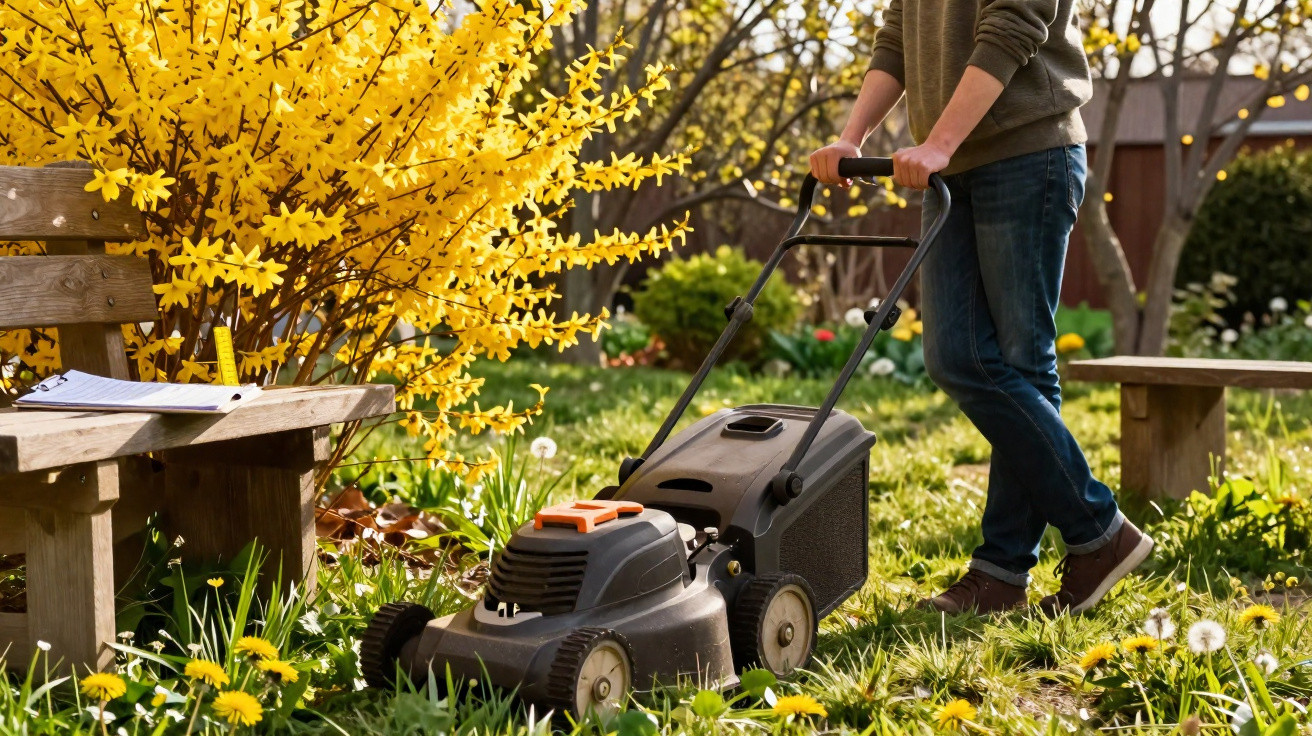
Many keen gardeners are eager to wheel the lawnmower out of the shed in spring. The turf looks worn, moss is spreading, and the neighbours may already have cut their grass for the first time. Even so, it pays to pause briefly: the calendar does not determine the right moment. Instead, look for an unassuming yellow-flowering shrub in the garden, along with a few clear signs from nature.
Why the first lawn cut in spring is so sensitive
After winter, much of the lawn’s activity takes place out of sight. The blades above ground may appear tired, but the crucial work is happening below: roots are rebuilding their reserves and branching out again. This period determines how dense, green and resilient the lawn will be over the months ahead.
“Mowing too early forces the lawn to divert the energy reserves it has only just rebuilt straight back into producing new leaf growth – weakening it for the long term.”
This can lead to several specific problems:
- The lawn dries out more quickly in summer.
- Bare patches develop more easily, allowing moss or weeds to take over.
- Diseases and fungal problems gain an easier foothold.
Garden experts point to two temperature ranges as a broad guide. Several consecutive nights should remain clearly above around 4°C, while grass starts growing properly once soil temperatures reach roughly 6°C. Below these levels, the lawn is still partly dormant; mowing brings little benefit and mainly drains its strength.
The key rule: check the weather and soil first
Before starting the mower, inspect the ground. The soil needs to have dried out: it should no longer be soaking wet, but must not be frozen hard either. On soft or muddy ground, mower wheels compact the soil, damage roots, cause water to collect and leave ruts behind.
A dry day with a little breeze and no frost forecast is ideal. The grass blades should feel light and must not cling together with moisture when held. Mowing in morning dew can leave ragged cuts, which in turn create entry points for fungi.
“A simple rule of thumb is this: mow only when the ground is firm, the blades are dry and the nights have become noticeably milder.”
Before making the year’s very first pass, carry out a quick lawn-care check:
- Carefully rake away any remaining leaves.
- Lightly scratch or comb out loose cushions of moss.
- Remove branches, stones and toys from the lawn.
- Sharpen the lawnmower blades, or have them sharpened.
Blunt blades tear rather than cleanly cut the grass. The ends of the blades become frayed, turn yellow and look unhealthy after only a few days, even if the lawn was mown at the correct time.
Forsythia: the yellow signal for the first lawn cut
Rather than relying on apps, gardening charts or instinct, many experienced gardeners use one very straightforward sign: forsythia, the shrub with vivid yellow flowers. This ornamental shrub generally blooms before its leaves emerge and responds sensitively to rising temperatures.
When its branches are covered in bright yellow blooms, it is a strong indication that vegetation is getting under way, the soil is warming up and the lawn has begun actively growing. That is the time to plan the first cut, provided the weather and ground conditions are also suitable.
“Forsythia in full bloom acts like a natural starting signal: the lawn can now have its first gentle trim.”
Checklist: when the first cut really makes sense
Use the following points to help make the decision:
- Forsythia in your garden or nearby is clearly in bloom.
- Frost has not occurred for several nights and temperatures are staying mild.
- The lawn feels dry and the ground is not muddy.
- The grass has visibly grown and has a vibrant green colour.
If these conditions are met, the first lawn cut can go ahead – but it should be done carefully.
Mow gently: height, technique and the most important mistake
Many people make the same mistake in spring: they set the mower too low and “shave” everything down to golf-course height. This puts considerable stress on the lawn and deprives it of the chance to recover steadily after winter.
For the first cut, follow these rules:
- Set the cutting height fairly high, usually to 4–5 centimetres depending on the mower.
- Never remove more than one third of the blade height in a single cut.
- Move slowly, especially across uneven ground.
“Gradually reducing the height, rather than cutting everything down in one go, encourages a dense lawn that can withstand foot traffic.”
If spring flowers such as crocuses, daffodils or tulips are still growing in the lawn, leave these patches uncut for the time being. While their leaves remain green, the bulbs are storing energy for the following year. Once the foliage has yellowed, it can be cut without issue, or those areas can return to normal lawn care.
A UK trend: leave more grass standing and mow less
Alongside the question of timing, another issue is becoming increasingly common: does every part of the garden really need to be kept as short and immaculate as a football pitch? In the United Kingdom, an approach has become established that is now attracting many followers elsewhere too: parts of the lawn are left uncut for longer, sometimes throughout the whole of May. Only paths, seating areas and visually important zones are trimmed.
The result is that wildflowers and naturally appearing blooms, including daisies and dandelions, can emerge and provide food for wild bees, bumblebees and butterflies. At the same time, the garden still looks cared for because the mown strips give it a clear structure.
| Area | Recommended care |
|---|---|
| Paths and access routes | Mow regularly and short to ensure secure footing |
| Play and seating areas | Keep grass at a medium-short length; cut every one to two weeks depending on use |
| Corners, borders and beneath trees | Mow less often, allow flowers to grow and perhaps cut only several times a year |
Studies show that insect populations are declining noticeably in many regions. Gardens in built-up areas can therefore become important refuges. Leaving the mower in the shed from time to time supports not only wild bees and other pollinators, but also saves time, petrol or electricity.
Dandelions and more: a nuisance or a rescue for the lawn?
Yellow dandelion flowers divide garden owners. Some regard them as weeds to be controlled, while specialist organisations emphasise their value. In spring, their flowers are among the first significant food sources for many insect species.
“A few patches of dandelions in the lawn barely affect its appearance, benefit wild bees and can still be cut back later.”
Anyone worried that the lawn will become completely “overgrown” can take a balanced approach: leave flowers in less visible areas while maintaining central spaces as usual. What matters more is a considered strategy than trying to remove every single plant.
Practical tips for a healthy lawn throughout the year
To make the right spring approach pay off over the long term, it is worth considering other aspects of lawn care:
- Fertilising: Do not fertilise immediately before or after a radical cut. Leave a few days in between so that the grass can process the nutrient boost properly.
- Watering: Water less frequently but thoroughly, encouraging roots to grow deeper.
- Grass clippings: Short, dry clippings can remain on the lawn as mulch; wet or long grass is better collected.
- Scarifying: Do this only once the lawn is growing strongly, and only when thatch and moss are genuinely dense.
Those who follow these points will have less need to “rescue” their lawn in summer and can enjoy stable, hard-wearing turf that copes far more calmly with hot spells.
Why patience pays off in spring
The urge to mow as early and as neatly as possible is understandable. A precisely cut lawn creates a sense of order. From the lawn’s perspective, however, a change of approach is worthwhile. A few extra days of patience, attention to the yellow forsythia flowers and a slightly higher mower setting help the lawn enter the season strongly rather than running on reserves by April.
At the same time, deliberately allowing a few corners to grow wilder turns a garden into more than just a green surface: it becomes a small habitat where lawn, flowers and insects can all find their place. This combination often produces the most attractive view in the end – and avoids some unnecessary mowing.

Comments
No comments yet. Be the first to comment!
Leave a Comment