
People renting their home often assume they must leave their plants behind. But is that really necessary?
Many tenants know the feeling: the balcony is in full bloom, the small flower bed in the courtyard is looking its best – then another move is on the horizon. Shrubs planted directly in the ground and climbing supports fixed in place have to stay behind. This is exactly where the idea of a portable garden comes in: from the outset, everything is designed so that you can pack up your green space like furniture and take it to your next home.
Mobile rental garden: how the principle works
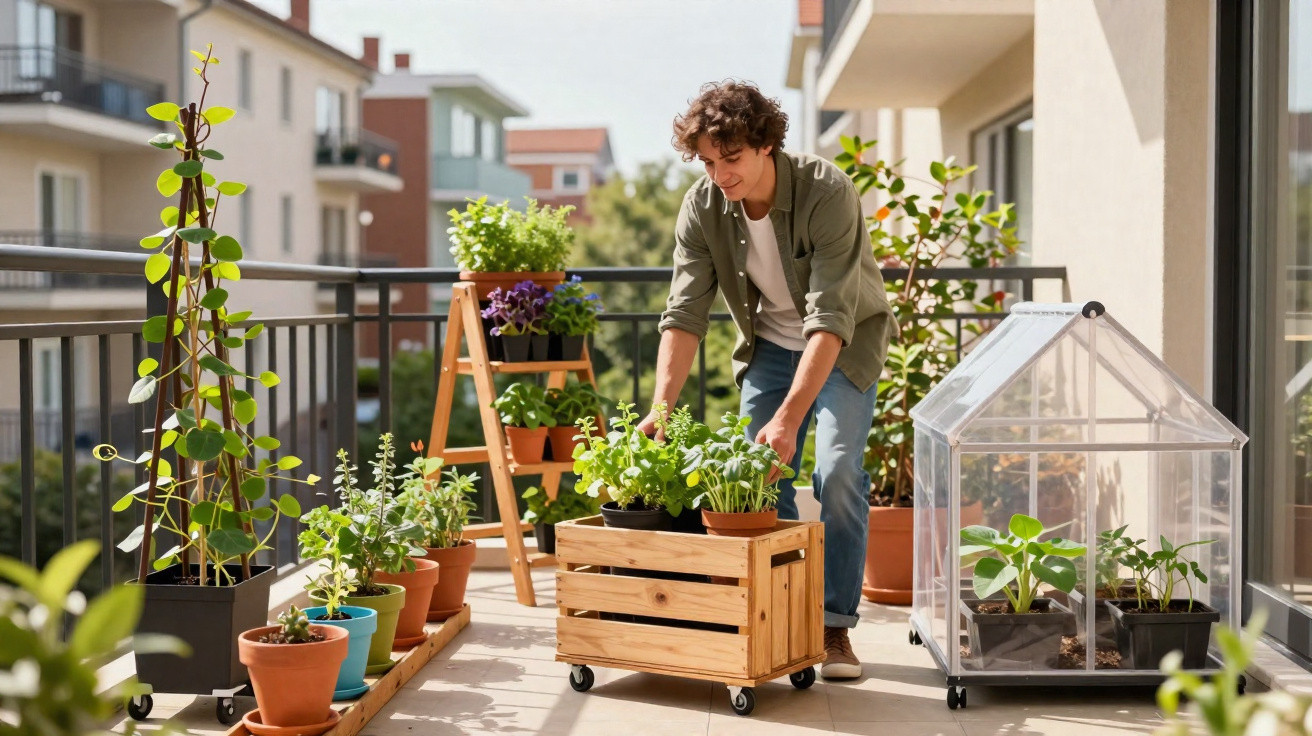
A portable garden is made up almost entirely of movable items: pots, planters, raised beds, wheeled pallets and free-standing frames. Nothing is permanently secured to the soil or a wall. Every element can be positioned, moved or dismantled.
This offers two major benefits. Your landlord receives an undamaged garden when you leave, while you can relocate your plants whenever needed according to sunlight, wind or the season.
“Tenants who choose mobile solutions from the beginning will not lose a single favourite plant when they move.”
Before getting started, it is worth carrying out a quick check:
- Read your tenancy agreement: are there rules for the balcony, façade or shared garden?
- Check the load capacity: how much weight can the balcony support?
- Take photographs: document the original condition of the garden or terrace.
For the layout, free-standing structures are especially useful: trellises with feet, plant ladders, small plastic greenhouses and lightweight planters, ideally fitted with castors. Many items can be sourced cheaply or even for free, such as discarded wooden crates or old buckets converted into plant containers.
Five plant ideas that move house with you
To make planning easier, here are five complete planting concepts. Each combines a particular structure, a visual effect and suitable plants – all designed to move easily to your next home later on.
1. A mobile pot border around the edge
Imagine a kind of “living hedge” made entirely from pots. Place several containers closely together along a gravel strip or beside a fence. Arranging them at different heights gives the display structure:
- At the back: tall plants such as ornamental grasses, lavender or a small olive tree
- In the middle: medium-height perennials such as sage, hardy cranesbill varieties or small roses
- At the front: trailing varieties such as verbena, ivy or dichondra
Put the largest containers on wheeled plant caddies. This allows you to move them alone without straining your back. When moving day arrives, simply wheel the whole row to the removal van.
2. Green privacy screening with a free-standing trellis
If you are not allowed to drill holes into the wall, you need a climbing frame that stands independently. Position a trellis with feet directly against the house wall, with two long planters in front to provide weight at the base.
Fill them with fast-growing climbing plants that can cover the whole structure in a single season:
- Nasturtiums for edible flowers
- Sweet peas with fragrance
- Morning glories with bright blooms
The planters can also accommodate strawberries or low-growing herbs. Moving out is surprisingly quick: detach the trellis, load the planters and you are done. The plants can simply carry on growing in their new location.
3. Herb shelf with a plant ladder
An old wooden ladder or purpose-built plant shelf can become a space-saving herb station. Arrange small pots on its individual steps according to their light requirements:
- At the top: sun-lovers such as basil, thyme and rosemary
- In the middle: chives and parsley
- At the bottom: thirsty, vigorous mint, preferably kept separate so that it does not take over everything, and cut-and-come-again salads
The ladder simply rests against the wall, with a protective mat beneath it to prevent water marks. When you move, carry the whole shelf as though it were a piece of furniture; in most cases, the pots can remain in place.
4. A small plastic greenhouse cover for young plants
A compact plastic greenhouse with a zip-up door is ideal for balconies and rented gardens. It can stand on a terrace or in an unused grassy corner, secured with ground pegs.
Several shelves inside can hold:
- Seeds sown in trays
- Young tomato or pepper plants
- Delicate flowers that need a little warmth
The cover creates a mild environment and extends the growing season, yet it can still be taken apart. For a move, simply empty the shelves, disconnect the poles and pack the structure flat in the car.
5. A movable raised bed with four sections
A lightweight rectangular raised bed can become the centrepiece of a mobile garden. Depending on the available space, place it on grass or set it on a pallet with castors. Fill it with a mixture of soil and compost, keeping it light enough to move later.
Divide the space mentally into four sections:
- A herb corner with rosemary, thyme and oregano
- Fast-growing salads and radishes
- Compact tomatoes with some basil planted between them
- Flowering plants that attract insects, such as marigolds or cosmos
There are two options for moving day: either scoop some of the soil into bags to reduce the weight, or lift the entire bed with helpers and a sack trolley. This means even a complete mini vegetable plot can move with you.
How to keep a mobile garden calm rather than chaotic
Using numerous pots and elements can quickly create an overcrowded look. A few design principles will help keep the overall arrangement orderly:
- Choose two main materials, such as terracotta and light wood
- Repeat colours: for example, white and purple flowers combined with plenty of green
- Deliberately position large containers as focal points, grouping smaller ones around them
- Fit heavy planters with castors as a matter of course
- Add handles to wooden crates so that they can be carried like boxes
“A clear basic rhythm of recurring materials and colours makes even a large number of pots look structured and high-quality.”
What to consider about maintenance and weight
A portable garden needs the same care as any other: watering, feeding and pest checks. The difference lies in its weight and mobility. Pure garden soil is extremely heavy. A loose mix of soil, compost and lighter additions such as bark compost or expanded clay is a better choice.
This means you will need to water a little more often, but the whole garden remains easier to transport. You can fill very large containers halfway with lightweight material and use nutrient-rich soil only in the upper section. Your back will thank you every time.
Before a major move, a small preparation checklist is worthwhile:
- Do not start any major repotting jobs in the few weeks beforehand
- Sort plants by size and create groups
- Tie delicate shoots together loosely with string
- Keep sturdy boxes ready for small pots
- Arrange equipment such as a sack trolley or folding trolley
Water a little more sparingly the day before, so that the soil is damp but not dripping wet. This stops the root ball from falling apart during transport and keeps your moving boxes dry.
How a mobile garden changes rented living over the long term
Anyone who has seriously invested in a portable garden soon notices a useful side effect: they begin planning further ahead. Perennials, potted shrubs and perennial herbs all become worthwhile, because they no longer have to be left in the courtyard when you move out.
It also feels less daunting to take part in seasonal growing projects. Potted tomatoes or chillies can otherwise seem risky to many tenants, as it is unclear how long they will remain at the property. Mobile solutions make it easier to begin such projects with confidence. Even if your living arrangements change unexpectedly, the plants simply come along.
This approach is also practical for people who regularly travel between town and countryside or have to move home frequently. Part of the garden – perhaps a box of herbs or a small fruit tree in a container – can be used in different places as your life changes, from a student balcony to the terrace of a future terraced house.
By choosing containers carefully, you also build up a kind of “green starter kit” for future moves. Well-made raised beds, good wheeled plant caddies and trellises with supporting feet can all be reused for years, regardless of which floor you live on or which town you are in. At that point, a mobile garden no longer feels like a temporary solution for tenants, but a flexible system that moves through life with you.

Comments
No comments yet. Be the first to comment!
Leave a Comment