
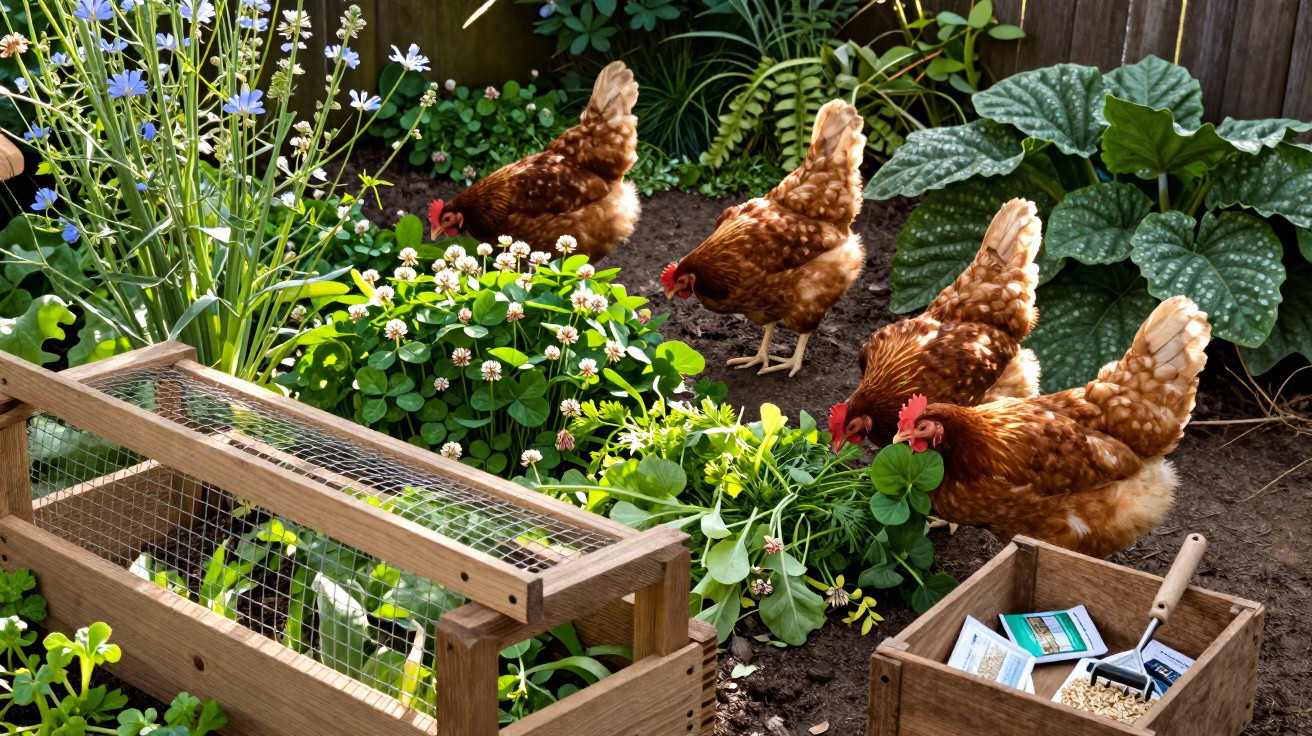
Many backyard chicken keepers face the same issue every spring: the run has been trampled into bare ground and does not exactly smell spring-fresh. One well-planned planting trick can improve the soil, the birds’ health and feed costs at the same time – turning grey mud into a lively green snack garden for chickens within a few weeks.
From mud pit to feeding oasis
By the end of winter, the ground in a chicken run is often compacted, wet and completely bare. Every spell of rain turns the area into a slippery stretch of mud. Anyone who waits until spring has properly arrived has usually already missed their chance: by then, wild plants, dry conditions and sunshine are competing with the plants you actually want.
The real opportunity comes in late winter and early spring. The soil is still moist while temperatures are gradually rising. These are precisely the conditions seeds need to germinate reliably and establish roots quickly, before chickens return to scratching and pecking at full speed.
“Sow now and you give the greenery a head start over chicken claws – and the summer heat.”
The aim is not an attractive ornamental lawn, but a tough, repeatedly regrowing carpet of forage that protects the soil, retains nutrients and feeds the birds. Ideally, it can replace a noticeable share of the concentrated feed in the feeder.
Three plants chickens love – and that restore the soil
Rather than buying costly specialist seed mixes, you essentially need only three species that complement one another remarkably well: white clover, ribwort plantain and wild chicory. All three are perennial, deep-rooted and well suited to heavily used ground.
White clover – the protein boost
Often dismissed as a “weed” in lawns, white clover is a real bonus for chickens.
- It provides plant protein that supports laying performance.
- It fixes nitrogen from the air, improving soil fertility.
- It forms a dense, low-growing cover over the ground.
Chickens are especially keen on its tender leaves. Once it is established, it quickly becomes clear that the birds choose to stand in the greenery rather than simply gather around the feeder.
Ribwort plantain – a natural medicine cabinet in the chicken run
Ribwort plantain grows in many meadows, yet it is often overlooked in chicken runs.
- It supports the respiratory system, particularly during damp, cold periods.
- It has a mild effect on digestion and mucous membranes.
- Its strong leaves also help to cover the soil.
Where chickens have a choice, they instinctively peck at the leaves. In doing so, they build a small measure of preventative care into their diet without any extra effort.
Wild chicory – a mineral boost from deep below
Wild chicory sends deep roots into the soil, drawing up nutrients that shallow-rooted plants can barely reach.
- It loosens the soil at depth.
- It brings minerals and trace elements into its leaves.
- It stimulates the birds’ appetite and liver function.
After a long winter of mainly grain and little fresh feed, chickens clearly appreciate this bitter, mineral-rich greenery.
“This trio of plants does not replace a sound basic feeding plan, but it makes it considerably cheaper and more natural.”
How to help seed germinate despite a flock of chickens
The biggest difficulty is simple: chickens love seeds. If they are merely scattered over the ground, most will end up in crops rather than soil. A small, practical trick provides the answer.
Protective frames as a “salad bar with a wire lid”
By dividing the chicken run into zones, you can sow without having to shut the birds out all the time. Here is how it works:
- Build shallow wooden frames or repurpose old ones.
- Stretch fine wire mesh or aviary mesh over them and staple it securely in place.
- Set the frames on prepared soil and sow the seeds inside them.
- Press the frames down lightly so that they sit firmly.
The plants germinate safely beneath the mesh. Once the shoots are long enough, they grow up through the openings. Chickens can nibble the tips without pulling out the plants.
“This creates a ‘permanent salad buffet’ that keeps regrowing instead of being eaten bare straight away.”
Using several frames across the chicken run ensures fresh greenery is always coming through somewhere, even when one area is being used more heavily.
Less mud, fewer illnesses and less stress
A continuous plant cover does more than provide feed: it also acts as natural drainage. Roots hold the ground together and draw surplus water downwards. Puddles and slippery, greasy soil occur far less often.
This lowers the risk of:
- foot problems such as bumblefoot or scaly leg infestations;
- parasites that thrive in damp patches of droppings;
- rotten smells and poor air quality in the chicken run.
More structure in the run also changes the birds’ behaviour and mood. Chickens enjoy searching for food themselves, pecking leaves and hunting insects and tiny creatures among the greenery. It keeps them occupied and reduces aggression within the flock.
“A varied chicken run does not replace a luxury coop, but it works like a daily anti-stress programme.”
How much this affects the feed budget
Seed costs remain manageable. A small packet of white clover, some ribwort plantain and wild chicory can cover surprisingly large areas. Working with targeted planted islands rather than sowing every part of the run also saves money.
| Measure | One-off effort | Long-term benefit |
|---|---|---|
| Seed for the three-plant mix | a few pounds | annual supply of regrowing green feed |
| A few wooden frames with mesh | one afternoon of DIY work | permanent protected areas for young plants |
| Lightly roughening the soil before sowing | a little physical effort | better germination and more stable plant cover |
The more fresh greenery the birds eat, the less grain feed they need. The effect on the rate at which feed bags are used is particularly noticeable in spring, when laying rates increase.
Practical tips for backyard chicken keepers
Anyone keen to green up their chicken run can follow a few straightforward guidelines:
- Plant the muddiest areas first.
- Never close off the entire run at once; use only partial areas at a time.
- Spread seed as finely as possible and rake it in lightly.
- After germination, make sure there is enough moisture until the plants are established.
- Move the frames occasionally so that new areas can become covered too.
If space allows, you can also create small “rest zones” in the chicken run and close them off for a few weeks at a time. The vegetation can recover there while the chickens use other areas. This keeps the run viable over the long term.
Why natural forage areas are more than just a trend
Keeping chickens for self-sufficiency is booming. Many keepers want home-produced eggs that are as healthy as possible and come with a clear conscience. A chicken run that offers more than bare ground fits perfectly with that ambition.
Natural forage plants provide not only nutrients, but also activity, flavour and variety. Chickens that spend time in greenery every day usually have glossier plumage, a calmer flock atmosphere and more consistent laying performance.
Children in particular soon see more in a “chicken garden” with its green islands than simply farm animals behind wire. They can watch a few seeds become a living system that links soil, animals and people – and, at Easter, eggs will be waiting in the nest with a genuinely green story behind them.



Comments
No comments yet. Be the first to comment!
Leave a Comment