
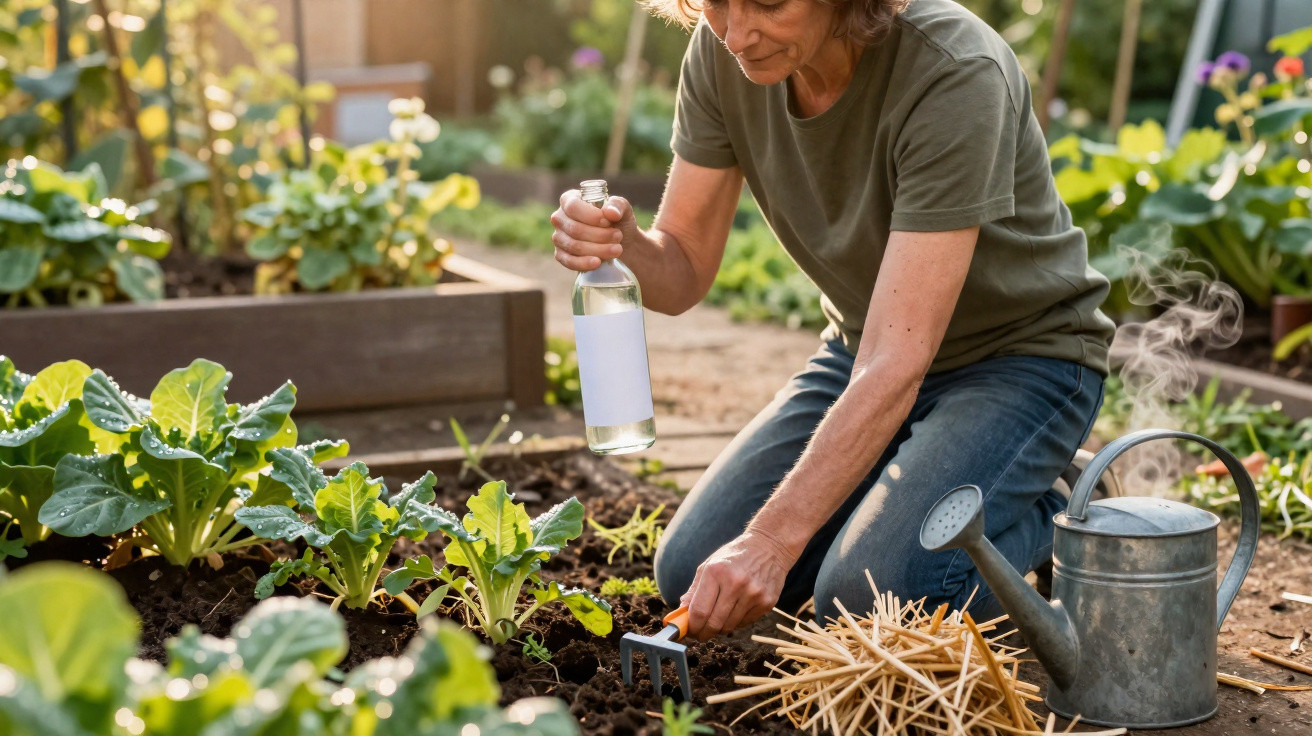
A tip is quietly circulating in many terraced-house estates: use a little white vinegar in the garden during the morning and weeds will supposedly disappear quickly, without relying on chemicals. It sounds ideal – a kitchen staple rather than a specialist product, at a time when concerns about the environment, soil and insects are widespread. Yet, as is often the case, the reality behind this simple idea is far more complicated.
Why the morning is so important
Between roughly 6 am and 11 am, conditions in the garden are quite distinctive. The air is still cool, dew covers many surfaces and the sun has not yet started beating down relentlessly on beds and paths. This is precisely the period that can make garden work more efficient.
- Plant leaves are soft and more receptive because of the remaining moisture.
- Roots are often less firmly held in soil that has not yet dried out.
- Evaporation is lower, so liquids remain on leaves for longer.
- Nearby plants face a much smaller risk of heat damage.
Anyone removing weeds during these hours will notice the difference straight away: clumps of grass and young shoots can often be pulled from the soil, roots and all, with one tug. Cool air combined with damp earth acts like a natural advantage.
The myth of the “magical” vinegar moment is based on a real effect: morning is generally the best time for thorough, gentle weeding.
What white vinegar actually does in a flower bed
White household vinegar is generally made from alcohol fermented into acetic acid. Its acid content is usually between five and ten per cent, with a pH of around two to three. Put simply, it is quite harsh on plant surfaces.
When undiluted vinegar lands on leaves and young shoots, it damages the cell structures at the surface. The affected parts of the plant dry out, leaves turn brown and shrivel. Initially, this can look impressive – especially with fresh spring weeds that still have tender, lightly woody stems.
In spring, from around March to June, these applications appear to work particularly well. Many unwanted plants still have shallow roots. After being sprayed with vinegar, paths and beds can quickly look “tidy”. However, the key word is “appear”: the effect often remains superficial.
Deep-rooted weeds, such as ground elder or dandelions, repeatedly grow back because their roots are either undamaged or only slightly affected. Anyone relying solely on vinegar is therefore playing an optical game – the garden looks neat for a short time, but the problem is merely postponed by a few weeks.
Soil damage rather than an organic trick: the overlooked downside
Many amateur gardeners choose vinegar because they want to use “something natural” instead of chemical products. That is exactly what makes this approach so tempting. But natural does not automatically mean harmless.
If vinegar is repeatedly used in beds, paving joints or gravel paths, the acid seeps into the ground. Over time, this can have several consequences:
- The soil pH falls, making the soil noticeably more acidic.
- Earthworms and other soil organisms retreat or die.
- The soil loses its structure and becomes compacted or “dead”, as experts put it.
- Sensitive food crops growing nearby begin to struggle.
The issue becomes particularly serious when vinegar is mixed with other household remedies. Online recipes include salt, hot water and even chlorine-containing products. What sounds harmless can make areas unusable for years. Salt disrupts plants’ nutrient uptake, remains in the soil and prevents new growth – not only of weeds, but of anything intended to grow there later.
Where vinegar and salt are used regularly, areas can easily develop where almost nothing thrives properly.
Legal position: what is permitted and what is not
In some countries, vinegar is no longer treated as a simple household product once it is deliberately used against plants, but as a plant protection product. Strict rules then apply, including to amateur gardeners.
The central point is that only products officially authorised may be used for “plant protection”. Household vinegar is not normally included on this list. Authorities regard it as an unapproved product that has not been assessed for either effectiveness or environmental harm. Anyone who nevertheless uses it specifically to kill plants is operating in at least a legal grey area – and, in some countries, well beyond it.
Fines in private gardens are rare, but they are possible in principle if officials can prove deliberate use. The situation becomes even more sensitive if vinegar mixtures end up on driveways or public paths near drain covers. That can lead to trouble over contamination of the wastewater system.
What morning gardening can really achieve – without vinegar
Despite all the criticism of vinegar, the advice to work between 6 am and 11 am is sound. Those who use these hours can maintain their garden far more sustainably, using methods that protect the soil, insects and plants over the long term.
Mechanical methods: old-fashioned but highly effective
Especially in spring, straightforward tools are often enough to remove weeds thoroughly:
- Hoe or draw hoe: Ideal for beds; it loosens the soil and severs young roots just below the surface.
- Sharp paving-joint knife: Perfect for paving and patios, including narrow gaps.
- Hand weeder or dandelion digger: Removes deeper roots of dandelions or plantains cleanly.
- Garden gloves: In the early morning, many plants can simply be pulled out by hand with their roots attached.
Residual moisture in the soil means plants offer less resistance. Taking advantage of this saves effort and noticeably reduces the likelihood of rapid regrowth.
Heat, mulch and boiling water as useful allies
Gravel and paved paths offer further options that do not require problematic chemicals:
- Hot water: Poured directly from a kettle onto joints, it destroys plant cell structures. It is best used on a dry day.
- Thermal tools: Special flame weeders heat plants intensely for a short time, causing them to collapse within a few days.
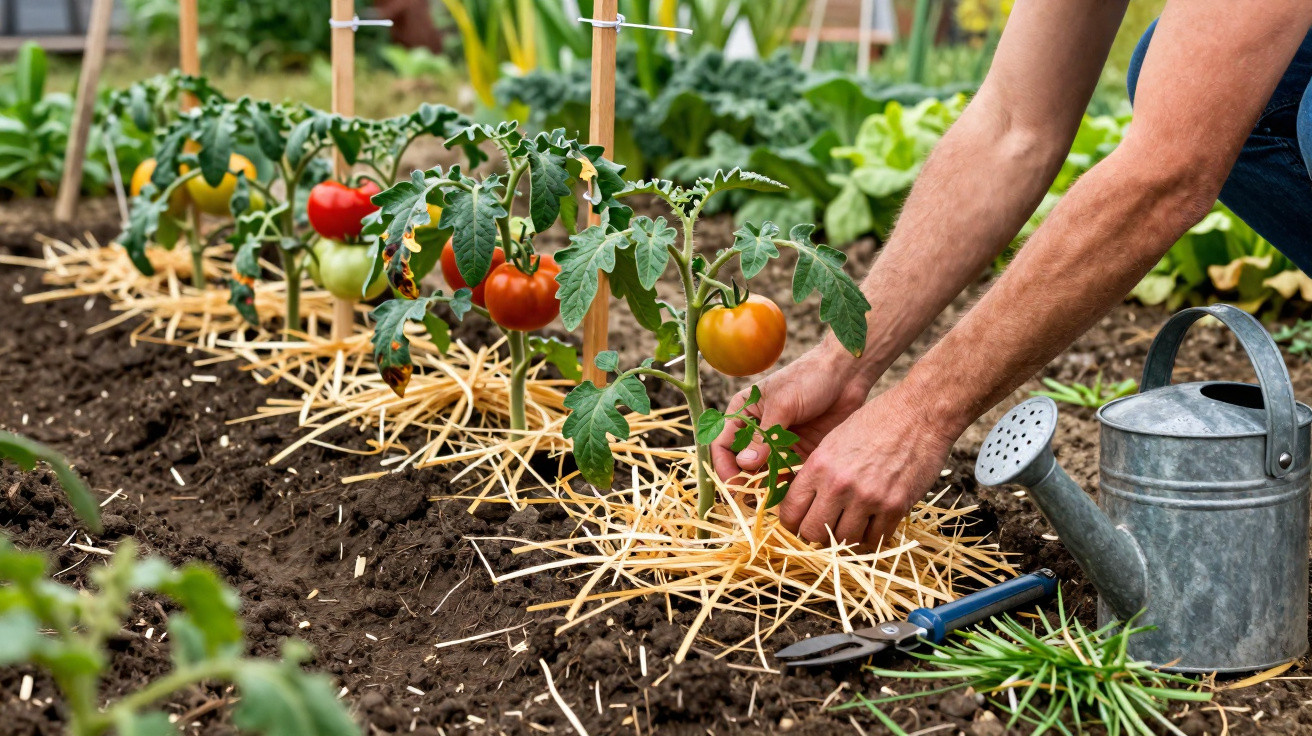
- Mulching: A thick layer of bark mulch, woodchip or grass clippings on beds allows very little light to reach germinating seeds.
Mulching immediately after mechanically removing weeds avoids many later rounds with the hoe. This is particularly true for vegetable beds, herbaceous borders and areas beneath shrubs.
Who finds the white vinegar myth especially tempting
The prospect of bringing the entire garden under control with one kitchen product is especially appealing to people with little time or limited physical mobility. A few sprays and paving joints look tidy – it seems like a shortcut in an area that otherwise demands a great deal of work.
New gardeners without an extensive collection of tools are also quick to turn to household remedies. The vinegar bottle is already in the cupboard, so the barrier to getting started is minimal. Add enthusiastic testimonials online, and it is easy to feel reassured.
The vinegar trick owes much of its appeal to feeling easy – far easier than regular weeding and mulching.
How to maintain a healthier garden over the long term
Rather than relying on supposed miracle solutions, it is worth considering the garden’s overall layout. Many weed problems arise because areas of soil remain bare and sunlight reaches them directly. A few basic strategies can help:
- Dense planting: Where desired plants are planted closely together, there is scarcely any room for unwanted ones.
- Permanent ground cover: Evergreen cushion-forming plants beneath shrubs keep the soil shaded.
- Thoughtful path planning: Fewer gravel areas and more planted zones reduce vulnerable problem areas.
- Regular small jobs: A brief weekly walk around the garden stops weeds from establishing deep roots.
Timing matters too: early in the year, when weeds are still tiny, they can be removed in one easy pass. Waiting too long means considerably more work later.
What to consider before reaching for the vinegar bottle
Vinegar certainly has its place in the kitchen and household – for descaling, cleaning and preserving. In the garden, however, it behaves more like an uncontrolled intervention: visibly effective in the short term, but risky in the long term for soil, tiny organisms and, in some cases, neighbouring plants.
Anyone who still chooses household remedies should use them extremely sparingly, avoid repeated use and consider their effect on adjoining areas. Garden work is much less stressful when you use the productive morning hours, reach for a hoe, knife and mulch, and gradually develop the garden into a dense, living system where weeds simply have fewer opportunities.

Comments
No comments yet. Be the first to comment!
Leave a Comment