
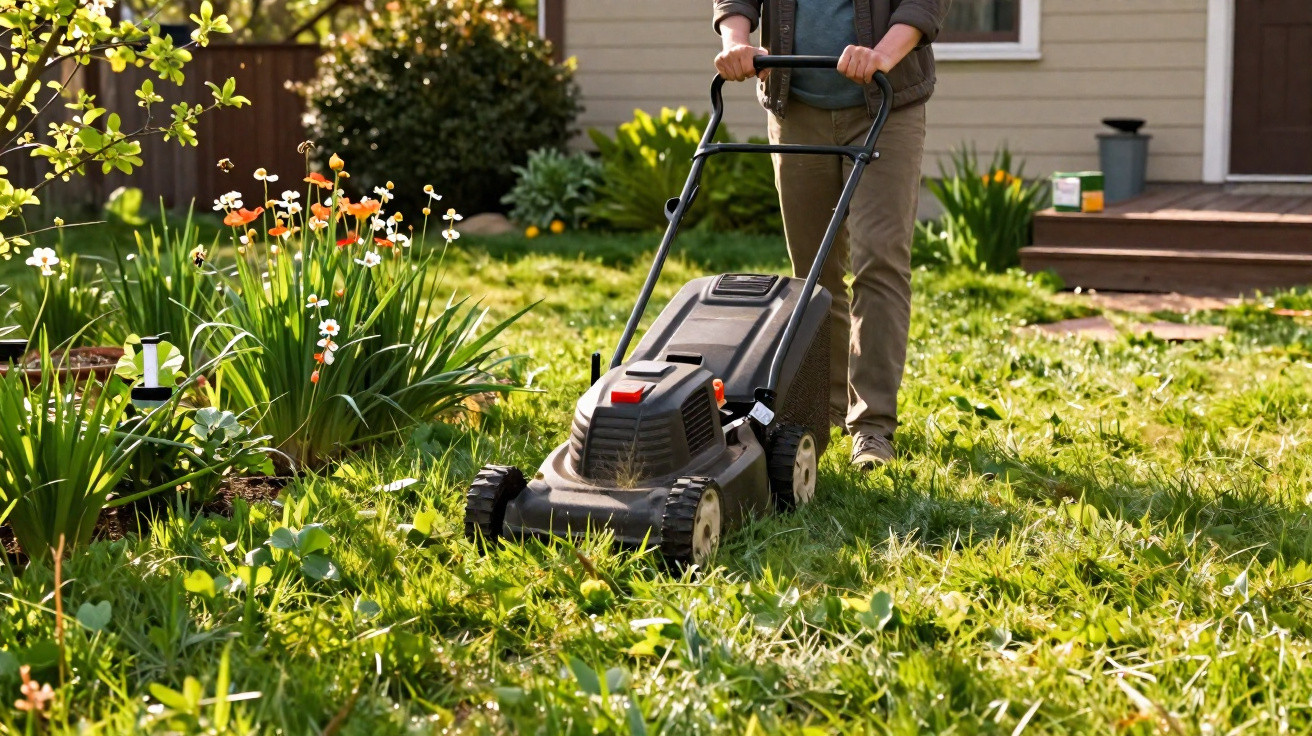
A single rule determines whether your lawn becomes thick and green.
As soon as the first mild days arrive, many amateur gardeners wheel the mower out of the shed and get started straight away. The urge to make the lawn look “tidy” and short is strong. Yet this is often where the problem begins: the lawn emerges from winter weakened and does not cope well with drastic treatment. Anyone who follows a few simple principles in spring will have a far denser, richer green carpet by summer.
Why March can be crucial for your lawn
After winter, the garden often looks bleak: flattened blades, yellow patches and cushions of moss. Many people take this as a sign that it is time to “give everything a proper tidy-up”. Specialists see it differently. During the dark months, grass plants receive very little energy and rely on stored reserves. At precisely this time, the lawn needs as much leaf surface as possible to capture sunlight.
“The more leaf growth that remains in early spring, the faster the lawn replenishes its energy reserves and produces dense new growth later on.”
Grass blades act like tiny solar panels: they capture light and supply the plant with energy. If they are cut back severely in March, that collection area is lost. The plant must first rebuild itself instead of directing its reserves into side shoots and root development. The result is a thin lawn, with moss and weeds taking advantage of every bare space.
Experts therefore advise leaving the first mow until relatively late. Depending on the region, this may mean late March or even early April. More important than the date on the calendar are several clear signs in the garden:
- The ground is no longer frozen for prolonged periods.
- Morning frost becomes less frequent.
- Soil temperature is around 7°C or higher.
- Uncut grass has reached roughly 8 to 10 centimetres in height.
If you live in a colder area or have a very shaded garden, it is generally better to wait an extra week. That patience pays off throughout the season.
The most important rule: never cut more than one third at a time
The key technique for a thicker lawn has a straightforward professional name: the one-third rule. The principle behind it is highly practical: every mow affects the plant’s energy balance. Remove too much growth and it lacks the strength to produce new shoots.
“The one-third rule states that no more than one third of the current blade length should be removed in a single cut – never more.”
A practical example shows what this means:
- Current grass height: 9 centimetres
- One third of that: 3 centimetres
- Recommended cutting height: reduce it to no lower than 6 centimetres
This retains sufficient leaf area for the grass to keep capturing light. The plant responds to this moderate cut with denser growth. It develops more side shoots, fills gaps and shades the soil more effectively. Moss and weeds then have fewer opportunities to establish themselves.
Why a higher cutting height is sensible in spring
Many lawn owners enjoy an extremely short, carpet-like finish. At the height of summer, when growth is vigorous, that appearance can occasionally be approached. In spring, however, it is damaging. Professionals recommend setting the blades noticeably higher for the year’s first mow, leaving the lawn at around 5 to 6 centimetres afterwards.
The advantages of this height in early spring include:
- More leaf area for photosynthesis
- Better soil shading and less drying out
- Moss and emerging weed seedlings receive less light
- Grass plants recover more quickly after mowing
Many people notice only a few weeks later that the lawn looks more even and bare patches begin to shrink on their own. The grass plants are then working with the gardener rather than against them.
How to prepare your lawn for mowing in March
Before the mower blades touch the grass, take a quick look at the soil. Driving over wet, muddy or frozen areas compacts the ground and damages roots. This can create bare patches that later take considerable effort to repair.
The following steps will help prepare the lawn properly for its first mow:
- Check the soil: If the surface still feels spongy or water is standing on it, wait. Slightly damp ground that is not muddy is ideal.
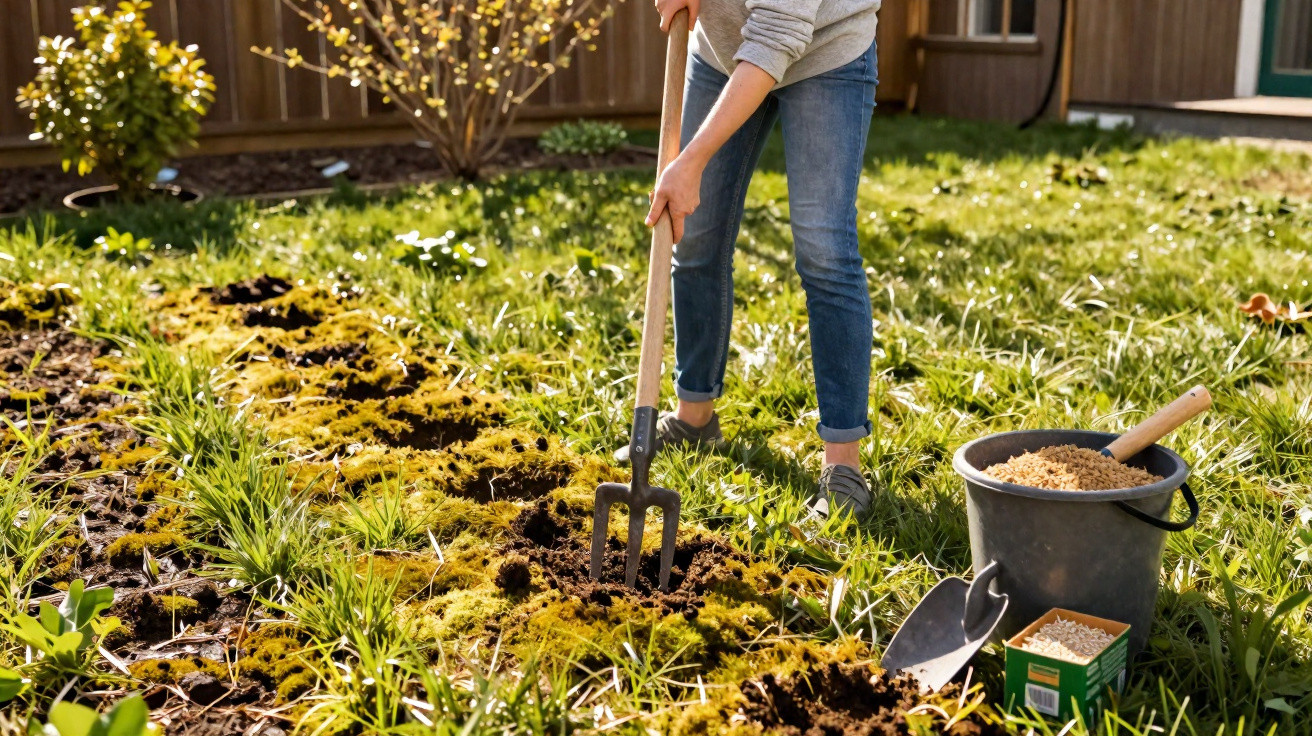
- Aerate lightly: Use a garden fork or lawn aerator to make occasional holes in the soil, allowing water and air to penetrate more effectively.
- Clear leaves and branches: Rake away old layers of leaves and twigs so that the grass blades are exposed.
- Sharpen the blades: Blunt blades tear grass rather than cutting it cleanly, weakening the plants further.
It is usually best to avoid using a scarifier at this stage, especially on weakened lawns. This aggressive treatment is more suitable once the grass is actively growing again.
The first mow in March: gentle rather than drastic
Once the preparation and weather are right, it is time for the important step. Many professionals describe it as merely “brushing” the grass blades. In other words, the mower should remove only the tips, not half of each plant.
“For the first mow of the year: use a high setting, move slowly and remove no more than one third.”
With an adjustable lawnmower, choose one of the higher settings. For an older machine without an exact centimetre scale, a simple ruler check can help you estimate the cutting height. At first, it is better for the lawn to remain slightly too long than to be cut too short.
After this first pass, do not leave it for weeks before mowing again. Regular but still gentle mowing is more effective. A schedule of every seven to ten days, always following the one-third rule, encourages a dense, hard-wearing lawn.
A thicker lawn with sensible aftercare
The March approach works best when combined with a few straightforward care measures. These include:
- A light initial feed: A spring lawn fertiliser supplies nutrients for fresh growth.
- Targeted overseeding: Reseed thinner areas with a suitable seed mixture so that no open gaps remain.
- Keep an eye on watering: Young shoots in particular are sensitive to extended dry spells.
Anyone with pets or a heavily used lawn benefits especially from this combination. The surface then recovers more quickly and remains more resistant to wear.
Wildflowers, insects and lawns can work together
An increasing number of gardeners deliberately mow certain areas less often. Some leave a corner to develop into a small wildflower meadow or postpone cutting around boundary areas considerably. This supports insects, provides food for pollinators and creates visually interesting contrasts in the garden.
This approach can easily be combined with a well-maintained lawn: the main area stays short and usable, for example for children playing or garden furniture, while individual strips or corners are allowed to grow taller. The result is a lively garden that is both practical and close to nature.
Why patience in spring is genuinely worthwhile
The temptation to intervene drastically in March and “create order” is understandable. Those who take a more restrained approach at this stage strengthen the lawn’s root system and overall vitality. The plants are more likely to spread sideways, fill gaps and naturally form a denser carpet.
The central message is this: it is not an early, close cut that creates the dream lawn, but the combination of the right timing, a high cutting height and strict adherence to the one-third rule. Anyone who follows these points will enjoy not only a more attractive lawn over the course of the year, but also less work dealing with moss, weeds and bare patches.





Comments
No comments yet. Be the first to comment!
Leave a Comment