
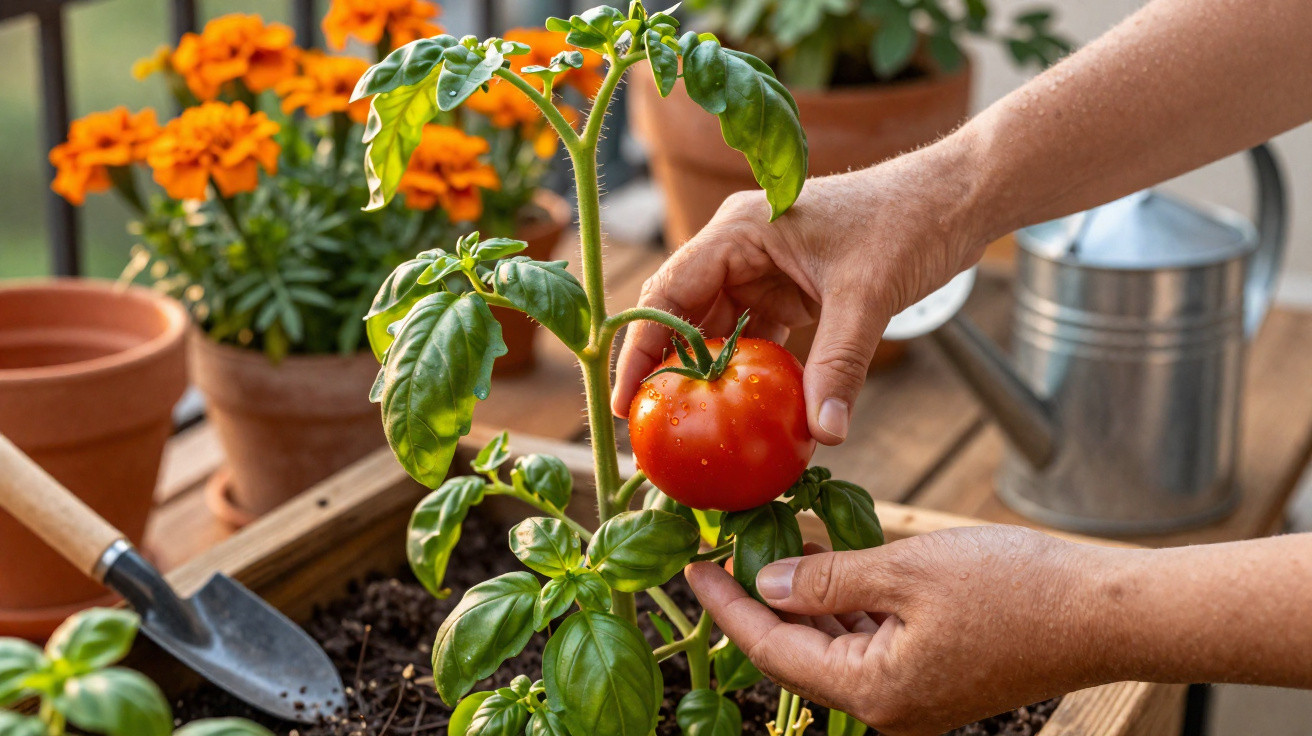
Looked after, watered and fed your tomatoes – yet they still taste only average?
One unassuming culinary herb could make a surprising difference.
Many home gardeners put a great deal of effort into their tomatoes: costly varieties, specialist fertilisers and carefully planned watering. Yet the fruit that reaches the plate can still be rather bland. A simple companion planting combination, whether in a bed or a large container, promises more flavour, healthier plants and a bigger harvest – without chemicals.
Why a kitchen classic improves tomatoes in the bed
What works on the plate can work in the garden too: tomatoes and basil are an ideal pairing. Gardeners deliberately use what is known as companion planting. Different plants grow close together, support one another and create a small, resilient ecosystem.
The principle is straightforward: each species contributes its own strengths. Basil releases a powerful scent, attracts beneficial insects and tends to deter unwelcome visitors. In return, the tomato plant experiences less stress, grows more vigorously and often produces more flavoursome fruit.
“Planting basil directly alongside tomatoes creates better conditions for ripe, sweeter and less disease-prone fruit.”
Many home gardeners say that, after switching to this pairing, their tomatoes taste noticeably fuller, sweeter and more distinctly of tomato. Although this effect has not been comprehensively measured scientifically, experiences in gardens point strongly in that direction.
How basil genuinely helps tomato flavour
The greatest benefit starts out of sight: basil repels common pests whose feeding puts tomato plants under stress. These include, in particular:
- whiteflies
- aphids
- other sap-sucking insects that gather on leaves and shoots
Fewer pests mean less stress. Instead of constantly producing new defensive compounds, the plant can direct its energy towards growth and fruit formation. The fruit can then ripen more steadily, developing more sugars and aromatic compounds.
At the same time, basil’s dense foliage partly shades the soil. This keeps it cooler, slows drying and reduces swings in moisture levels. Tomatoes particularly appreciate these even conditions. With fewer watering extremes, the harvest is likely to be riper, with fruit that often tastes gentler and less sharply acidic.
Online gardening guides and personal reports mention another effect: in a number of gardens, yields were estimated to increase by 20 to 30 percent when basil was used as a companion plant. More fruit, better ripening and fewer losses – the difference is ultimately noticeable on the plate.
A win-win in the bed: protection and flavour enhancement in one
Basil benefits not only the tomato directly but also the wider garden environment. Its delicate summer flowers are highly attractive to pollinators:
- bees
- bumblebees
- other beneficial insects
Tomatoes are chiefly self-pollinating, but they benefit greatly from vibration and movement caused by insects. More visitors to the flowers often result in more fruit per plant and more evenly formed clusters.
“While basil’s scent disrupts pests, its flowers attract pollinating insects at the same time – a double benefit.”
Basil also appears to keep fungal diseases such as the feared late blight somewhat under control. Gardeners report less severe infection when the herb grows in the same bed. It cannot replace good growing conditions, but it can reduce some of the disease pressure on tomatoes.
The secret tip: a third plant for even more garden power
Some experienced home gardeners take the idea a step further by planting another flowering species between the rows: borage, often known as cucumber herb. Its deep roots loosen the soil and draw nutrients from lower layers towards the surface.
The star-shaped blue flowers are especially appealing to bees and other beneficial insects. This creates a trio of tomato, basil and borage that brings abundant life to the bed. Tomatoes benefit from well-rooted, airy soil and a whole army of beneficial insects that keeps pests in check.
How to plant basil correctly with your tomatoes
To make the most of the effect, choose both timing and spacing carefully. Both crops enjoy warmth, light and nutrient-rich soil. Plant once the risk of the last night frosts has safely passed.
| Aspect | Recommendation for tomato & basil |
|---|---|
| Planting time | late spring, after the last frosts |
| Position | sheltered, very sunny and protected from wind |
| Tomato spacing | 50–60 cm between tomato plants |
| Basil spacing | planted between tomatoes every 30–40 cm |
| Container size | at least 40–60 litres of compost per tomato+basil in a container |
In a bed, a simple arrangement works well: one tomato, one basil beside it, then another tomato, and so on. This keeps both plants close enough to benefit each other without competing too heavily.
Tips for balconies and patios
Anyone without a garden can recreate the same principle in a container. A large pot or planter holding 40 to 60 litres is usually enough for one tomato plant and one vigorous basil plant.
- use high-quality vegetable compost
- add a drainage layer of expanded clay or gravel
- plant the tomato deeply, but set basil relatively shallowly
- water regularly, while avoiding waterlogging
A mulch layer – made from grass clippings or chopped straw, for example – retains moisture in the compost. Tomatoes respond with more even development, while basil stays fresh and tender for longer.
Avoid care mistakes to retain the flavour advantage
Basil is sensitive to severe drought and excessive wetness. Both weaken the plant and reduce its usefulness as a protective companion. Ideally, water in the morning or evening, directly around the root zone.
A practical tip: regularly pinching out the basil shoot tips encourages branching. The plant remains bushy, produces more leaves and intensifies its aroma. At the same time, there is always fresh greenery for the kitchen – in salads, pasta dishes or simply on toasted bread with the first slices of sun-ripened tomato.
“The more often you harvest basil, the denser it grows – and the more strongly its scent protects the tomato bed.”
Tomatoes themselves need a sturdy cane or trellis, regular removal of side shoots and balanced feeding. Over-fertilising may produce enormous plants, but their flavour can be less intense. A moderate nutrient level generally leads to more concentrated aromas.
What really lies behind the “better flavour”
The word “aroma” may sound like magic, but clear processes are at work. During sunny, low-stress periods, tomatoes build up more sugars, acids and fragrant compounds. Many of these substances accumulate in the skin and flesh while the fruit remains on the plant.
When tomatoes are under constant pressure from dry spells, pests or diseases, they often ripen too early or unevenly. The result can taste watery or one-dimensional. Basil indirectly helps to lessen such disruption.
There is another factor: gardeners who consciously care for a tomato-and-basil pairing usually harvest later, allowing the fruit to ripen longer on the plant. It is during this final ripening stage that sweetness and fragrance become markedly more pronounced. Supermarket tomatoes are often picked earlier so that they withstand transport – another reason why this garden trick can put home-grown tomatoes ahead on flavour.
Extra ideas for even more enjoyment in your own garden
Anyone who enjoys this combination can experiment with varieties. Flavoursome cocktail or cherry tomatoes often respond particularly well to good conditions. Paired with small-leaved basil, they create truly fragrant islands in containers.
Other herbs, such as thyme or oregano, can also grow nearby if there is sufficient room and the tomatoes still receive enough air circulation. The important thing is not to let the base of the plants become completely overgrown, so that leaves can dry quickly after rain.
Risks should also be considered: during very wet summers, even the best plant partnership cannot entirely prevent fungal diseases. In that case, choose an airy position with rain protection, such as a simple tomato house. Basil still provides support, but it does not replace suitable care.
Anyone who tries this simple trick will usually notice a difference in the very first season. Tomatoes harvested ripe and still slightly warm from the sun, followed by a handful of basil from right beside them – it is hard to get closer to a Mediterranean summer feeling in your own garden.


Comments
No comments yet. Be the first to comment!
Leave a Comment