
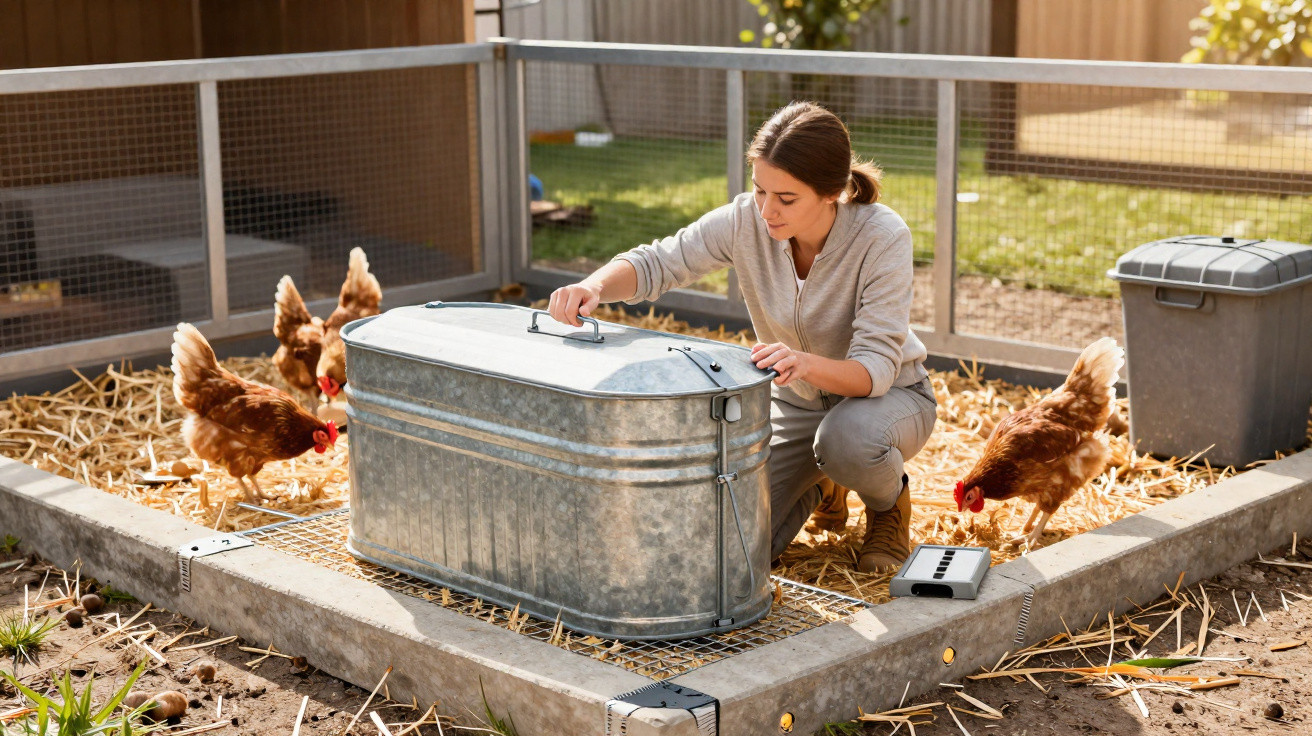
Keeping chickens means that, sooner or later, you may have to deal with an unwelcome visitor: the brown rat. Chicken coops are highly appealing to them, offering food, eggs and shelter while causing stress for the flock. The encouraging part is that sensible routines and a few targeted alterations can make a coop far less inviting to rats, without costing a fortune.
Why rats find your chicken coop so appealing
To a rat, a typical chicken coop resembles an all-inclusive hotel: leftover feed, grain, water, soft bedding, dark corners and a roof overhead. That exact combination is powerfully attractive.
They are also remarkably capable animals. Rats can:
- jump up to one metre high;
- swim extremely well;
- dig deep burrows;
- squeeze through gaps of around two centimetres;
- gnaw through wood, thin plastic and crumbling concrete with their teeth.
For many keepers, the damage goes well beyond a few missing grains. Rats:
- eat eggs;
- may injure or kill chicks;
- keep the whole flock under constant stress;
- can noticeably reduce egg production;
- contaminate the coop and run with droppings and urine.
The health risk is frequently underestimated. Rats can carry pathogens such as salmonella and leptospires. Anyone working in the run, collecting eggs or replacing bedding therefore comes into indirect contact with them.
“Common warning signs include scratching sounds at night, a strong ammonia smell, soil holes with smooth edges, and rats that are visible even during the day.”
Immediate action: five changes you can make today
Before considering traps, concrete or professional pest controllers, review everyday routines. Many rat issues develop simply because food is always available and the coop sends out small ‘invitations’.
1. Secure feed consistently
The key principle is simple: rats must not be able to reach easily available food. Start with these straightforward actions:
- remove feeders and leftovers from the run in the evening;
- do not leave grain exposed in the coop;
- avoid scattering feed all around the run.
Anyone who likes to hand-feed their chickens excessively may unknowingly be setting out a buffet for rats. Smaller portions that are pecked up quickly are the better option.
2. Store feed supplies in rat-proof containers
An opened sack of chicken feed in the corner of a garden shed is effectively a sign telling rats to help themselves. Safer choices include:
- old metal bins with tightly fitting lids;
- thick barrels made from rigid plastic;
- sturdy metal feed bins from an agricultural supplier.
Thin plastic storage boxes rarely withstand rodents’ teeth for long. Raising containers slightly on bricks or pallets also makes climbing up more difficult.
3. Make feed available only when needed
Treadle feeders are particularly effective: chickens use their weight to open the lid, while the feed remains largely inaccessible to other animals. This reduces spillage on the ground and, consequently, the attraction for rats.
Without this type of equipment, one simple rule still works: feed in the morning and clear away every last remainder in the evening. In many coops, this change alone significantly reduces rat visits.
4. Check water points
Dripping drinkers and small puddles beside the coop are not only unhygienic; they also give rats a constant supply of water. A sealed drinking container that is easy to clean and checked regularly removes this added advantage.
5. Reconsider compost and kitchen waste
Many chicken keepers combine the coop area with a compost heap. While practical, this can rapidly attract rats if the compost:
- is positioned very close to the coop;
- is open and easy to access;
- contains meat scraps, processed meat, cheese or other animal products.
A better approach is a lidded compost bin set some distance from the chicken area, with no meat or cheese leftovers. Feed kitchen scraps intended for the chickens straight away rather than allowing them to lie around.
Make the chicken coop itself a barrier to rats
Anyone seeking a lasting solution will usually need to make structural changes. Fortunately, not every coop requires an expensive complete refurbishment. Carefully chosen improvements in the right places are often enough.
Concrete slab, raised coop or reinforced floor
Three common options have become established among hobby keepers:
| Solution | Advantages | Disadvantages |
|---|---|---|
| Concrete slab (8–10 cm) | long-lasting, easy to clean, highly effective against burrowing | more work, material costs, difficult to relocate |
| Coop on posts (30–40 cm high) | underside remains clearly visible, rat nests are spotted quickly, improved air circulation | steps or ramps needed, must be firmly anchored in strong winds |
| Wooden floor with wire mesh stapled underneath | suitable for existing coops, manageable cost | wood must be protected from moisture |
For wire mesh, quality is worthwhile: welded wire with small apertures of around 6–13 millimetres and a substantial wire thickness withstands far more than cheap aviary mesh.
Identify and seal weak points
Rats do not need a large entrance. A simple test is useful: if a pencil fits through a gap, a young rat can force its way through it too.
Pay particular attention to:
- cracks in concrete floors;
- gaps around doors and hatches;
- unsealed openings around water and electrical lines;
- wood that already shows signs of gnawing.
Strong, bite-resistant materials are suitable for sealing these areas, including:
- steel wool or fine metal shavings packed firmly into gaps;
- sheet metal at especially vulnerable points;
- mortar or repair concrete for larger cracks.
The run and fence as a barrier
The run should not become a rat motorway either. Close-mesh, preferably welded wire fencing buried to a depth of around 20 centimetres and bent outwards makes digging underneath much harder. A smooth top edge or overhang helps limit climbing.
Traps, poison and when professional help is needed
If several rats are already appearing during the day or the ground is covered with holes, prevention alone is often no longer sufficient. At that stage, traps or professional pest control should be considered.
Using traps correctly
Those wishing to avoid poison should look at snap traps or electric traps. Key rules include:
- always place traps along walls and established travel routes;
- leave them baited but unset for the first two days, allowing the animals to gain confidence;
- prevent chickens and other pets from reaching the traps, for example by using boxes with side openings.
Suitable bait includes peanut butter, pieces of nut or strongly scented dry food. Regular checks and hygienic disposal of trapped animals prevent new odours that could warn other rats.
When a professional pest controller makes sense
For severe infestations, in densely built-up residential areas, or where children regularly play in the garden, professional pest control may be the safer option. Pest control companies:
- assess travel routes and nesting sites;
- use approved rat poisons only in secured bait stations;
- monitor results and adjust the strategy where necessary.
Anyone taking this step should also deal consistently with feed hygiene and structural weak points. Otherwise, new animals will eventually move in.
Why patience is your most important ally
A rat population in the garden rarely develops overnight. It usually builds gradually: first a few scratching noises, then occasional sightings, and eventually a network of tunnels around the coop. Tackling the problem works in much the same way: more like a game of chess than a quick fix.
“Those who consistently remove food sources, reduce hiding places and gradually close structural gaps first take away rats’ comfort, then their refuge – and finally their desire to stay.”
It is especially useful to view the coop from a little distance: where might animals feel safe? Which corners do I barely see? How often are there genuinely no grains left lying about? An honest assessment usually reveals the most effective changes quickly.
Over time, the effort pays off in several ways: chickens remain calmer, lay more reliably, the coop is easier to clean, and the risk of disease falls considerably. It also brings the reassurance of being in control, rather than expecting the next alarming rustle every night.






Comments
No comments yet. Be the first to comment!
Leave a Comment