
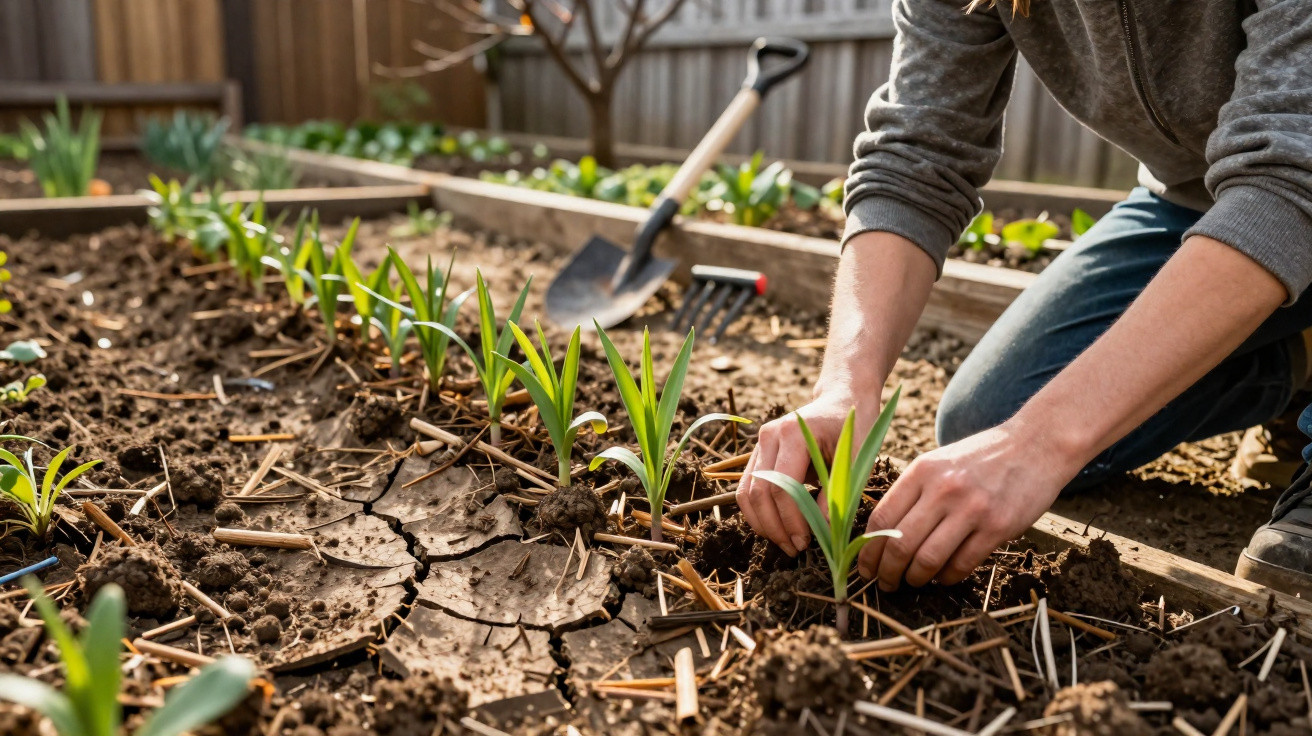
No soft mulch, no ornamental bark: only exposed, trodden-down soil resembling an abandoned building site. Yet gardeners across the UK, the US and much of Europe increasingly say they are deliberately allowing their soil to firm up. The long-standing routine of perpetual digging and raking is gradually falling away. Neighbours may look doubtful. Harvests are improving. Slug numbers are falling. Our relationship with the soil beneath us is changing. By spring, the contrast can be remarkable.
On a frosty morning in February, I went to a small community garden on the outskirts of town. The plots appeared unusually… quiet. Nobody was double-digging or working their beds into something resembling whipped chocolate cake. Most of the soil was level and slightly crusted, as though the gardeners had left after autumn and not returned.
A volunteer then crouched down, pushed her fingers into a slim crack in the hard-looking surface and raised a section of soil as if lifting a brownie. Beneath it, the earth was dark, compact and discreetly full of life, with fine white roots and earthworms throughout. The top looked compressed. Underneath, it was concealing something.
She smiled, almost as though she needed to apologise, and said, “We stopped fighting the soil.”
Why gardeners are deliberately letting their soil compact
Tell a conventional gardening club that you are allowing your soil to compact and you may receive a few disapproving looks. For decades, the ideal has been “light, fluffy soil” that falls apart between your fingers. Suggesting that firmer, more settled ground might suit plants better can sound almost blasphemous.
Yet something interesting is occurring in gardens where people have reduced the constant digging. Beds may be less immaculate during winter, but their plants are taller by summer. Water does not disappear during the first warm spell. Weeds appear less overwhelming. The upper few centimetres can seem hard, while the roots below still find everything they require.
This is not about being lazy; it reflects a different understanding of soil as a living system.
In one suburban road I visited, three neighbours had unintentionally created a modest experiment. All began with similarly clay-heavy back gardens. Gardener A maintained the familiar system: rotavating in autumn, raking in spring and continually pursuing a fine, fluffy tilth. Gardener B adopted a full no-dig approach, using a deep compost mulch and keeping foot traffic off the beds. Gardener C chose a middle course, with light mulching, minimal disturbance and naturally firmed paths and bed edges.
Three years later, the outcome was uncomfortable for the school of thought that says soil should always be dug. Gardener A’s beds were attractive in April, yet they baked hard by July, needed frequent watering and gave lower yields during hot periods. Gardener B had thriving soil life, but also faced a persistent struggle with slugs and woodlice attracted by the rich surface mulch. Gardener C’s beds, with their mildly compacted surfaces and firm paths, suffered fewer pest surges and retained moisture more consistently, even through a dry summer.
None of them had set out to conduct a scientific trial. They were simply neighbours exchanging observations over the fence and realising that the soil everyone worried about - soil left to settle and become firmer - was quietly exceeding expectations.
What happens when soil is permitted to firm slightly over winter is less mysterious than it may appear. Rainfall strikes the ground, gravity takes effect and air spaces close. This can sound harmful if you picture roots struggling for oxygen, but roots do not occupy only the 1 cm surface crust. They grow lower down, in the area where natural structure has had time to develop.
When the ground is not repeatedly dug, fungal networks remain joined, worm channels stay open and organic matter becomes bound into aggregates rather than being loosened and broken apart. A firmer top layer also reduces evaporation and gives young plants a steadier hold. The important distinction is that healthy compaction is not the same as a lifeless, cement-like pan. It is closer to a well-used woodland path than a concrete car park.
When gardeners describe “letting soil compact”, they often mean that they have stopped rebuilding its structure every autumn. They accept a slightly tougher surface in return for greater resilience deeper down.
How to let soil compact without damaging it
The gardeners benefiting most from this approach are not simply treading over their beds and hoping it works out. They manage compaction as you might handle sourdough dough: firm, but not lifeless. In practice, the method can be surprisingly straightforward.
Once the growing season is over, they remove large pieces of plant debris, retain roots wherever possible and apply a restrained layer of organic material - commonly 1–3 cm of compost. They then leave the bed alone. There is no rotavator and no double-digging. Rain, along with winter freeze–thaw cycles, takes care of the rest.
In early spring, instead of cultivating the entire bed, they disturb only the areas needed: slim drills for sowing, planting holes for seedlings or a gentle rake to loosen the surface crust alone. The soil underneath can feel firmer than the cushion-soft beds displayed at a garden centre, but roots often travel into and through it with unexpected ease.
This should not be presented as an idyllic solution without drawbacks. Some readers may already have tried “doing nothing” only to end up with ground as hard as brick and unhappy plants. The reality is that compaction takes different forms. Severe, lifeless compaction caused by heavy machinery, repeated trampling or building rubble is an entirely different problem.
Gardeners choosing firmer soil are therefore also adapting their routines. They establish permanent paths and avoid placing their weight on growing areas, even if this means awkwardly stepping between beds. They add organic matter regularly, however modestly. They also accept that the soil may not resemble crumb cake in March.
They are candid about the emotional challenge as well: abandoning years of advice, YouTube tutorials and glossy “before and after” images does not happen overnight. On a wet day in March, when faced with a dull-looking compacted bed, reaching for a fork can feel tempting simply because it feels like taking action.
As one experienced allotment holder told me on a cold, grey afternoon, gardeners are caught between two instincts. The older voice insists, “Dig deeper, break it up, make it look right.” The newer one suggests, “Step back. Let the soil organise itself.” Most real gardens will probably settle somewhere between those positions.
“The big shift for me,” says Ruth, who runs a small organic market garden on heavy loam, “was realising my job wasn’t to fluff the soil, it was to stop ruining the structure the worms had already built. When I let the top compact a bit and stopped panicking, the roots went down, not sideways.”
For anyone considering this more hands-off method, several practical reminders can keep expectations sensible:
- Letting soil compact does not mean you can trample across beds throughout the year.
- Even firm soil needs organic matter from time to time, including small amounts that suit a limited budget.
- Heavy clay may require added patience and shallow mulches before this approach performs at its best.
- Sandy soil may gain more from protecting the surface than from deliberately encouraging compaction.
- Let us be honest: nobody really manages this perfectly every day, so think in terms of seasons rather than flawless routines.
What changes in spring when you stop fluffing the soil
Spring is when this quiet shift either demonstrates its value or falls apart. In beds that have been allowed to firm up, the first noticeable change is often the way water moves. When early rain arrives, the surface may puddle briefly before gradually absorbing it. Within a few hours, the bed looks settled rather than freshly cultivated and marked by erosion.
Planting also has a different feel. Pressing a trowel into slightly firm soil brings resistance, more like slicing a well-baked loaf than cutting into sponge cake. Seedlings are less likely to wobble in the wind. Seeds sown directly may require more care over depth, but the surrounding soil holds its form and moisture, helping to prevent fragile new roots from drying out in the first spell of sunshine.
Anyone who has seen a carefully raked seedbed become dust within a week may find the understated strength of a firmer surface unexpectedly comforting.
There is another, less obvious change. In gardens where soil is left to settle, the spring workload feels less frantic. There is no rush to dig every bed before a cold snap or heatwave arrives. Instead, you open narrow rows for carrots, beans and salads. You are not reconstructing the entire bed from the beginning.
Psychologically, that makes a difference. Physically, it also affects the weeds that emerge. Deep disturbance brings old, persistent seeds up from the seed bank. Light disturbance often produces fewer seedlings that are easier to pull. For anyone who has watched an April seedbed turn into a May jungle, that is a small but genuine relief.
Another quiet change follows: roots begin to travel downwards rather than sideways. In firm, structured ground, plants commit to depth. During heatwaves, those deeper roots can access successive layers of cooler, moister soil. This does not mean you will never need to water again. It does mean your garden is less dependent on a single missed day with the hose.
You are unlikely to see this transformation in one season. It becomes apparent in the second or third year, when a neighbour’s beds split into wide cracks while yours develop only fine lines, like a face that has aged well. Letting soil compact is not really about laziness; it is about exchanging immediate satisfaction for longer-term ease.
We all recognise the moment of standing before a plot in early spring, filled with ambitious plans while our shoulders already ache before work has begun. Gardeners who quietly opt for firmer, less-disturbed soil are turning that moment into something calmer, less heroic and more sustainable. It is not a miracle, merely a different account of who is doing the hardest work: the gardener or the soil life.
| Key point | Detail | Benefit for the reader |
|---|---|---|
| Letting soil settle | Reduce deep digging and permit natural winter compaction with light mulching | Less back-breaking work and more stable spring beds |
| Targeted disturbance | Open only planting rows and holes rather than tilling entire beds | Fewer weeds, better root depth and more time for actual gardening |
| Healthy versus dead compaction | Firm, living structured soil compared with a hard, lifeless pan caused by heavy traffic | Know when to trust firmness and when the ground genuinely needs loosening |
FAQ:
- Isn’t compacted soil bad for roots and drainage? Truly compacted, lifeless soil is a problem. What many modern gardeners are doing is allowing natural firmness at the surface while creating structure and life below, so that both water and roots can still move freely.
- Should I stop walking on my beds completely? Ideally, keep routine foot traffic on paths and boards, and handle growing areas gently. An occasional step will not ruin everything, but repeated pressure in the same places creates genuine compaction.
- Does this method work on heavy clay? Yes, although clay requires patience. Combine shallow mulches, minimal disturbance and time. Across several seasons, worms and roots can make even sticky clay surprisingly workable.
- Do I still need to add compost or manure? Yes. Firm soil still depends on organic matter to feed soil life and form structure. You may apply it less frequently or less deeply, but that consistent supply of goodness remains important.
- How do I know whether my soil is “good firm” or “bad compacted”? Try pressing in a fork or spade. If it enters with some effort but not complete resistance, and you can see worms and crumbly clods beneath the surface, you are probably in the “good firm” zone. If it barely goes in and roots turn sideways, you may need to loosen the soil gently and rebuild its structure over time.





Comments
No comments yet. Be the first to comment!
Leave a Comment