
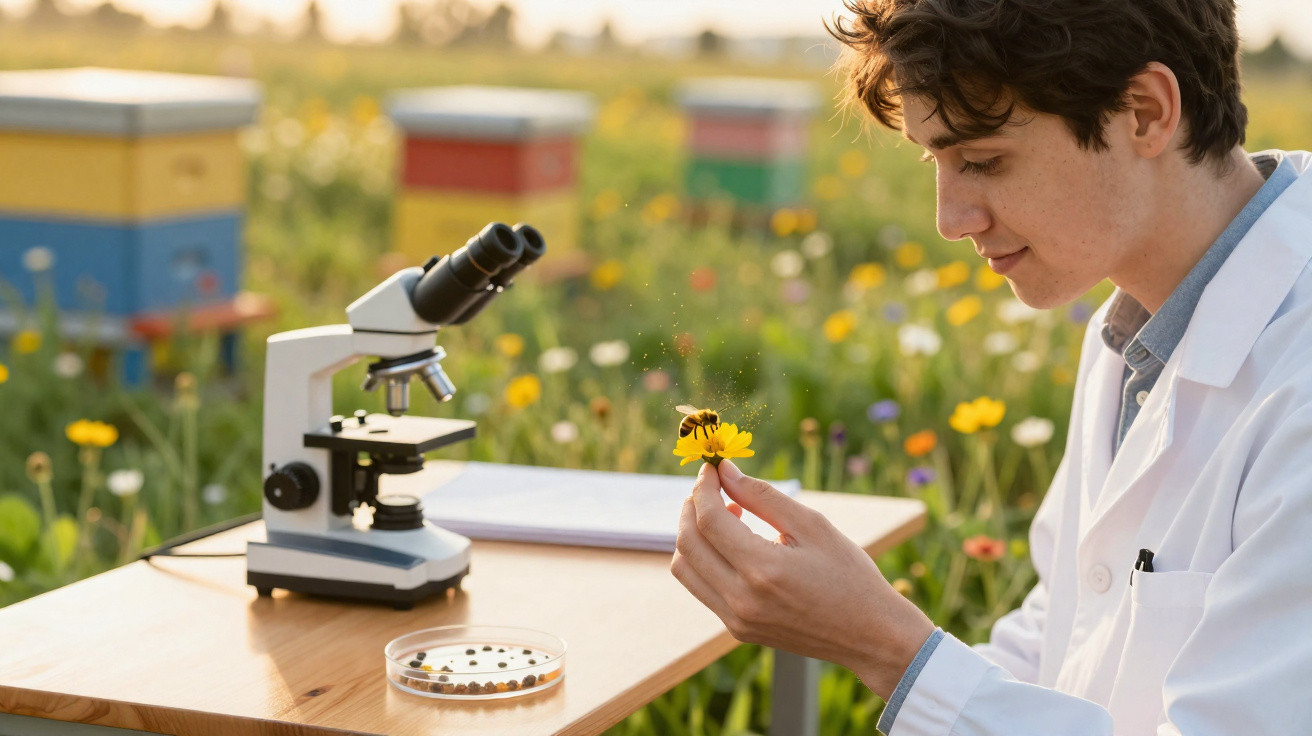
For years, beekeepers and farmers have warned about the gradual decline of honey bees. Pesticides, diseases and parasites are among the many threats. Research from the United States now suggests that pollen itself contains a previously overlooked ally that can protect both bees and crops.
When honey bees decline, harvests are at risk
Honey bees pollinate a substantial share of crops grown worldwide. Without them, many types of fruit and vegetables would produce far less reliably. At the same time, colonies are facing growing pressure: more than 30 different pathogens are found in and around hives, including viruses, bacteria, fungi and parasites.
To tackle some of these pathogens, beekeepers have mainly relied on antibiotics. However, these treatments are becoming less effective, disrupt the animals’ gut microbiome and leave residues in wax and honey. Resistance has already been well documented in some countries. The search for alternatives is therefore under way - and attention has turned to a place where few had expected to find solutions: pollen.
Researchers show: pollen is not merely food for bees, but also a kind of microbial medicine cabinet.
A team from Washington College and the University of Wisconsin–Madison examined pollen collected from nature and pollen taken from beehives. They discovered a surprisingly broad range of bacteria, including numerous types that actively combat disease-causing microbes.
Bacteria in pollen: an invisible network inside the beehive
Honey bees store large amounts of pollen, which is their principal protein source for larvae and adult worker bees. What appears to be a straightforward food store proved, in the study, to be a complex microbial ecosystem.
The researchers isolated 34 strains of actinobacteria from flower pollen and from pollen already stored in hives. About 72 per cent of these strains belonged to the genus Streptomyces, a type of bacterium well known from antibiotic research. Many medicines used in human healthcare originally come from these very microbes.
Notably, the same bacteria were present on flowers, on foraging bees and, later, in the hive. It appears that bees carry these microbes with them during foraging flights and unknowingly incorporate them into colony life.
The more diverse the plant life around a hive, the more varied the invisible bacterial selection in its pollen appears to become.
Landscapes containing many different flowering plants hosted substantially more distinct microbes. Monocultures, by contrast, impoverish not only nectar and pollen sources but also this “microbial toolkit”. The composition of this pollen microbiome could play a decisive part in a colony’s ability to withstand disease.
Natural antibiotics against bee and plant diseases
The team then investigated whether the isolated bacterial strains could genuinely slow down pathogens. In laboratory trials, they placed the pollen-derived strains in “competition” with six troublesome microbes - three that mainly affect bees and three that damage crops.
The organisms examined included:
- Aspergillus niger - a fungus that causes the condition known as “stonebrood” in bees
- Paenibacillus larvae - the pathogen responsible for the feared American foulbrood
- Serratia marcescens - a bacterium capable of weakening bee immunity
- Erwinia amylovora - the cause of fire blight in fruit trees
- Pseudomonas syringae - responsible for leaf spots and shoot damage in many crops
- Ralstonia solanacearum - responsible for wilting diseases in crops such as tomatoes and potatoes
Almost all tested Streptomyces strains markedly inhibited the growth of Aspergillus niger. This matters because stonebrood can spread unnoticed in a hive for a long time. Infected larvae harden and genuinely resemble small stones, which gives the disease its name.
Several strains also showed moderate to strong effects against the pathogen behind American foulbrood. Beekeepers regard this disease as one of the most severe threats: it is highly contagious, generally results in the death of the colony and requires extensive control measures.
Of particular interest to agriculture, the same pollen bacteria also slowed fire blight, wilting diseases and root rots - pathogens that can cause enormous crop losses. This brings pollen into focus as a potential source of new plant-protection products.
A chemical arsenal on a microscopic scale
The bacteria produce an entire range of bioactive compounds. The researchers identified several established groups of active substances:
- PoTeMs - polycyclic macrolactams with strong antimicrobial activity
- Surugamides - cyclic peptides with a broad spectrum of activity
- Lobophorins - compounds that are primarily active against bacteria
- Siderophores - molecules that bind iron, making survival more difficult for pathogens
Many of these substances are considered comparatively stable and have low toxicity to non-target organisms. This is precisely the combination sought in biological plant-protection products and alternative treatment approaches.
The bacteria in pollen behave like tiny pharmacies, releasing their medicine directly into bee bread.
How plants, microbes and honey bees work as a team
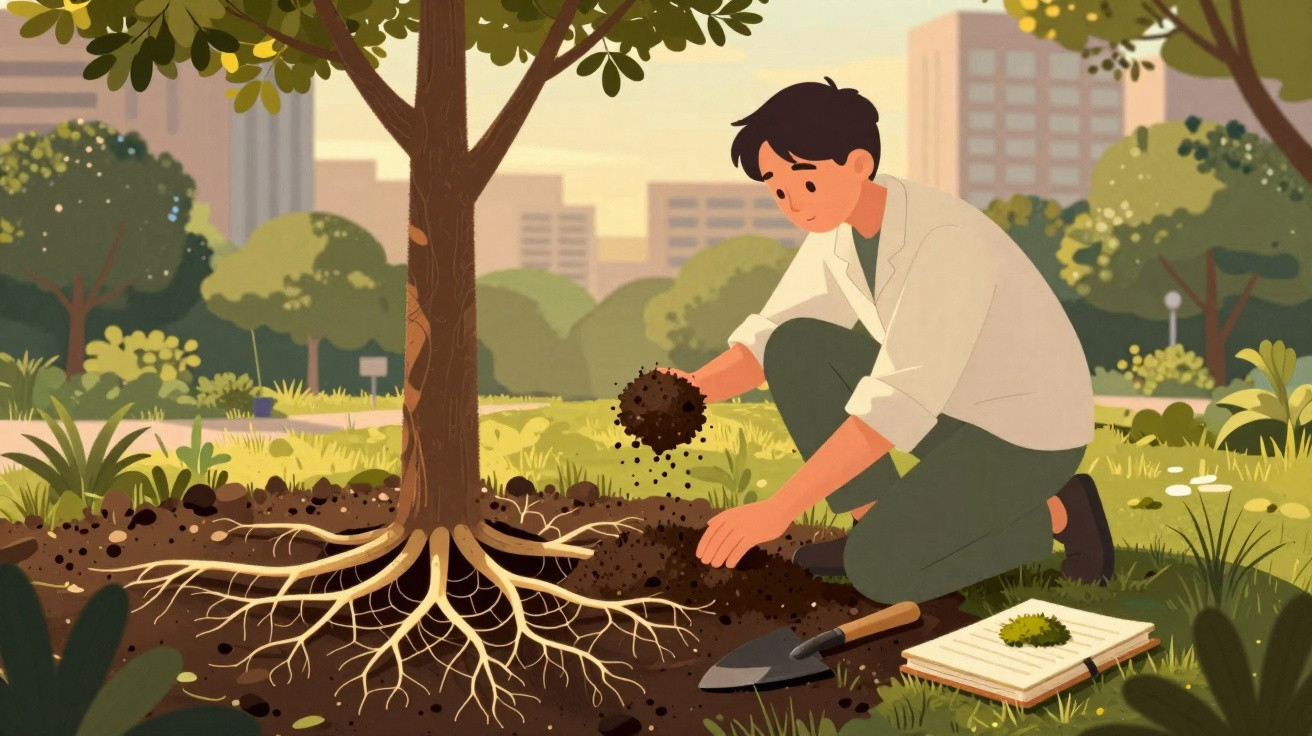
Where do these beneficial microbes originally come from? Genetic analysis indicates that they are not random contaminants, but so-called endophytic bacteria. These live inside plants, often without harming them - and, at best, to mutual benefit.
Within the genomes of the strains examined, scientists found typical tools for this way of life: enzymes that score plant cell walls, genes for plant hormones such as auxins and cytokinins, and siderophores that enable bacteria to bind iron. These features allow them to establish themselves in leaves, stems and flowers.
When a plant produces flowers, the endophytes also reach its pollen. Honey bees automatically take them up while foraging and then carry them into the comb. There, they multiply in stored pollen and continue producing antimicrobial compounds.
This creates a three-part network:
- The plant provides the endophytes with habitat and nutrients.
- The bacteria protect the plant against pathogenic microbes in the soil and on its surface.
- The bees use microbe-enriched pollen as food and as a protective shield against their own pathogens.
The quality of this network depends heavily on the diversity of flowers in the surrounding area. A species-rich meadow supplies not only different pollen types but also different strains of beneficial bacteria. By contrast, a vast maize field usually offers only a very limited microcosm.
New strategies for sustainable beekeeping
In many countries, beekeepers currently use two antibiotics above all: oxytetracycline and tylosin. Both can disrupt bees’ gut microbiome and leave residues in beeswax. Reports are also increasing that pathogens such as Paenibacillus larvae are becoming less susceptible.
The study points to a different path: rather than fighting bacteria, it may be possible to introduce beneficial microbes into the hive in a targeted way. Beekeepers could add selected Streptomyces strains to colonies, for instance through specially treated pollen or fondant feed.
Possible advantages of such a strategy include:
- a lower risk of resistance because whole mixtures of compounds are active
- fewer residues in honey and wax
- stabilisation of the bees’ natural microbiome
- simultaneous protection for surrounding crops
Rather than flooding the hive with medicines, it could be possible to strengthen the colony’s own microbial defences.
Considerable testing is still required before such an approach reaches practical use - in field conditions, over several years and across different climates. Yet the direction is clear: bacteria that already occur naturally in pollen have major potential to become part of gentler beekeeping management.
What this means for agriculture and gardens
Many home gardeners are already familiar with products containing beneficial fungi or bacteria intended to strengthen plant roots. The pollen bacteria now examined could contribute to a next generation of such treatments, focusing on flowers, leaves and above-ground plant parts.
Possible applications could include sprays or seed treatments containing selected Streptomyces strains to curb fire blight or root rots. Ideally, farmers and beekeepers would work together: flower strips and diverse crops would strengthen both the range of beneficial organisms in fields and microbial protection in beehives.
Even now, private gardens can do much to support this invisible network:
- grow a varied mix of native flowering plants
- avoid tidying away every “wild corner”
- largely refrain from using broad-spectrum fungicides in the garden
- support local beekeepers who keep bees close to their home area
Key terms explained briefly
What does “endophytic” mean?
Endophytic microbes live inside plants, often between their cells. Many do not harm the plant; some improve nutrient uptake or make it more resilient to drought stress and pathogens. They can be thought of as the plant’s “co-residents”, quietly helping to maintain stability in the background.
What are siderophores, and why are they so useful?
Siderophores are small molecules that bind iron extremely tightly. Bacteria use them to “fish” this scarce trace element from their surroundings. In the competition for iron, pathogens lose ground. Siderophores therefore work indirectly like a protective shield for plants and bees, depriving harmful competitors of vital resources.
Ultimately, the study demonstrates how closely bees, plants and microbes are interconnected. Anyone seeking to protect bees should therefore look beyond Varroa mites and spraying agents, and also consider flower diversity, soil life and the invisible helpers in pollen. This web of relationships may hold the most robust answers to many of agriculture’s current problems.



Comments
No comments yet. Be the first to comment!
Leave a Comment