
The first sign that something was amiss with my soil did not come from a laboratory report or gardening guide. It was the lack of sound and movement. When I turned the ground, no beetles scurried away and no worms wriggled from the light; there was only a compact, pale layer of earth that seemed exhausted. I had always taken pride in my “clean” garden: weed-free beds and ruler-straight rows, achieved with a popular product I used without a second thought.
One spring, as I knelt beside the beds, I pushed my fingers into the soil and felt… nothing. There was no bounce or friable texture, only a dead, sticky paste.
A few weeks afterwards, I made one small change that altered everything.
Why I trusted the soil instead of the bottle
The product sat prominently in my shed, its bright packaging promising fast results and “stronger plants”. You would recognise the brand immediately from the shelves of any garden centre. I used it as people around me did: weed killer here, all-purpose chemical fertiliser there, and insect spray whenever something moved where I did not want it.
It seemed efficient, almost expert. The paths remained clear and the beds looked neat. For years, I convinced myself that this bare, immaculate appearance showed control rather than absence.
Then, one summer, my tomatoes looked superb but tasted like… cardboard. The courgettes became huge, yet watery. I remember cutting into a tomato and expecting that rush of fragrance, only to find nothing. My neighbour, who never used anything “from a bottle”, gave me a misshapen tomato from her untidy-looking plot. It was ugly and slightly split at the top, but one bite made mine seem completely inferior.
She laughed and said, “The worms do the work for me.” I realised that I had not spotted one worm in my beds for weeks. That lodged in my throat more firmly than her tomato had.
I began reading late into the night, disappearing down the rabbit hole of soil biology. Every article made the same straightforward point: chemical weed killers, synthetic fertilisers and broad-spectrum pesticides affect far more than the things we want rid of. They damage the entire tiny city beneath our feet.
Fungal networks, bacteria, microscopic creatures and earthworms – the unseen workers that create structure and nourish roots – were effectively being driven out by my “efficient” routines. My soil had not become unhealthy by chance. I had deliberately made it sterile, simply because glossy labels had told me to.
The season I stopped spraying and paid attention
One wet March afternoon, I took the half-empty bottle to the back of the shed and pushed it behind an old rake. It was not dramatic, but it felt like betrayal against every advert in the gardening aisle that I had ever trusted. I chose a simple approach: no weed killer on the paths, no “blue crystal” fertiliser in the beds, and no insect spray unless there was a genuine infestation.
Instead, I covered the ground with materials already to hand: shredded leaves from the previous autumn, partly finished compost and even some cardboard beneath the most weed-ridden corners. Overnight, the garden appeared rougher, less like a magazine spread and more like an unfinished project.
The first few weeks were difficult. Dandelions emerged through the paths, and I grumbled as I removed them by hand. Slugs seemed to hold a small festival among my young lettuce. I came close to giving up.
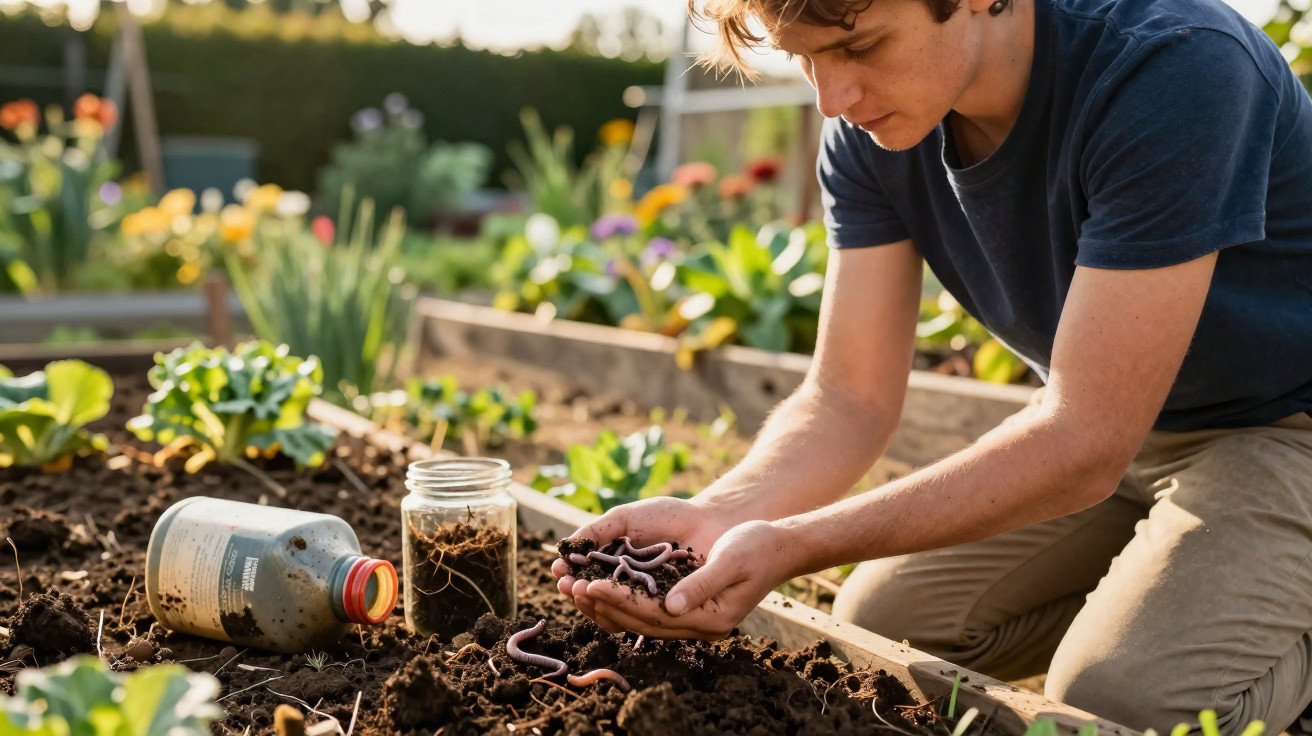
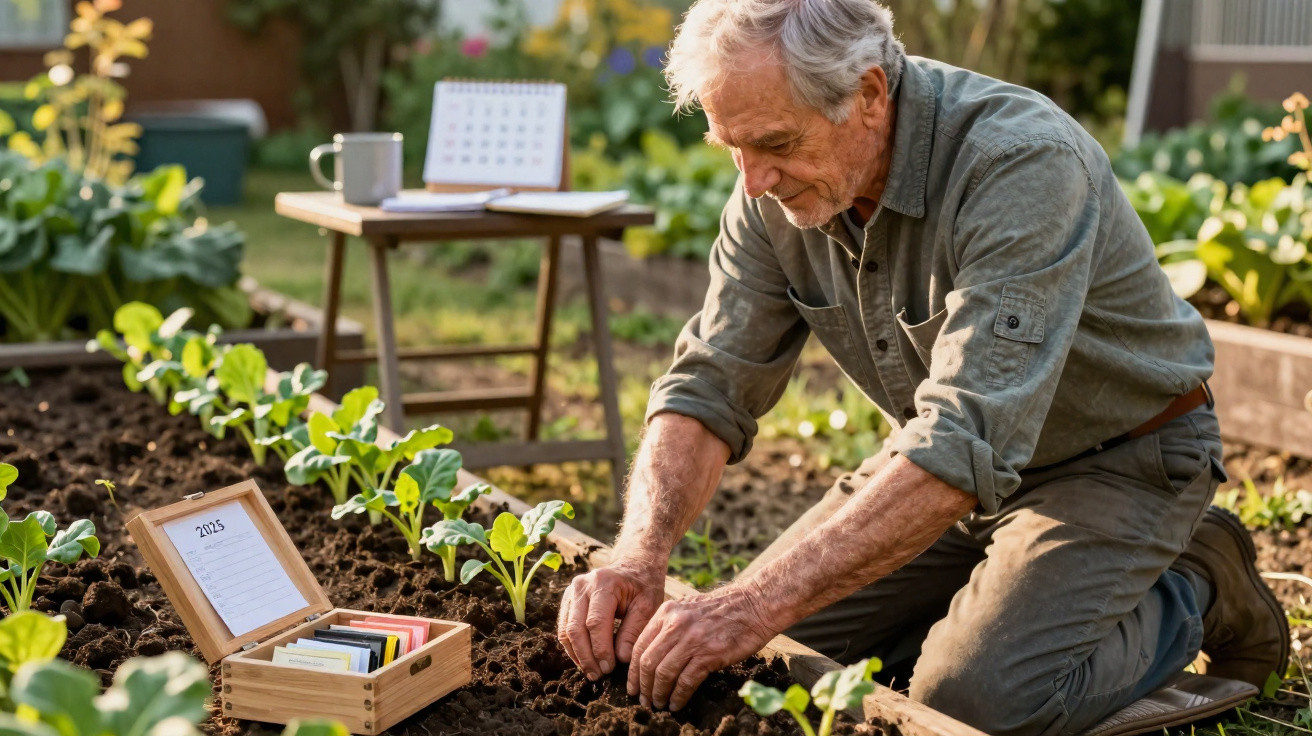
Then, on a perfectly ordinary morning, I pushed my hand trowel into a bed mulched with leaves. The earth that came up was darker and looser. One earthworm flashed pink before curling away. I stopped, then began checking other areas like a child hunting for buried treasure. There were more worms, tiny white roots spreading sideways and a handful of swift beetles disappearing from view.
There was no dramatic, viral “before and after” image. Just a gentle change from lifeless stillness to quiet activity.
The reasoning is fairly simple. Once you stop treating soil with harsh products, the first result is… nothing. It simply sits there. Then the organic material you add – leaves, straw, compost and kitchen scraps – provides food for microbes. Those microbes attract fungi, which help improve soil structure. Improved structure draws in worms and other organisms that make tunnels, aerate the earth and create room for water and air.
That living chain nourishes plants more gradually, but more consistently, than any instant fertiliser granule. Roots travel deeper, locate nutrients for themselves and become less dependent on what comes from a bag. It takes longer and looks a little messier, but it is far more resilient when the weather changes from drought to downpour.
Small habits that bring soil life back
If you are considering putting down the sprayer, begin on a small scale. Choose one part of your garden as a “no-product zone” for a season. Use no weed killer, synthetic fertiliser or pest spray there. Regard it as an experiment rather than a revolution.
Cover bare ground with organic material: chopped leaves, untreated grass clippings, straw or simple homemade compost. Apply it in light layers, as though you are tucking the soil beneath a blanket rather than smothering it. Then, once each week, use a hand trowel to lift a little soil and simply inspect it. Pay attention to its colour, scent, texture and worms. This modest routine lets you follow the quiet recovery.
The most challenging part is not the method, but the patience it demands. We have all had that moment in the garden when a weed appears and our minds shout, “Spray it, now.” If everything does not immediately look neat, it can feel as if control is slipping away.
Let us be realistic: nobody pulls every single weed as soon as it appears. Do not act as though you will. Set aside a regular period each week for hand-weeding, then accept a few “freedom weeds” as part of the arrangement. Put your effort into feeding the soil rather than battling every unwanted visitor. Your future self – and your future harvest – will quietly appreciate it.
One thing I didn’t expect was how emotional it would feel to see life crawl back into the ground I’d been nuking for years.
There was a morning that summer when I lifted a clump of mulch and saw a spider, three beetles, a millipede, and a fat earthworm all in the same handful of soil. That tiny universe wriggling in my palm made me realize I hadn’t “lost control” of the garden. I’d finally given it back.
- Stop using the harshest product first – this is usually weed killer or broad-spectrum insect spray.
- Introduce one gentle practice – a thin layer of mulch, a small compost heap or a no-dig bed.
- Observe more than you intervene – five peaceful minutes with a trowel can teach more than ten labels.
- Expect a “messy” period – it represents transition, not failure.
- Notice the small improvements – one worm, darker earth or fewer cracks during dry weather.
Letting the garden become a little wild again
A year after I stopped using that popular product, my garden had changed in ways no packaging could show. The boundaries were softer, and a few self-sown flowers grew among the vegetables. Soil that had once been pale and compact now contained dark streaks and crumbly areas. When rain fell, it soaked in rather than collecting on the surface as it had before.
The harvest was different as well. My tomatoes were not perfect, but they tasted sweeter. Carrots sometimes split, yet they had the earthy intensity I remembered from gardens in childhood. The largest change could not be seen: during heatwaves, the plants stayed upright for longer, as though their roots in living soil gave them greater stamina.
This change does not mean becoming a purist or permanently throwing away every shop-bought product. It is more about asking, whenever you reach for a bottle, “Is this helping the life under my feet, or working against it?” Even reducing use, or delaying it, can allow your soil community time to rebuild.
The truth is that the “perfect” garden we are sold – uniform, spotless and insect-free – has a cost that only becomes clear when everything falls silent. Once you have heard the soil breathing again, returning to that approach is difficult.
If you have had a similar experience – a time when you stopped using a product and noticed a subtle but powerful change – your story could help someone now standing in their garden with a bottle in hand, wondering whether there is another option.
Perhaps the real gardening trend is not a new miracle spray or expensive tool. Perhaps it is this gradual, almost stubborn faith that life wants to come back as soon as we stop forcing it away. Putting down the bottle may feel insignificant on the day. Years later, you may see a single earthworm and recognise that this was when your garden began breathing again.
| Key point | Detail | Value for the reader |
|---|---|---|
| Reducing chemical products | Stopping weed killers, synthetic fertilisers and broad pesticides in one test area | Offers a realistic, low-risk way to watch soil life return |
| Feeding the soil, not just the plants | Using mulch, compost and no-dig methods to improve structure and biology | Produces tastier crops and more resilient beds during weather extremes |
| Observing small signs of life | Checking soil colour, texture, smell and organisms regularly with a trowel | Helps readers monitor progress and remain motivated through the messy transition period |
FAQ:
- Question 1 How long does it take for soil life to return after you stop using chemicals?
- Question 2 Can I still use some fertiliser without damaging my soil?
- Question 3 What should I do about weeds if I stop using weed killer?
- Question 4 Will pests explode if I stop spraying insecticides?
- Question 5 Is this approach possible in a very small urban garden or on a balcony?

Comments
No comments yet. Be the first to comment!
Leave a Comment