
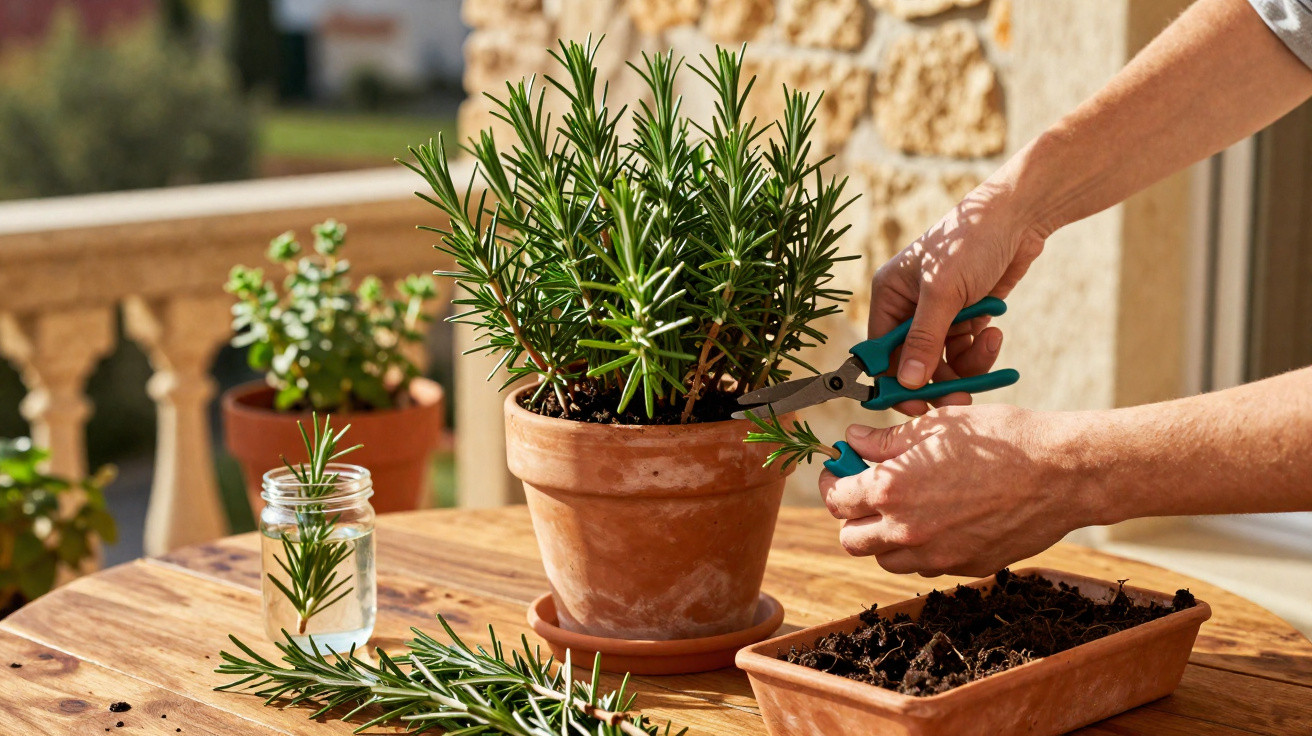
On a sunlit balcony or beside a dry garden path, rosemary can subtly define the atmosphere of an entire outdoor area.
This hardy Mediterranean shrub may appear low-maintenance, yet every tidy, scented plant benefits from some thoughtful pruning. Carried out properly and at the right moment, pruning keeps rosemary bushy, productive and packed with flavour.
Why rosemary needs regular pruning
If it is left unpruned, rosemary becomes woody, lanky and thin. Its stems dry out, the foliage becomes sparse, and both its appearance and scent decline. Gardeners who leave rosemary untouched are often taken aback when it suddenly fails following a cold snap or drought.
Regular, light pruning keeps rosemary dense, fragrant and far less vulnerable to weather shocks and disease.
Regular pruning offers several distinct advantages:
- Promotes new green shoots that are rich in essential oils
- Creates a fuller shrub and prevents bare, open centres
- Makes it simpler to gather stems for cooking or drying
- Prolongs the useful life of older plants
Whether rosemary is growing in a terracotta pot beside the kitchen door or in poor, stony ground at the far end of a border, the principle is unchanged: brief, regular sessions with secateurs are preferable to severe corrective cuts every few years.
Best times of year to prune rosemary
Spring after flowering: the main window
Across most temperate areas, the principal pruning period is from March to April, once the small blue flowers have faded. At this point, severe frosts are usually subsiding and the shrub is preparing for fresh growth.
Aim to shorten every spent flowering stem by around one third, cutting only into soft green growth and never into hard brown wood.
Only cut into live, green growth; old brown wood rarely sprouts again and can leave permanent gaps.
In colder locations, it is sensible to wait until April, allowing wounds to seal quickly without the risk of late frosts. Young plants require gentler treatment: trimming 5–8 centimetres from the tips is generally sufficient to encourage branching.
Autumn tidy-up before winter
A further gentle trim in October can help rosemary enter winter in better condition. This is chiefly a health measure rather than a shaping exercise: take away dead or damaged sprigs, thin overcrowded areas, and remove stems resting on damp soil.
Pick a dry, bright day so cut surfaces can dry swiftly. Do not make major cuts then, as soft new growth produced in late autumn is especially susceptible to frost damage.
Applying a mineral mulch, such as gravel or grit, around the base helps shield the roots while allowing the soil to drain freely. This matters greatly for a plant that dislikes cold, waterlogged conditions.
Times you should avoid pruning
Certain conditions are repeatedly unsuitable for pruning rosemary.
| Period | Why it is risky |
|---|---|
| Hard freeze in winter | Fresh cuts do not heal, and frost can kill whole branches. |
| Heatwaves in midsummer | Heat and water stress combine with pruning stress, weakening the plant. |
| Very wet, muggy spells | High moisture around wounds encourages fungal diseases. |
| Full flowering period | The plant is investing energy in blooms and pollinators; heavy cuts disrupt that cycle. |
Light kitchen harvesting is acceptable at almost any time. More substantial structural pruning should follow the spring-and-autumn pattern.
Pruning by plant age: young, mature and old rosemary
Shaping young rosemary plants
During the first two years, the aim is to create a dense, compact framework. This early structure can determine the plant's appearance for a decade or longer.
Rather than cutting heavily, gardeners should “pinch” soft shoot tips between finger and thumb, or use fine secateurs. Taking only 5–10 centimetres from the end of each shoot encourages branching and produces a fuller plant.
Never remove more than a quarter of the foliage from a young rosemary in a single season.
Make each cut immediately above a pair of leaves or a small side shoot. New side branches will develop from these points, creating a rounded shape instead of a tall, thin stem.
Managing older, woody rosemary
After a few years, rosemary develops woody stems that may be bare near the base. At this point, gradual “renovation” is the most effective method.
In the first year, remove only dead grey twigs and the most tired, unproductive branches. Over the next one or two years, slowly reduce the remaining woody stems, ensuring that each retains some green growth.
This phased approach allows the root system to adapt. It also leaves enough foliage for photosynthesis to sustain the plant while younger side shoots become established lower down.
Severe cuts: last chance for neglected shrubs
A rosemary plant neglected for years may consist of a tangle of thick brown stems with leaves only at their ends. When that happens, light tidying will not restore its form.
A more drastic cut, reducing some stems by up to half, may be possible, but only if small leaf buds or green areas are visible on the wood. Fully dead, dry branches should be removed at their base.
After a hard prune, rosemary can take several months to show clear regrowth, even if the plant survives.
While recovery takes place, water cautiously, do not apply large doses of fertiliser, and ensure the soil drains freely. Heavy feeding encourages vulnerable soft growth and does nothing to solve the plant's structural problems.
Different pruning tactics for pots and open ground
Rosemary in pots
Plants grown in containers have restricted root room and experience changing moisture levels, meaning they tolerate harsh pruning less well.
As a general guide, reduce pruning intensity by roughly a third when compared with similar rosemary growing in the ground. This means gentler shaping, with particular emphasis on tip pruning rather than deep cuts into the main framework.
After pruning, monitor drainage carefully. Empty saucers and use a gritty compost mixture. Freshly cut rosemary sitting in cold, wet compost is highly likely to die back.
Rosemary in the ground
In borders and gravel gardens, rosemary roots can extend further and reach moisture deeper in the soil. This added resilience permits firmer shaping: established plants often tolerate shortening vigorous shoots by up to two thirds.
Good airflow is important. Removing several crossing branches from the middle of the shrub lowers humidity around its centre, reducing the chance of fungal issues in damp climates.
Trailing and ball-shaped forms
Prostrate and trailing varieties, commonly planted to cascade over walls or cover banks, require a slightly different approach. The objective is to preserve their horizontal, flowing habit.
Shoots that suddenly grow vertically can be shortened back to a side branch, allowing the plant to retain a low, cascading outline.
For smart ball-shaped shrubs, gardeners usually trim around the whole plant by approximately one third, moving around it while cutting. Two sessions each year, after flowering and in early autumn, maintain a thick, rounded form suited to formal beds and herb knots.
Mistakes that cost plants their life
Cutting into dead or very old wood
One principle lies behind almost all rosemary pruning advice: never cut into dead brown wood in the expectation that it will grow again. In most cases, it will not.
Scratch the bark with a fingernail: green and fragrant underneath means live tissue; dull, dry and beige means dead wood.
Cuts made in dead areas remain bare, and these sections may gradually die back to the base. Eventually, the shrub develops hollow centres and unattractive gaps that cannot be filled in.
Removing too much at once
Removing more than roughly one third of the foliage at a time leaves the plant without enough photosynthetic “panels”. Its reserves are redirected towards healing, leaving less energy available for new growth.
For severely misshapen shrubs, a better strategy is to make several restrained cuts over two or three years. The plant can regain its vigour each season before the next stage of shaping.
Wrong tools, wrong day
Blunt blades crush rather than cleanly cut stems, increasing the amount of injured tissue and delaying healing. Unclean blades may also transfer fungal spores and bacterial pathogens between plants.
Sharp, clean secateurs are suitable for most rosemary shrubs. Long-handled shears can make work quicker on large, hedge-like clumps, but they must still be sharp and wiped with disinfectant before use.
Dry, bright conditions are best. Wounds close more rapidly, while fungal spores spread less easily than they do during prolonged damp weather.
Turning prunings into new plants
Taking cuttings from pruned stems
Fragrant cuttings need not go straight onto the compost heap. Many can become new rosemary plants.
Select non-flowering shoots measuring about 10–15 centimetres. Remove leaves from the lower half so that no foliage sits beneath the compost surface or water line. Roots will form along this bare section.
A mixture of equal quantities of gritty sand and multi-purpose compost works well for rosemary. It drains effectively while retaining enough moisture to support developing roots.
Water vs soil: two routes to rooting
Soft spring growth often roots easily in a glass of water placed on a bright windowsill. Changing the water daily keeps it fresh and lets gardeners see the first white root tips emerging.
For semi-woody stems collected later in the season, placing them directly into moist, gritty compost generally produces stronger root systems. The growing medium protects delicate roots from changes in light and temperature.
Water-rooted cuttings need gentle handling when moved; soil-rooted ones usually transplant with less shock.
Aftercare for young plants
When roots are a few centimetres long, move the cuttings into individual 10–12 cm pots. For the next several weeks, balance is essential: keep the compost lightly moist but never waterlogged, and protect plants from fierce midday sun and strong winds.
Once each young rosemary is 15 centimetres tall and has developed several side shoots, it is generally ready to be planted outside permanently, preferably in spring after the risk of frost has passed.
Extra context: what “woody” really means and how climate shifts timing
Gardeners often refer to “old wood” without explaining the term. In rosemary, it means the thicker lower sections of stems, where the bark has hardened and become brown. These parts provide structure rather than flexibility. Most growing points and dormant buds are found in the greener growth further from the base.
Climate and position can also alter the pruning schedule. In coastal areas or urban heat-island locations in the UK and United States, flowering may begin sooner, moving the post-flowering pruning window forward by several weeks. In colder inland areas, the same opportunity comes later, sometimes not until late April. Gardeners with very sheltered balcony pots may see early flowering while still experiencing sharp overnight frosts, making the timing more complicated.
A simple “fingernail test” to check for live wood, combined with attention to local frost dates, is often more useful than following a fixed calendar. With these checks and a consistent, restrained approach, rosemary can remain an attractive and productive feature for many years, regardless of the size of the garden in which it grows.





Comments
No comments yet. Be the first to comment!
Leave a Comment