
On a rain-soaked Tuesday towards the end of November, I went outside to inspect my pots and immediately felt that all-too-familiar dread. The terracotta that had looked glorious in July was marked with green streaks, the compost was cold and sodden, and a forlorn rosemary had taken on the grey, drooping look that quietly says: root rot. It had rained endlessly, sunshine seemed like a myth, and my containers were sitting flush against the patio, like forgotten mugs in the washing-up bowl. I reacted as many of us would: prodded the compost, let out an exaggerated sigh and promised myself I would “sort it out at the weekend”. I never did. The plant died.
Then a garden expert gave me advice that seemed almost laughably straightforward: “Get those pots off the ground.” The recommended material was so everyday that I nearly ignored it. But that is where things become interesting.
The hidden winter threat beneath your pots
Gardeners often discuss frost, snow and “hard winters”, yet we give far less attention to those long stretches of dreary drizzle. This is precisely when root rot can do its most subtle damage. A pot placed directly on a cold patio or deck allows water to gather beneath it with nowhere to drain. Its drainage holes become blocked by the flat surface, the compost remains saturated, and the roots are left suffocating in a cold bath. Once yellow leaves appear or you notice a faint, mushroom-like odour, the problem is usually well advanced.
Friends who work in garden design will tell you that containers tend to fail during winter through small, gradual issues rather than disasters. Standing water, limited air circulation and tiny drainage holes blocked at the base all quietly add up. We picture plants being killed by one dramatic night of frost, but many decline slowly over weeks in wet, airless compost. The frustrating truth is that this often has little to do with your ability as a gardener. It is simply physics and the surface underneath the pot working against you in a place you hardly ever inspect.
There is a particular sort of sadness in lifting a pot in March and finding black, waterlogged, sour-smelling compost below. You remember the watering, feeding and Instagram pictures from June, only to find yourself holding a plant that did not die from neglect, but from being cared for in the wrong way. When you buy a lovely glazed pot, nobody tends to mention that the ground beneath it can matter as much as the compost inside. Once you understand it, though, it is impossible to overlook.
The simple material garden experts recommend
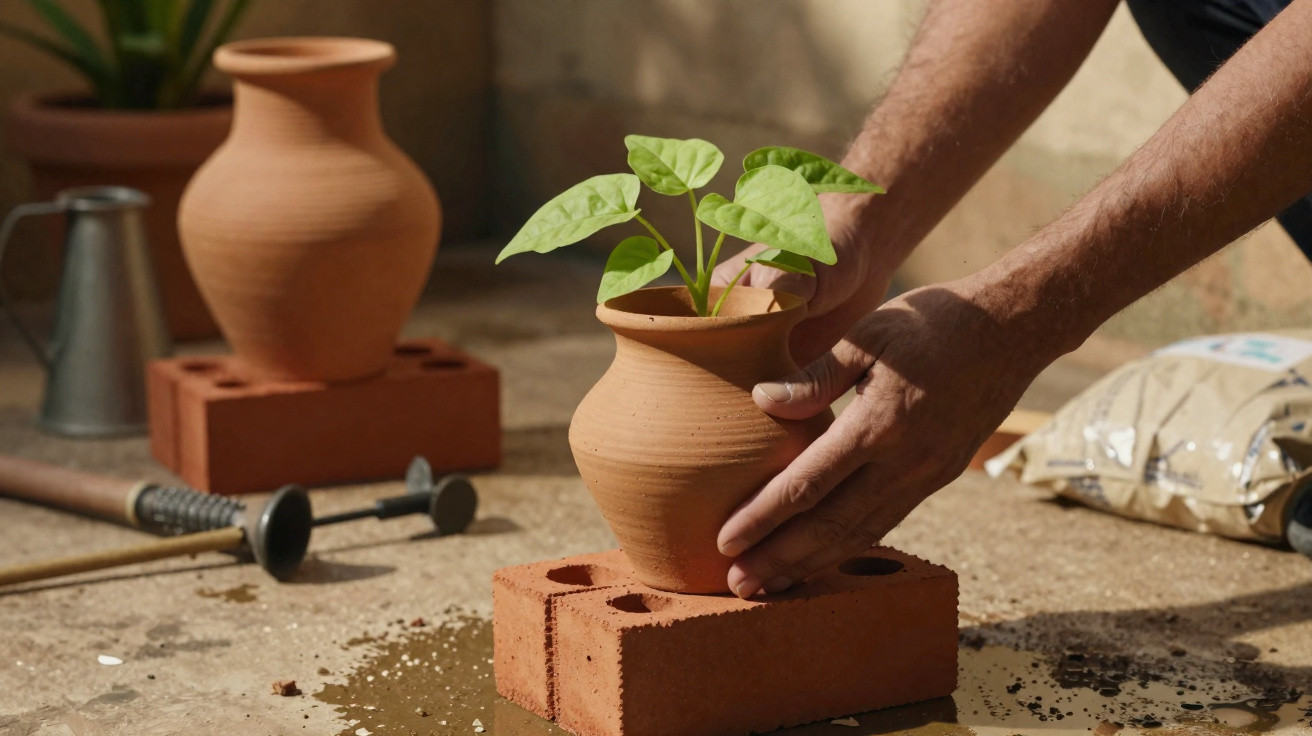
So what is this supposedly miraculous solution? It is neither an expensive smart planter nor a clever new device. It is a material builders and DIY enthusiasts have had lying around for years: porous bricks or pavers. These are not the shiny, fully glazed, water-repellent versions, but plain, rough and slightly gritty blocks that allow water through and encourage air movement. Garden experts have discreetly placed them beneath pots for years, raising containers by a few centimetres and giving roots a better chance of surviving winter.
Putting pots on these bricks creates a miniature space below them for drainage and airflow. Instead of remaining trapped against paving or decking, water can run from the pot’s drainage holes into the gaps between the bricks. The brick absorbs some of that moisture before gradually releasing it into the surrounding air, much like a solid sponge. That slim layer of breathing room can be the difference between roots that rot and roots that rest.
One RHS-trained gardener I spoke to put it bluntly. “If you put your winter pots straight on a smooth patio, you’re basically putting a plastic lid on their lungs,” she said, brushing soil off her hands. “You lift them onto something porous, they breathe. Less rot, fewer sulky plants.” It is not particularly glamorous science, but it is effective during wet British winters, when compost rarely has the chance to dry properly between showers.
Why bricks outperform decorative pot feet
You may have noticed ornamental pot feet in garden centres: small lions, balls and decorative shapes that look charming beneath a terracotta container. To be fair, they can help. Yet basic chunky bricks or rough pavers often perform better in winter because they support the entire bottom of the pot while keeping drainage open. They distribute weight more evenly, reducing the risk of larger containers cracking or leaning, and avoid the small pressure points that can chip pots on frosty mornings.
Bricks offer grip as well as texture. A weighty glazed pot on a slippery patio can shift slightly when wind and frost arrive, particularly on a balcony. Resting it on a pair of rough bricks gives it a more secure footing. It is not the sort of tip that produces attractive before-and-after posts on social media, but experienced gardeners will recognise its value. Some of the most useful methods never reached Pinterest.
How porous bricks changed my winter pots
The first time I attempted it, I felt slightly foolish. I found several spare bricks in a neighbour’s skip, wiped away the cement dust and pushed them beneath a line of herb pots that normally spent winter looking miserable. The scrape of terracotta across brick was unexpectedly satisfying, rather like moving furniture in a room that has annoyed you for months. With my hands in my pockets, I stepped back and thought: surely that cannot make much difference.
Several weeks later, it had. The basil still died, because basil always seems to die as soon as the heating comes on and daylight becomes scarce. However, the thyme and rosemary, which normally became brown and brittle after sitting in soggy compost, kept their colour. The compost remained cool and moist without becoming swampy. When I moved a pot slightly, there was no spreading layer of green slime underneath, only darkened brick and a mild earthy scent rather than the sour smell of rot I had learnt to fear.
There was something reassuringly quiet about the change. Rather than wrapping every container in fleece and circling the patio like an anxious parent, I began to trust the arrangement. The pots even appeared more deliberate. Their slight elevation made them seem displayed rather than simply placed wherever space allowed. Most importantly, down beneath the surface, the roots had access to air. Not a great rush of it, just enough.
We all know the “why did this die?” feeling
Anyone who has lost a treasured plant over winter will recognise that strange blend of guilt and uncertainty. You go over every decision: did I water it too much or too little? Was it the cold spell, the wind or the weekend away? Very often, the answer is painfully ordinary: the pot spent three months flat on a cold stone slab, and the water never truly drained away. Sometimes the hardest part is not what we did wrong, but what we did not realise needed checking.
In truth, hardly anyone is crawling around outside in December to inspect pot bases like a structural engineer. We are trying to put the bins out in the rain without our fingers going numb, not conducting drainage assessments. That is why uncomplicated physical adjustments can be so valuable. Once the bricks are in place, they continue doing their work without calendar alerts, apps or a demand for flawless routines.
Why winter roots need breathing room
Roots do not become entirely inactive over winter. Their growth slows, they rest, but they continue to require oxygen. When they remain in waterlogged compost pressed against an unforgiving patio, oxygen levels fall and fungal diseases take hold. Root rot is not a single culprit; it is a varied group of opportunistic fungi that thrive in cold, stagnant and saturated conditions. Elevating a pot on a porous surface shifts the balance against them.
The small gap below a pot has two significant effects. First, it lets water travel downwards instead of moving sideways and returning into the compost. Secondly, as temperatures and pressure change around the container during the day, it provides a route for air to be drawn in. This gentle exchange of air and water is almost impossible to see, but it transforms the winter conditions inside the pot.
Garden experts often advise keeping compost “just moist, not wet” in winter, as though this were simple to achieve. On a compact urban balcony or shaded terrace, though, you have little control over the water falling from the sky. Rain comes in sideways, gutters overflow and pots absorb it all like small buckets. Raising them on bricks is a quiet way of changing the conditions, so that even during heavy downpours the roots are not entirely at the weather’s mercy.
How to raise pots at home without overcomplicating it
There is no need for a detailed plan or a trip to the shops. For most medium-sized containers, two or three rough bricks or porous pavers will suffice. Position them flat where the pot will sit, leaving narrow spaces between the bricks so water can escape. Then lift the container onto them, making sure that at least a couple of drainage holes are unobstructed rather than directly above solid brick.
Where a patio is particularly uneven, adjust the arrangement as needed: use one brick at the back and two at the front, for instance, or make a small staggered platform. It does not have to appear immaculate, as the bricks are barely noticeable from a distance. In fact, the extra height can look quite smart and lend the plant a little more presence. Just do not use completely non-porous supports, such as glossy tiles or thick plastic blocks, as the main base, since that removes much of the advantage.
For exceptionally large, heavy containers, arrange several bricks in a compact grid to spread the load safely. Prioritise stability first, drainage second and appearance third. A surprising number of garden experts have what look like modest building sites hidden beneath their impressive pots: mismatched bricks, offcuts and broken pavers. Somehow, it still looks wonderful. The roots are unconcerned about the bricks’ colour.
The understated pleasure of losing fewer plants
There is a special pleasure in stepping outside in late February and seeing that more pots have survived than usual. A small sage plant that normally blackens at the base remains upright, violas are still flowering around the rim of their pot, and the compost feels moist rather than claggy when pressed between your fingers. You realise that winter has not been a complete cull. You have not turned yourself into an endlessly efficient gardening machine; you simply altered what your pots were standing on.
That is what I appreciate about this approach. It acknowledges that life is busy, that we forget to move containers out of the rain or inspect drainage holes every week. Instead of demanding constant, perfect care, it alters the conditions so that plants become slightly more forgiving. The bricks under your containers act as a discreet safety net, catching minor errors before they become major losses.
At some point, gardening advice began to feel like an ever-growing list of concerns: pests, diseases, climate, timing, pruning and feeding. This is the reverse of that. It is almost dull. You put porous bricks beneath your pots and largely carry on with winter. Yet those modest blocks can mean greeting spring with living plants rather than asking, once again, “what went wrong this time?”
One small change, an entirely different winter
On a calm January morning not long ago, I went outside into the thin, pale light that makes everything seem a little delicate. The patio slabs were slick, and the air carried a faint smell of wet leaves and cold metal. I walked towards a large ceramic pot that had disappointed me twice before with root-rot losses. This time, raised on three plain, unattractive bricks, the plant inside was green, firm and waiting.
Sometimes the real magic in a garden isn’t the plant you choose, but the way you let its roots live. We tend to favour dramatic remedies: heat mats, insulating covers and elaborate sheltering systems. Yet it is often the subdued, almost invisible choices that keep plants alive throughout our long, wet winters. A few porous bricks beneath a pot may not seem important when you hold them. Under the container, where water and air exchange places, they can make all the difference.
If you are fed up with plants succumbing to that slow, baffling winter decline, do not only blame the weather or your “black thumb”. Look beneath your pots. When they are pressed directly against stone, raise them onto something rough, solid and mildly absorbent. The adjustment is minor. But the relief of reaching spring without that familiar smell of rot is anything but.




Comments
No comments yet. Be the first to comment!
Leave a Comment