
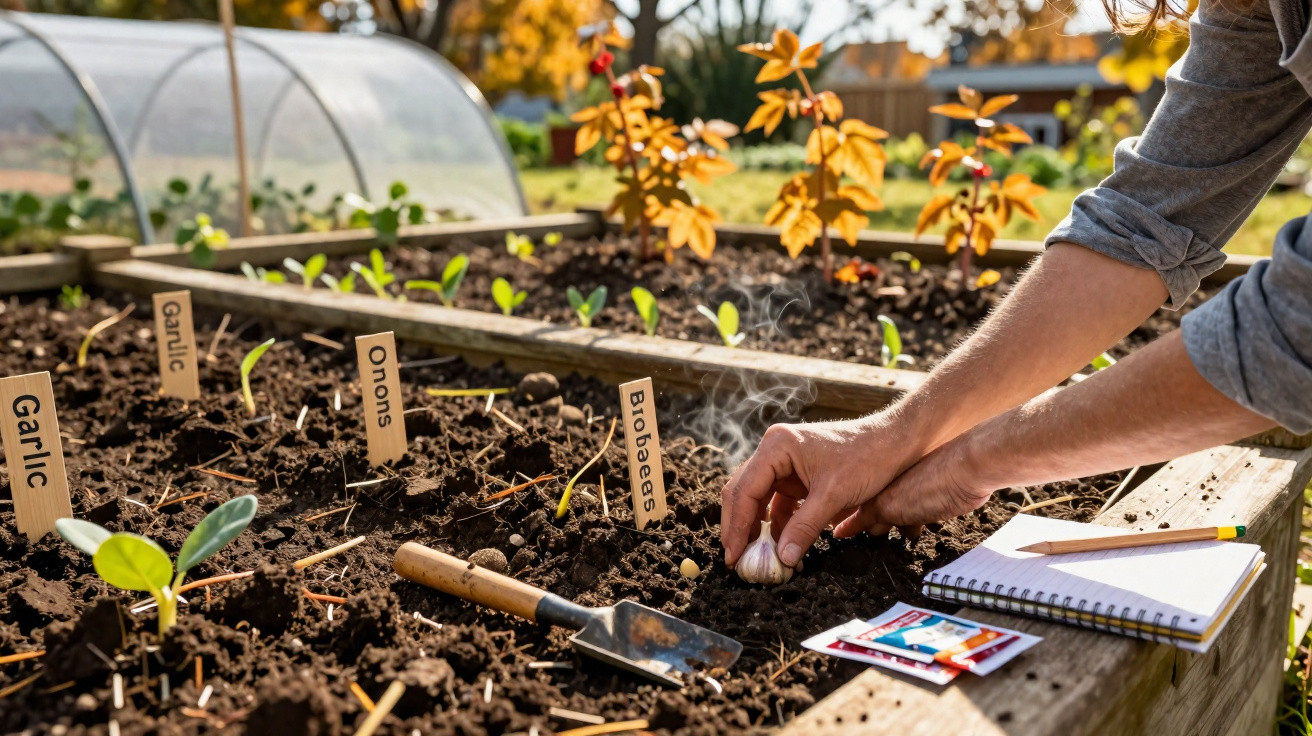
As daylight fades and the ground begins to cool, beds that appeared worn out in September can be prepared quietly for the year’s first harvests. Treating early October as a second “spring” allows home gardeners to establish garlic, onions, broad beans and soft fruit, ready to surge into life as soon as winter begins to ease.
Why autumn sowing transforms the growing season
Autumn gardening can seem purely about clearing up: removing exhausted plants, putting away canes and gathering fallen leaves. Below ground, however, the soil retains the warmth, moisture and structure that summer weather often depletes. Together, these conditions offer roots a gentle start rather than a demanding challenge.
Soil, moisture and light: October’s understated benefits
In early October, soil temperatures are generally suitable for root development across most of the UK. Although the surface cools, the ground 10 to 15 cm below often remains pleasantly mild. Roots benefit from this consistency, enabling them to spread without intense heat or repeated dry spells.
Planting in autumn lets roots grow while everything above ground slows down. The plant invests in foundations instead of foliage.
Autumn rain takes the place of summer’s unpredictable watering. Water is distributed more evenly through the soil profile, helping seeds and bulbs avoid the cycle of drought followed by soaking. Fewer weeds emerge, while insect activity usually declines as evenings draw in. This results in reduced competition, lower stress and fewer early setbacks.
Moving the timetable forward for earlier harvests
Sowing or planting in October is not about forcing visible growth; it is about saving time. Through winter, roots gradually establish themselves beneath the soil even when there is little activity above ground. As light levels increase in late February and March, these plants respond quickly, drawing on energy stored in bulbs or built up within their root systems.
That early advantage can bring harvests forward by weeks, and occasionally months, compared with conventional spring sowings. Garlic bulbs swell sooner, broad beans flower before aphid numbers increase, and soft-fruit bushes produce sturdy, firmly rooted canes capable of supporting the season’s first berries.
Garlic: the clear favourite for early harvests
If you choose to grow only one autumn crop, make it garlic. It suits compact spaces, needs minimal care and delivers excellent flavour while shop-bought bulbs may still be weary from months in storage.
Selecting garlic suited to autumn sowing
Garlic varieties do not all perform equally well when planted before winter. Choose types specifically described as suitable for autumn planting. In UK and European catalogues, this commonly includes white or purple “softneck” varieties and robust “hardneck” cultivars bred to withstand repeated frosts.
These bulbs emerge from dormancy gradually, developing roots while the clove above remains compact and resilient. This pattern is important: garlic that produces excessive leaf growth before severe frost can suffer damaged tips and reduced vigour.
An easy planting method for better garlic bulbs
Garlic is seldom unsuccessful when a few straightforward rules are followed. Break the bulb into separate cloves, retaining only the largest and healthiest ones. Remove any cloves that are soft or show mould.
- Set each clove point upwards, roughly 3–4 cm deep.
- Allow 10–15 cm between cloves within a row and 20–25 cm between rows.
- Use a freely draining bed rather than heavy soil that becomes waterlogged.
Garlic does not tolerate wet ground. Raised beds or gently raised rows help surplus rain drain away and reduce the chance of rot. Rich compost is unnecessary, as excessive nitrogen at this point promotes weak, soft growth instead of firm bulbs.
Minimal care for a spring garlic harvest
After planting, garlic generally benefits from being left alone. Only water during particularly dry autumn weather, then allow winter rainfall to do the work. A light covering of straw, leaf mould or shredded bark insulates the soil, suppresses weeds and evens out temperature changes.
Well-rooted autumn garlic often reaches harvest in late May or early June, weeks ahead of spring-planted bulbs.
Once leaves begin yellowing from the tips and around one-third have faded, lift the bulbs gently with a fork. Dry them in an airy, shaded spot. Harvesting this early leaves the bed available for a follow-on crop, such as courgettes, French beans or salad leaves.
Onions and shallots: dependable crops for October beds
Garlic may receive most of the attention, but autumn-planted onions and shallots provide the foundation for early-summer meals. They work well in borders, raised beds and large containers, remaining largely dormant throughout the colder months.
Choosing varieties for an early harvest
Garden centres and seed suppliers commonly stock cultivars or sets intended for overwintering. These cope with lower temperatures more successfully than standard maincrop onions. Traditional yellow onions, along with many red or bronze shallots, grow well when planted from early to mid-October in milder locations, or a little earlier in colder areas.
| Crop | When to plant | Typical harvest |
|---|---|---|
| Autumn garlic | Late Sept – mid Oct | Late May – June |
| Overwintering onions | Sept – Oct | June – early July |
| Autumn shallots | Oct | June |
| Autumn-sown broad beans | Oct – early Nov | Late May – June |
Planting advice to keep bulbs in good condition
Onion and shallot sets may look resilient, but they can rot quickly in saturated or compacted soil. Loosen the upper 15–20 cm, clear away stones and rake the surface level. In wet winters, shallow ridges can improve drainage.
- Leave 10–15 cm between onion sets and 15–20 cm between shallots.
- Push each bulb into the soil until only its tip is level with or just beneath the surface.
- Water lightly after planting, then avoid further watering unless the weather remains very dry.
A light mulch protects the soil surface from heavy rain and winter crusting. Keep it thin, though, so emerging shoots are not smothered.
Guarding against frost, rot and unwanted visitors
Frost alone seldom kills established onion or shallot sets, though repeated freezing and thawing can push shallow bulbs up out of the ground. Inspect beds after cold periods and press back any bulbs that have lifted. Netting stretched across low hoops discourages birds, which sometimes pull at young shoots for amusement rather than food.
Excess moisture, not cold, causes most overwintering failures. Think drainage first, fleece later.
To reduce fungal issues, avoid watering during mild periods in winter. A breathable mulch and an open, sunny site allow foliage to dry rapidly once spring growth begins.
Broad beans and soft fruit: early crops for the whole family
Bulbs are not the only crops that benefit from autumn planting. Broad beans and soft-fruit bushes also gain a significant head start when they become established before winter is fully underway.
Broad beans: earlier flowers and fewer aphids
Broad beans sown in early October develop roots and a small cluster of leaves before largely pausing above ground. This low, compact growth often comes through winter with little harm, particularly when hardy cultivars labelled for autumn sowing are used.
Spacing is more important than many gardeners realise. Sow seeds around 5 cm deep and 20 cm apart in double rows, allowing 25 cm between the rows. Growing them this way lets plants support one another in windy conditions and creates a strong block.
When seedlings reach 10–15 cm, pull a little soil around the base of each plant. This “earthing up” strengthens their hold against winter gales and protects the crown. In most areas, watering is unnecessary until spring unless autumn is exceptionally dry.
By late spring, these early plants bloom before the main aphid surge, allowing pods to set more effectively and remain cleaner than those from later sowings. Harvesting can begin up to two months before spring-sown beans, changing the first weeks of June in the kitchen.
Raspberries, currants and gooseberries: establishing fruit for the future
Bare-root fruit bushes, available from late autumn until early spring, respond particularly well to planting in soil that is still warm and moist. Their roots extend into the surrounding ground while top growth stays almost dormant. When temperatures rise, they produce vigorous, balanced shoots rather than the stressed flushes associated with late planting.
- Incorporate well-rotted compost or manure before planting.
- Position bushes at the depth at which they grew in the nursery, using the soil mark on the stem as a guide.
- Water thoroughly once, then mulch with bark, straw or leaf mould.
Raspberries work well beside fences or along bed edges, where they will not compete with the main vegetable rows. Currants and gooseberries are suited to corners receiving sunshine for part of the day. Even in a smaller garden, this arrangement prevents shade from falling over garlic and onions while still providing bowls of berries as early summer begins.
Planning an autumn garden that produces across two seasons
Effective October sowing is not about increasing the workload, but about changing when that work happens. Two thoughtfully planned evenings in early autumn can replace a frantic, overcrowded spring programme.
Arranging beds for rotation and double cropping
Garlic, onions and shallots are all alliums, so they should not be grown in the same space year after year. Rotating them with legumes, brassicas or leafy greens interrupts disease cycles and helps maintain reliable yields.
Think of each bed as doing two jobs: an autumn-to-spring crop, then a summer or autumn follow-up.
For instance, autumn garlic can be followed by late courgettes, while overwintering onions can make way for climbing French beans. These early harvests release space exactly when tender plants need to go outside, instead of requiring them to remain in pots.
Equipment and protection for easier autumn sowing
Basic equipment can broaden your choices without making the garden feel like a farm of plastic tunnels. Reusable fleece, low hoops and cloches provide a few extra degrees of warmth while reducing the effect of harsh winds. They are most useful in exposed gardens or colder regions, where uncovered seedlings are more likely to be lost.
Recording planting and harvesting dates in a notebook or on a phone quickly reveals useful patterns. You will identify beds that remain wet during winter, varieties that tolerate severe frosts and places where voles or birds cause problems. Altering spacing by a few centimetres, using a different mulch or changing varieties can often deliver noticeable improvements the next year.
As well as producing food, October planting makes winter feel more active. Beds need not remain bare or lifeless; instead, they hold quiet potential, with cloves, sets, seeds and roots preparing the first spring meals while the rest of the garden is still asleep.



Comments
No comments yet. Be the first to comment!
Leave a Comment