
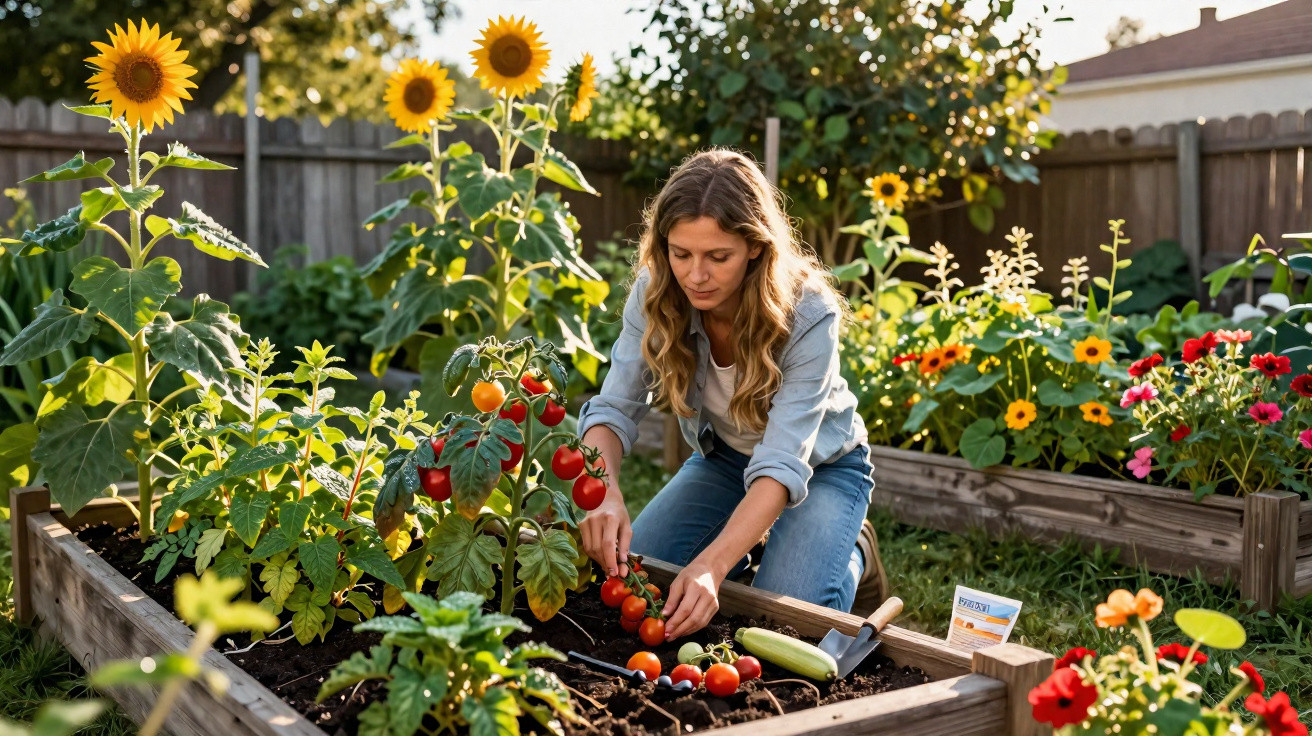
A small group of plants is quietly changing the rules of back-garden gardening. They emerge through gravel, in paving cracks, beneath raspberry canes and in that neglected corner you never got round to weeding. Gardeners are sharing pictures of “free harvests” and hailing them as the lazy gardener’s jackpot. Once you watch it happen, the fascination is easy to understand.
A plump calendula bloom had flopped into the path, as nonchalantly as a neighbour waving from their doorstep. Mint was scaling the fence as though it were paying the mortgage.
Crouching down, I spotted a row of dill seedlings along the edge of a compost spill, tiny green commas scattered through the bed. A sparrow bounced nearby, picking at sunflower husks it had most likely sown itself. The whole bed seemed almost to hum.
Then it struck me: nobody had planted any of it. Not a single person.
The ten plants gardeners swear “grow themselves”
Gardeners have a name for these unexpected gifts: self-seeders. They flower once, shed their seed, then behave as if your garden were their own sitting room. Calendula, nasturtium, borage, dill and coriander each seem to carry a map inside the seed coat, along with a plan to return in greater numbers. It feels like cheating, although the plants are doing every bit of the work.
Most of us have bent down to remove a supposed weed, only to discover it is rocket left over from the previous year. One reader from Leeds sent me a photograph of a complete salad bowl that had appeared by accident: rocket beneath the roses, coriander beside the hose reel and a circle of cherry tomatoes rising from last summer’s compost. She wrote that harvesting took 12 minutes and planting took 0 minutes. Figures like those are hard to forget.
Why do these ten flourish as though they have checked your diary and adapted accordingly? They cast seed at the ideal moment, often in autumn, then remain dormant throughout winter, their tough coats shielding the embryo until the soil heats up. Pulses of rain stir them into growth. Mint and chives, among others, bypass seeds entirely, spreading through runners and enlarging clumps that divide. Others travel on birds, boots and breezes. It is biology meeting your busy life and shaking hands.
Let self-seeders do the heavy lifting (you just edit)
A pattern keeps emerging in thriving gardens: choose one “wild edge”. Keep the final 2.5 cm of each bed slightly open, avoid deep digging and allow fallen seed to settle where it lands. In early spring, give it one proper watering, followed by two light waterings the next week. Your role is mostly editorial: thin seedlings, lift surplus plants into pots or cut them for the kitchen. That is all there is to it. This is the zero-fuss approach.
The usual errors include pulling out every unfamiliar plant, applying mulch too thickly or allowing mint to spread without limits. Contain mint in a bottomless bucket buried in the ground or in a broad pot, and leave chives room to form clumps. If tomatoes emerge where you would rather grow peppers, relocate them on an overcast afternoon. Honestly, no one manages this every day. That is precisely why forgiving plants are worth their weight in lunch.
These ten plants repeatedly deserve the “they just grow” label, without making a fuss.
“My best bed is half planned and half serendipity,” says Rose B., who grows in a rented plot and swears by volunteers. “I plant the anchors, nature plants the snacks.”
Here is the short list gardeners keep sharing:
- Calendula (pot marigold): thrives in sun, has edible petals and reseeds continuously.
- Nasturtium: offers peppery leaves and flowers; its seeds tumble away and return.
- Borage: has cucumber-scented leaves and star-shaped flowers, and bees adore it.
- Dill: feathery and aromatic, it reappears wherever it has previously grown.
- Coriander: bolts, produces seed and returns during cooler periods.
- Rocket: spicy foliage that self-seeds into cracks and tucked-away corners.
- Sunflower: seed dropped by birds can become a towering feature in the back garden.
- Cherry tomato: “compost babies” that produce fruit like confetti.
- Chives: perennial clumps that expand politely and flower.
- Mint: spreads via runners; contain it and enjoy it indefinitely.
Think of them as a friendly chorus that performs every year, even when you have forgotten the words.
The quiet excitement behind the “miracle”
There is something generous about a plant determined to turn up for you. It turns the garden from a task list into a partnership. Instead of judging success only by how straight the rows are, you begin to notice the gentle logic of the seed bank beneath your feet. Abundance slips in through the side door and wonders whether you have eaten.
It is also an exercise in attention. Self-grown patches train your eye to spot small details: the first true leaf on a coriander seedling or the brief rest a dill seed takes before it wakes. They invite you to pause, water once and trust that another act is on its way. That is no trick; it is a way of looking that carries into the rest of the day.
And, yes, there is a slightly rebellious quality to it. You reject the belief that value must equal hard labour and welcome assistance from a few seeds and a little wind. Before long, you are messaging friends about “free basil babies” and exchanging spare nasturtiums at the school gate. The pleasure spreads easily, while remaining oddly practical.
| Key point | Detail | Benefit for the reader |
|---|---|---|
| Choose a wild edge | Leave a strip where seeds can settle; avoid deep digging | Less work and more self-seeded abundance |
| Edit rather than over-tend | Thin, transplant or harvest surplus plants; contain spreaders | Transforms disorder into harvests without strenuous effort |
| Rely on resilient species | Calendula, nasturtium, borage, dill, coriander, rocket, sunflower, cherry tomato, chives, mint | Dependable “miracle” regrowth and consistent yields |
FAQ:
- Will these plants take over my garden? They will only do so if you allow it. Keep mint contained, deadhead sunflowers if you want fewer seedlings and thin plants where they become crowded.
- Should I water volunteer seedlings? Give them a thorough drink on planting day, then light waterings for a week during dry weather. After that, they can generally manage on their own.
- How can I distinguish a weed from a seedling I want? Photograph seedlings each season once you identify them, building a small reference collection. Once they have two leaves, their patterns soon become familiar.
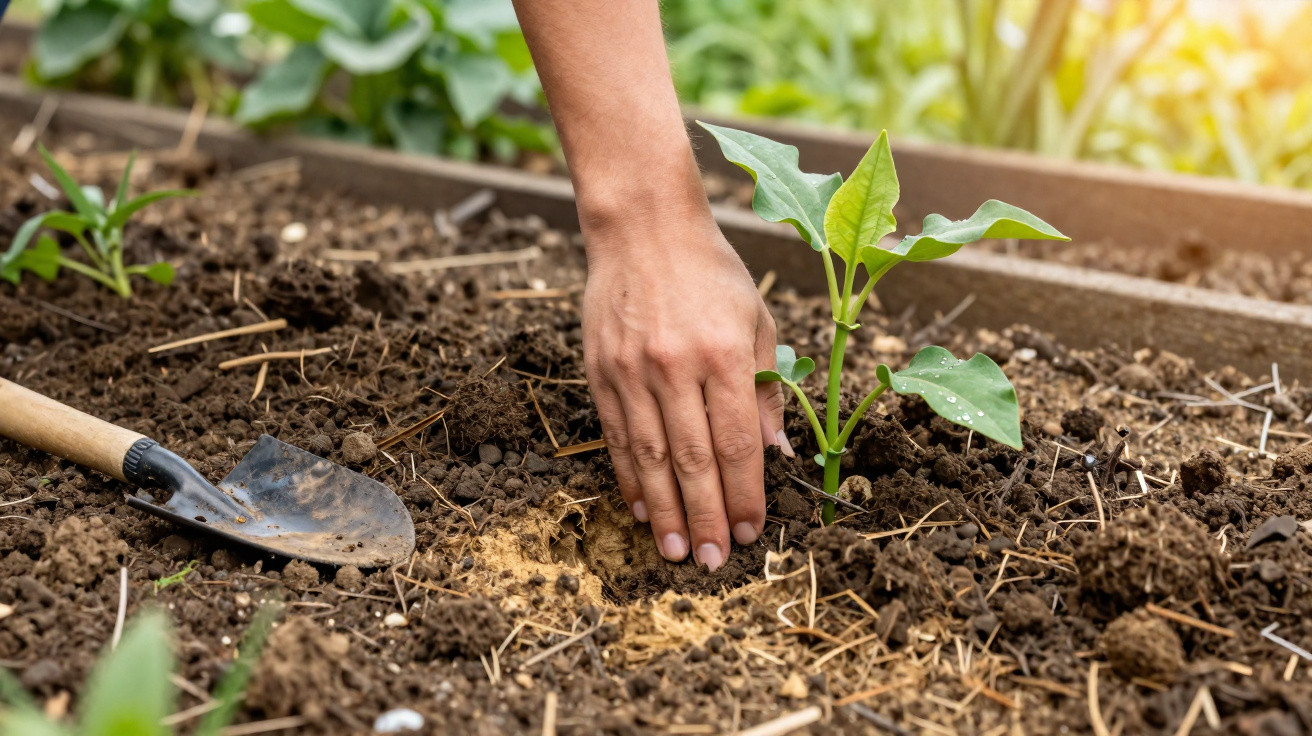
- Can volunteers be moved to more suitable places? Yes. On a cool, overcast day, lift them with a spoonful of soil, plant them at the same depth and provide shade for 24 hours.
- Is this worthwhile on a tiny balcony or patio? Absolutely. One pot can accommodate chives and rocket, while a small trough can keep coriander reseeding. Free herbs are especially valuable in compact spaces.
Comments
No comments yet. Be the first to comment!
Leave a Comment