
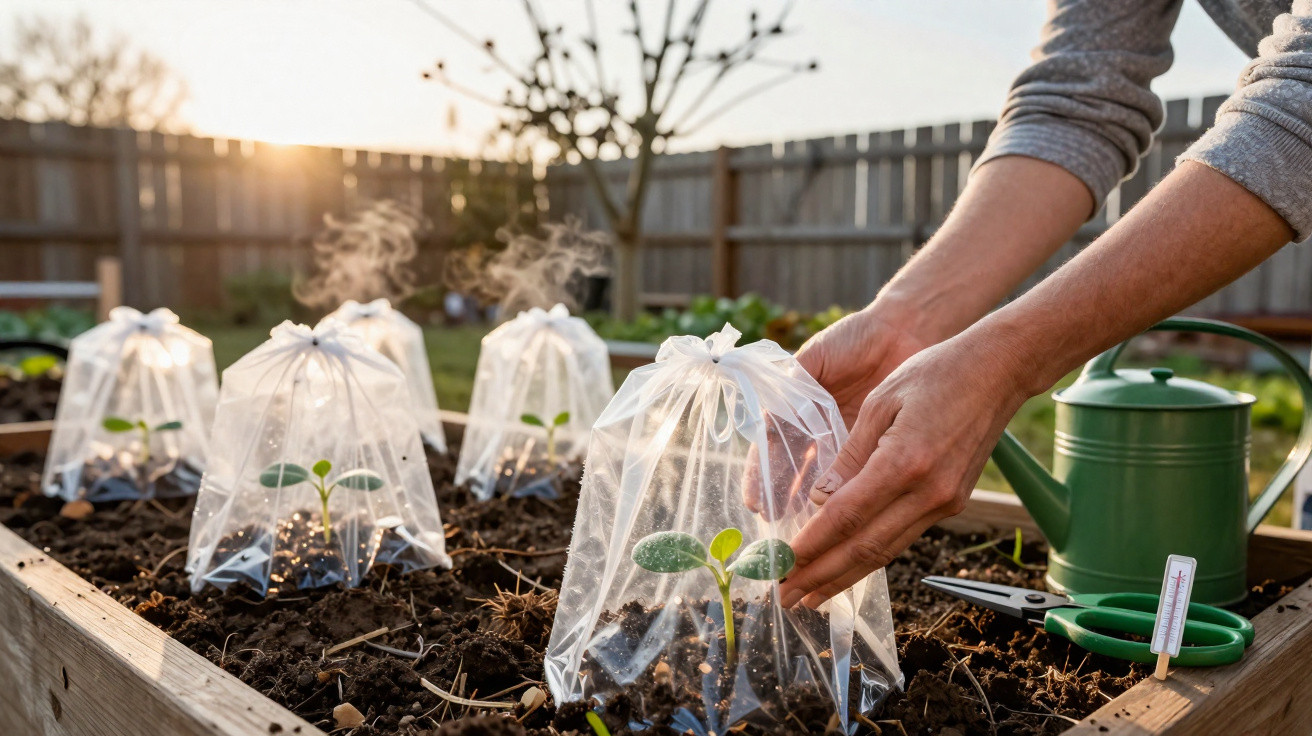
The seedlings on the patio table seemed both valiant and vulnerable: slender stems and soft leaves after a week of consistent growth. I felt that familiar pang every gardener knows: you have brought them this far, so do not let them go overnight. Standing beside the recycling caddy with cold hands, I listened to a fox in the lane and the far-off rattle of a milk float, calculating the modest essentials of survival-what I could cut, what I could cover and what might hold enough warmth until morning.
The answer was clattering about in the recycling.
Why milk jug cloches work so well on frosty nights
There is a particular satisfaction in making plant protection from ordinary waste. A transparent plastic milk bottle can serve as a miniature greenhouse, capturing daytime warmth and taking the edge off the night cold for seedlings. In the morning, you find bright beads of moisture inside and leaves that have not turned black-a small victory made with your own hands and a pair of scissors.
On our street, April has a habit of teasing us with winter. Last year, my neighbour Hannah lost half her courgettes in a sudden frost on the 26th, but rescued the remainder by placing 2-litre milk jugs over them at dusk, with their bases removed and caps loosened. The forecast fell to -2°C, an easterly wind was biting, and those makeshift covers changed an almost total loss into breakfast-table boasting. The relief was palpable at sunrise.
The science is straightforward. During the day, clear plastic catches short-wave sunlight, then reduces heat escaping towards the night sky-the loss that can destroy delicate cotyledons. Beneath every cloche, the soil works as a little heat store, giving warmth back to its enclosed pocket of air as night falls. It limits radiant heat loss, shields plants from wind chill and raises the dew point enough to stop seedlings being frozen into defeat by dawn.
How to make and use milk jug cloches quickly
Wash out a 2-litre milk bottle, remove its label and use a sharp knife to cut away the base, leaving a tidy edge. Set out your seedling, then press the jug a couple of centimetres into the soil to close the gap, giving it a slight twist to seat it firmly. Keep the cap off during daylight hours for ventilation; fit it at dusk when frost or wind is forecast, and place a stone on the edge if your beds are exposed.
We have all seen the forecast shift from “cold” to “-3°C and breezy” just as the kettle goes on. Avoid hurrying and snapping a stem: position the jug first, then water the soil around its edge to settle it in. In truth, no one keeps this up every night. Covering the coldest three or four nights will still reduce losses dramatically.
With this method, timing is important. Open the cloches on sunny days so seedlings do not cook in strong sunshine, then close their caps at dusk to retain the final trace of warmth. Where a severe frost is due, give the most valued young plants two layers of protection-a jug plus lightweight fleece laid over the row-and use condensation to show you when humidity is building inside.
“A milk jug is just a promise you make to tomorrow’s leaves,” an old allotment neighbour told me, passing me a spare bottle with a wink.
- Trim the bases neatly to reduce draughts and help them meet the soil.
- Leave caps off in daylight for ventilation, and replace them at night when frost bites.
- Use a tent peg or wire hoop where the wind is boisterous.
- Combine them with a light fleece for late frost below -3°C.
- Raise them for an hour after sunrise to dry foliage and strengthen growth.
Timing, ventilation and when to stop using the cloches
Treat cloches as stabilisers for delicate plants. Put them on each night while forecasts are close to freezing, then gradually reduce their use once night temperatures hold at 6–8°C and plants are growing more confidently. Move them between the crops that need them most-basil, squash, cucumbers and cosmos-while tougher plants such as kale and broad beans usually tolerate a slight frost. If cold weather lasts for a week, allow seedlings to air out in mid-morning each day, lowering fungal risk while encouraging stronger stems. Follow the plant as well as the weather app: curled leaves, washed-out colour or lanky, leggy growth indicate a need for extra daytime ventilation and less protection. If May delivers an unexpected late frost, bring the jugs back out without embarrassment. Garden weather loves a plot twist.
Milk jug cloches are not elaborate, which is precisely their appeal. They are a modest solution that preserves your progress when spring falters and your confidence falters alongside it. They also help you understand your own garden: the dips where frost lingers, the brick walls that radiate stored warmth and the places where a little air movement helps. The real skill is not achieving perfection, but keeping the materials close by and acting before you go to bed. In time, you will know which seedlings need that small suntrap and which require only shelter from the wind. You begin cutting jugs in February and stacking them by the back door like charms. Then you pass on the trick to the next gardener, worried at 9pm and wondering whether their tomatoes will survive.
| Key point | Detail | Benefit for the reader |
|---|---|---|
| Cut, cap and anchor | Remove the base, leave the cap off by day and fit it at dusk; twist into the soil and weight the rim | A simple, repeatable routine that quickly protects seedlings |
| Read the microclimate | Prioritise jugs for low-lying areas, beside fences and on tender crops | The greatest protection with the least effort and waste |
| Layer when necessary | Pair a jug with lightweight fleece on sub-zero nights | Improves cold tolerance by several vital degrees |
FAQ
- How cold will milk jugs protect seedlings? Allow for around -2 to -4°C of protection, depending on soil warmth, wind and the thickness of the plastic. Add a lightweight fleece over the row to extend that protection slightly on severe nights.
- Should the cap be on or off? Keep it off during the day to provide airflow, particularly in sunshine. Put it on at dusk if frost or wind is expected, then remove it again after sunrise to release excess moisture.
- Do I need to remove the whole bottom? For most purposes, yes: a fully open, clean base sits against the soil and cuts down draughts. Some gardeners make a hinged flap, but removing the whole base makes anchoring easier.
- Won’t condensation cause damping-off? It can where air is never allowed to circulate. Ventilate every day, water the soil rather than the foliage and harden plants off by lifting the cloches in late morning, allowing stems to strengthen and surfaces to dry.
- I don’t buy milk in plastic-what else works? Juice and water bottles, clear PET fizzy-drink bottles and even cut-down 5-litre containers can all work. Traditional glass cloches and floating row cover also work well alongside milk jug cloches.






Comments
No comments yet. Be the first to comment!
Leave a Comment