
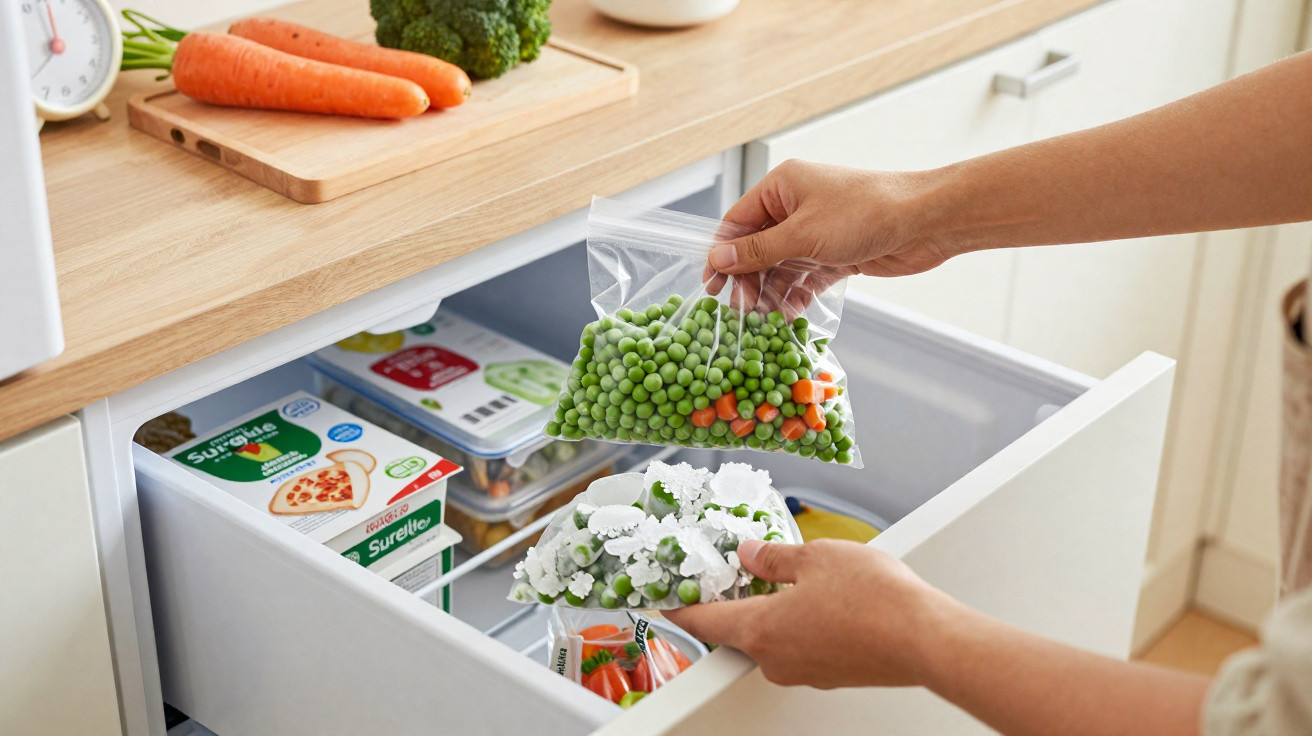
Many people pick up frozen fish, vegetables or pizza without registering an important distinction: some foods are labelled “congelés”, while others are “surgelés”. Based on French food rules and freezing technology, this difference affects texture, flavour, storage life and even the safe handling of leftovers at home.
Two similar terms, but very different freezing methods
Both “congelé” and “surgelé” describe foods kept at extremely low temperatures. The key difference is the speed at which the product is chilled and how rapidly the cold reaches its centre.
What industrial deep-freezing actually involves
“Surgélation” is a tightly regulated industrial technique in which food is subjected to intense cold at speed.
In deep-freezing, powerful jets of air or ultra-cold plates - typically between -30°C and -50°C - chill the product until its core reaches at least -18°C in a short time.
This rapid process is used for a wide range of products, including:
- fruit and vegetables, commonly frozen soon after picking;
- fish and seafood, which may be frozen on board the vessel;
- factory-prepared meals, pizzas and pastries.
The purpose is to lower the temperature quickly, before bacteria have time to multiply or the food’s internal structure starts to break down.
Home freezing is generally much slower
“Congélation”, on the other hand, is normally carried out in the home. A standard domestic fridge-freezer usually operates at around -12°C to -18°C, with temperatures that can be less stable than those of industrial equipment.
A piece of meat or a container of soup may need several hours to freeze completely. As this happens, larger ice crystals can develop, while the centre remains for longer in the transition period between chilled and deeply frozen.
Home freezing relies on patience and organisation, not industrial power: the principle is similar, the speed and precision are not.
People often freeze fresh meat, fish, bread or leftover meals themselves, whereas “surgelé” products have been frozen before they arrive on supermarket shelves.
Texture, flavour and nutrients: why freezing speed matters
As the water within food freezes, it becomes ice crystals. The more numerous and smaller those crystals are, the less harm they do to the surrounding cells.
How surgélation preserves food structure
By cooling food extremely quickly, industrial deep-freezing creates tiny crystals within its cells. This brings several benefits:
- Texture: vegetables retain more bite, fish separates into flakes more cleanly, and pastries hold their shape.
- Colour: there is less pigment damage, helping peas remain green and berries retain their vivid colour.
- Flavour: aromas are better maintained, particularly in herbs, spices and delicate seafood.
- Nutrients: vitamins such as vitamin C are partly retained, especially when produce is frozen shortly after harvest.
Freezing does not eliminate bacteria, but their multiplication slows dramatically once food falls below 0°C and then -10°C. Reaching those temperatures quickly reduces the time available for growth.
How slower home freezing can alter food
The colder and more efficient a home freezer is, the nearer its results will be to industrial freezing. However, many domestic appliances, particularly combined fridge-freezers, freeze food more gradually.
When freezing happens slowly:
- ice crystals become larger and may burst cell walls;
- defrosted meat can release more liquid and lose tenderness;
- vegetables are more likely to soften and give off water when reheated;
- sauces may split because fat and water no longer remain combined as they did before.
A thawed vegetable that feels mushy has not turned dangerous by default. Its cells were simply torn apart by large ice crystals.
Provided that the cold chain has not been broken, the food can still be safe to eat, although its texture and overall eating quality may be less enjoyable than that of surgelé food.
Health and safety: frozen food is not automatically risk-free
Low temperatures slow microbial activity, but they do not remove it completely. This distinction matters when handling frozen products safely.
What freezing can - and cannot - destroy
Both congélation and surgélation:
- stop the growth of many bacteria, moulds and yeasts;
- restrict toxin production while the food remains frozen;
- prolong storage life compared with chilled food.
However, freezing does not consistently kill every germ. Some microorganisms survive the cold and can become active again after the food has thawed.
Once food is thawed, the countdown resumes: bacteria pick up where they left off before freezing.
This explains why frozen-food packaging still states “consume within X hours after defrosting” and provides cooking directions designed to achieve safe internal temperatures.
How long can frozen food be stored?
Storage time depends on the freezing method, the amount of fat in the food and its packaging. The following broad guide applies to a domestic freezer set at roughly -18°C:
| Food | Industrial “surgelé” (in home freezer) | Home “congelé” |
|---|---|---|
| Lean fish (cod, hake) | 6–8 months | 3–4 months |
| Fatty fish (salmon, mackerel) | 3–4 months | 2–3 months |
| Raw meat pieces | 8–12 months | 4–6 months |
| Cooked dishes (stews, lasagne) | 3–4 months | 2–3 months |
| Vegetables | 8–12 months | 6–8 months |
| Bread and pastries | 1–3 months | 1–2 months |
These periods are guidance for quality rather than absolute safety cut-offs. Once they have passed, food may taste dull, oxidised or dry, even where it remains microbiologically stable.
Making the most of your home freezer
For anyone trying to reduce their food bill, a freezer is a useful way to prevent waste. Getting good results requires a few straightforward routines.
Practical habits for successful home freezing
- Freeze food as soon as you can after buying or cooking it. Leaving it in the fridge for a day before freezing causes quality to decline more quickly.
- Chill hot meals promptly before freezing. Use shallow containers or an ice bath, since warm food increases the freezer’s temperature.
- Choose airtight tubs or freezer bags. Reducing air limits freezer burn and prevents odours moving between foods.
- Mark every item clearly with its contents and date. Unidentified containers often remain unused until they no longer look appetising.
- Set the appliance to -18°C where possible, and do not pack it too tightly, so cold air can circulate.
- Do not refreeze food that has fully thawed. If necessary, cook it first, then freeze the prepared dish.
Good organisation turns the freezer from a chaotic ice cave into a genuine second pantry.
Reading “congelé” and “surgelé” on French food labels
When shopping in France or buying French imported products, knowing the wording on the packet can help you make more informed choices.
Wording commonly found on packaging
- “Produit surgelé”: a product frozen using an industrial deep-freezing method that meets defined technical requirements, including rapid freezing, a core temperature of -18°C and a controlled cold chain.
- “Produit congelé” or no specific term: may refer to food simply brought to freezing temperatures, often at a slower rate.
- “Ne jamais recongeler un produit décongelé”: the standard instruction not to refreeze thawed food.
The “surgelé” description often indicates that food was transferred from field or sea to deep-freezing within a short supply chain, under close time and temperature control.
Everyday choices: fresh, frozen and home-frozen food
Picture two separate evenings. On Monday, you use a bag of industrially frozen green beans. On Friday, you take out a container of beans that you cooked in bulk and froze at home.
The factory-frozen beans were deep-frozen soon after being harvested. Because they avoided several days of storage and transport at warmer temperatures, they are likely to remain firmer, brighter and comparatively rich in vitamins.
Your home-frozen beans may be softer, particularly if they were simmered for a long period before freezing. They can nevertheless work very well in soups or gratins, while also ensuring that leftovers are not thrown away.
The “best” option is not always the same: surgelé often wins on texture, while home freezing wins on budget and waste reduction.
For fish, deep-frozen fillets can at times be fresher than fish sold as “fresh” after spending several days on ice. With bread, freezing it at home on the day it is bought or baked can save money and reduce daily visits to the bakery, even if the crust becomes slightly less crisp.
Useful terms: the cold chain, freezer burn and blanching
A number of technical expressions appear regularly in discussions of frozen food, and they explain what happens throughout the process.
The cold chain
The “cold chain” means maintaining low temperatures continuously from the place of production through to the consumer. In the case of surgélation, this includes the factory, refrigerated transport, supermarket storage and the journey home.
A lengthy interruption - such as leaving food in a hot car boot or allowing a delivery to sit in a hallway - can warm the outer surface before it later refreezes, potentially harming both texture and safety.
Freezer burn and blanching
Freezer burn appears as dry, pale patches on food. It is caused by gradual dehydration when inadequately wrapped food remains too long in cold, dry air. The affected parts are safe to eat, but can be chewy and lacking in flavour.
Blanching is another important method. Briefly placing certain vegetables in boiling water and then transferring them to iced water before freezing helps to:
- stop enzymes that cause loss of colour and flavour;
- lower the number of microbes on the surface;
- preserve a better texture after defrosting.
Carrots, green beans and broccoli all respond well to a quick blanch before home freezing. This easy measure can bring the quality of home-frozen vegetables closer to that of their surgelé equivalents.

Comments
No comments yet. Be the first to comment!
Leave a Comment