
As the first mild days arrive, young plants often struggle with irregular watering and soil that dries out quickly. At the same time, an everyday household item is thrown away millions of times for no good reason. Used thoughtfully in a bed, pot or compost heap, it gives plants a kind of miniature water reservoir while also reducing waste.
How an old kitchen helper becomes a drinks bottle for plants
The beginning of the gardening season brings tricky conditions: sunshine intensifies, roots are still delicate and the weather can change rapidly. This is exactly when an item found in almost every home - and usually discarded far too soon - can prove useful: a kitchen sponge or washing-up cloth.
Its porous structure works like a small water tank. Positioned at the bottom of a flowerpot, above the drainage holes and below the compost, it absorbs surplus water during watering. It then releases that moisture gradually over time.
This creates a buffer inside the pot: the compost dries out more slowly, watering mistakes matter less and plants are less likely to become stressed.
Window boxes and containers exposed to strong winds benefit particularly well. Although the surface may already appear dry, the roots can still access moisture from the hidden reservoir.
Why old kitchen helpers should not simply go in the bin
Once a sponge starts to smell unpleasant or looks worn out, many households understandably throw it straight into the bin. There are several reasons why it should no longer be used in the kitchen:
- In damp conditions, huge numbers of germs can multiply within just a few hours.
- Grease and cleaning-product residues make continued kitchen use unappealing.
- Most of these helpers are placed in general waste after only a short period of use, adding to the environmental burden.
Moving it outdoors can be a better option, provided the item is cleaned first and used in the right place. Most remaining germs are no longer an issue outside, while the porous material can perform tasks for which garden centres otherwise sell expensive products.
Natural or synthetic: what can go into soil and compost?
Before putting this into practice, one key question must be answered: what material is the item made from? Not every version is suitable for soil or compost.
| Type | Use in a pot | Use in compost | Note |
|---|---|---|---|
| Natural fibre (e.g. cellulose, loofah) | Suitable as a water reservoir | Suitable; decomposes over time | Can rot down together with the compost |
| Synthetic fibre (containing plastic) | Limited use as a reservoir in a pot | Not suitable | Risk of microplastics and residues |
Natural versions made from cellulose or plant fibres can be placed in both pots and compost heaps. They break down over time and also help to give the soil structure.
Products containing plastic should not be added to compost that will later be used in a vegetable garden. Tiny particles and chemicals could remain in the soil. If they are used as a water buffer in a pot, it is best to monitor them and dispose of them in general waste later.
Preparing the kitchen helper for garden use
Before the former washing-up aid moves to the garden or balcony, it should be thoroughly cleaned. This greatly reduces germs and leftover cleaning products.
- Squeeze it firmly under running water until almost no foam remains visible.
- Boil it in a pan of water for several minutes or soak it thoroughly in clear household vinegar.
- Optionally, place it in the microwave briefly while damp so that most bacteria are killed.
- Let it cool completely, then reserve it exclusively for garden or balcony projects.
It must not return to the sink or kitchen worktop afterwards. Anyone collecting several can clean them in one batch and keep a small supply ready for the season.
Four smart uses in the spring garden
1. A hidden water reservoir in a flowerpot
For window boxes, container plants or houseplants in very free-draining compost, an old kitchen helper can serve as a concealed tank:
- Cover the base of the pot with a layer of expanded clay or broken terracotta for drainage.
- Place the cleaned sponge or cut pieces on top.
- Fill with compost and plant as usual.
When watering, the sponge takes up excess liquid. The roots can draw on it later. This reduces the risk of plants becoming too dry during a short absence, especially for people who are often away.
2. A moisture booster in the compost heap
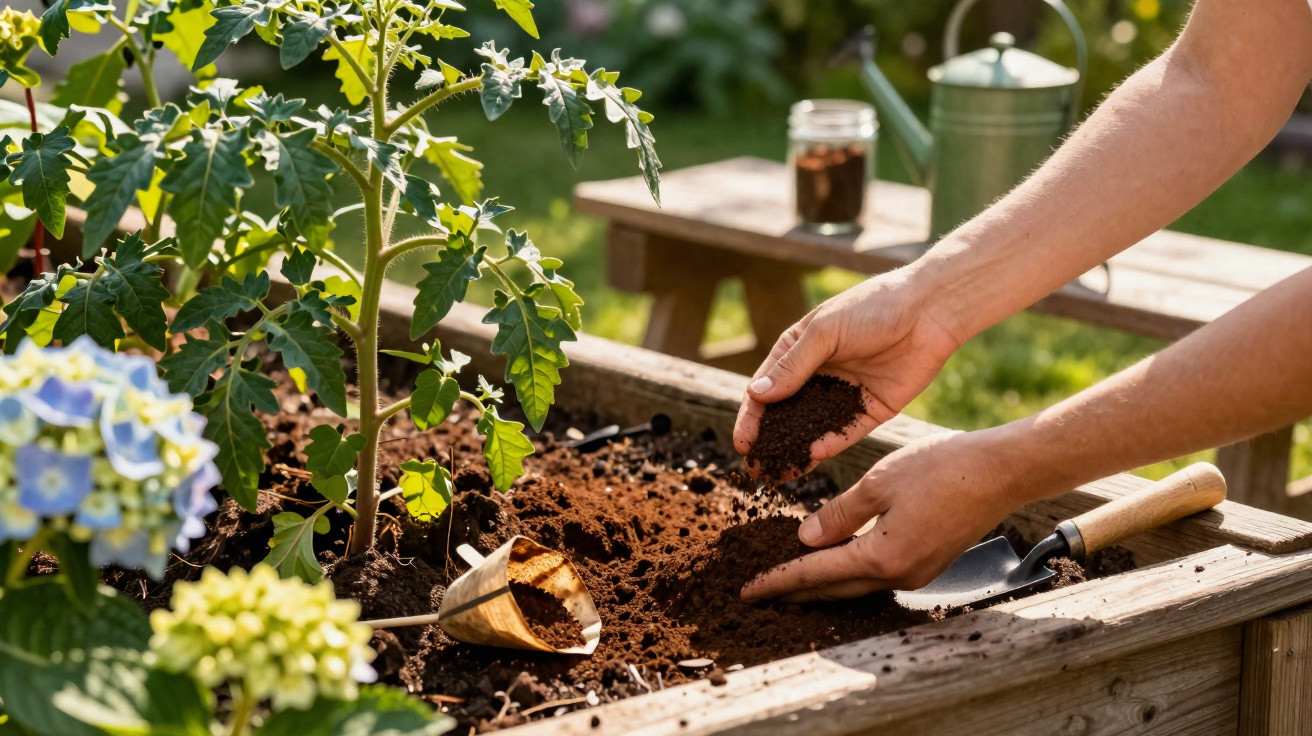
Natural types can be cut into small pieces and mixed into the compost. They absorb water, keep the material moist for longer and introduce a little more air into the heap.
Well-moistened compost breaks down more quickly, smells less pungent and ultimately produces nutrient-rich humus for beds and pots.
Placed among grass clippings, kitchen scraps and leaves, sponge pieces add structure to the heap and support the work of microorganisms. The requirement is that no aggressive cleaning-product residues remain in the material.
3. A mini propagation station for delicate seeds
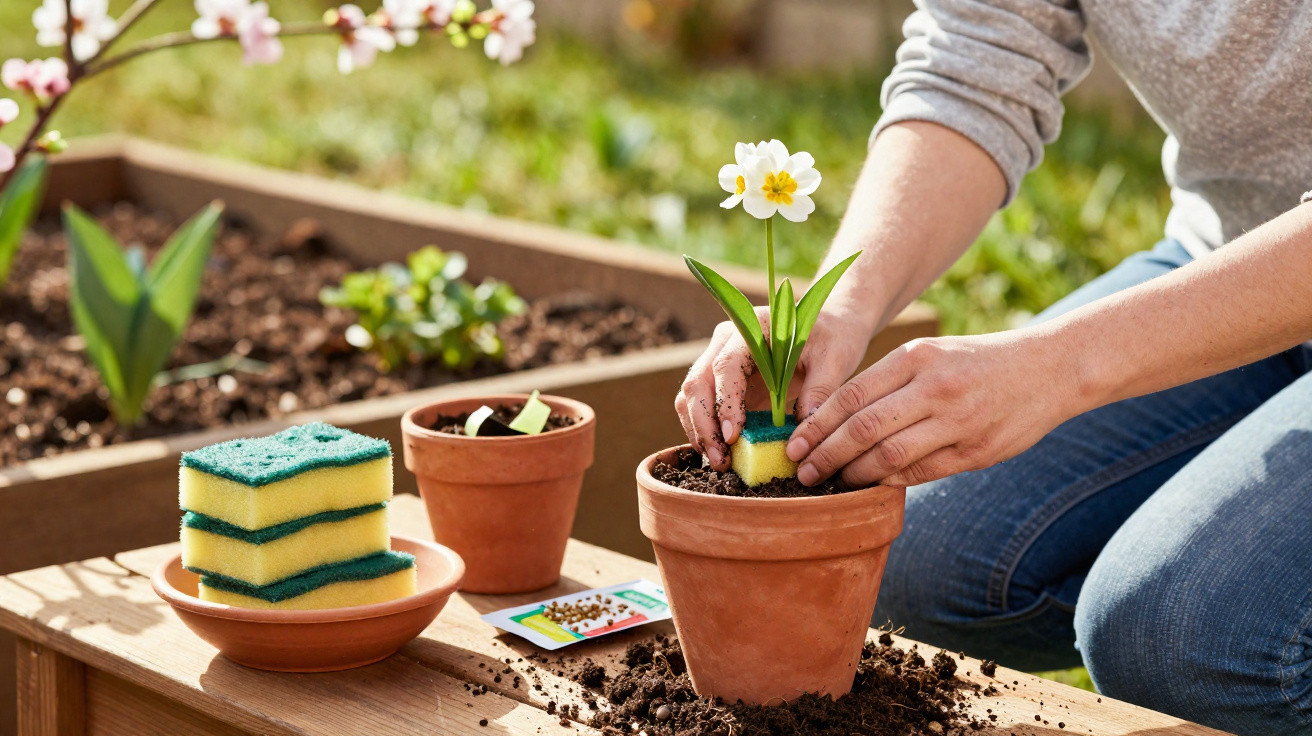
Anyone without room for large seed trays can cut the kitchen helper into small cubes and use each one as a germination aid. Make a small hole in every cube and press one seed into it.
The moist structure keeps seeds evenly damp without leaving them sitting in water. Once the seedlings are a few centimetres tall, the whole cube can be moved into a pot or bed. Natural materials will later decompose in the soil.
4. A protective cushion and pest barrier
Placed flat on the soil with the softer side facing down, a sponge can soften the effects of slight cold snaps around the base of sensitive plants. A small stone will keep it in position.
The surface may also feel unpleasant to some types of slug. Adding a few drops of strongly scented plant oils, such as mint or lavender, creates an additional fragrance barrier that keeps certain pests away.
What gardeners should watch for with this trick
Despite its practical benefits, this method should be checked regularly. Outdoors, these kitchen helpers are exposed to the weather and will change over time.
- An unpleasant smell may indicate rotting or high bacterial activity.
- Visible mould is a clear sign that the material should be removed.
- If the sponge tears apart or starts to disintegrate, it should be taken out of pots and beds.
Natural versions can remain in the soil if they show no problems, or they can be added to the compost. Any models containing plastic should instead be collected completely and placed in general waste to prevent microplastics entering the garden and vegetables.
Why this kitchen-helper trick works particularly well in spring
At the start of the season, the weather is especially changeable: warm spells alternate with cool periods, while evaporation and rainfall are difficult to judge. Young plants have not yet developed roots deep enough to draw water independently from lower layers of soil.
An additional reservoir around the roots helps balance these fluctuations. Water remains available for longer without creating waterlogging. This makes gardeners slightly less dependent on fixed watering routines and protects seedlings when an unexpectedly warm day occurs.
Practical additions and useful combinations for everyday gardening
This trick can be combined with other straightforward measures. A mulch layer of grass, bark pieces or leaves significantly reduces evaporation from the surface and strengthens the effect of the hidden reservoir below.
In pots containing hungry plants such as tomatoes or peppers, the sponge helps retain nutrient solution from liquid fertilisers in the growing medium for longer. Water is distributed more evenly, giving roots more time to absorb the dissolved nutrients.
The method can work in raised beds too: one or two layers of natural material below the upper soil layer provide extra buffering, particularly during dry summers. Anyone using reusable, durable types should mark their positions, making them easier to remove or relocate deliberately during later digging.
This turns an unassuming kitchen helper into a versatile garden tool, from a window box to a large compost heap. Pausing briefly before putting one in the bin brings two benefits: less household waste and plants that cope with the season far more calmly.
Comments
No comments yet. Be the first to comment!
Leave a Comment