
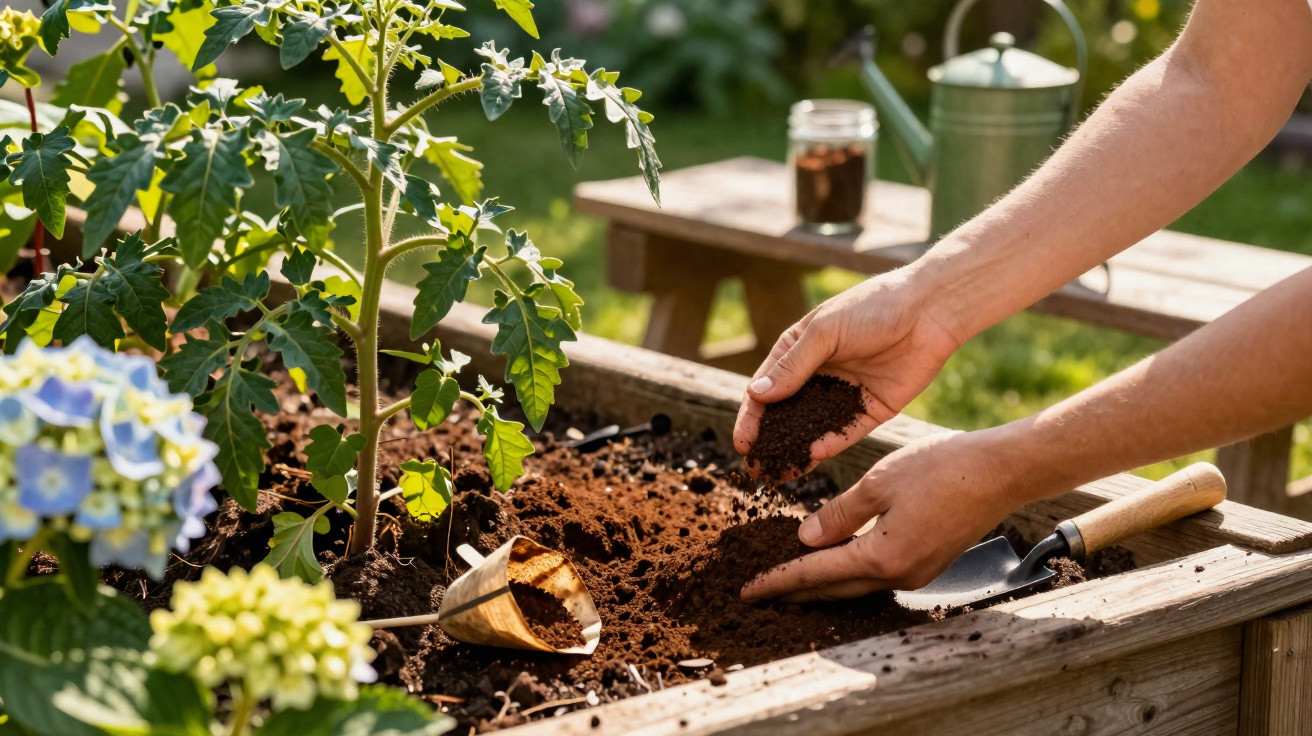
Almost every household produces it each day, yet most people throw it away without a second thought. This is not about the coffee filter, but what is left inside it: coffee grounds. What is often regarded as ordinary kitchen waste can help border plants, container plants and even houseplants grow more vigorously, flower more successfully and suffer less damage from slugs and other pests.
What coffee grounds actually do for soil
Coffee grounds are not a miracle cure, but they are a remarkably useful all-round fertiliser. They contain three key nutrients required by all plants:
- Nitrogen – encourages leaf and shoot growth
- Phosphorus – supports root development and bud formation
- Potassium – improves natural defences and resilience to stress
They also supply trace elements including magnesium and copper. These are often present in insufficient quantities in ordinary garden soil, yet they are important for chlorophyll production and enzymes involved in plant metabolism.
Coffee grounds act as a gentle, organic slow-release fertiliser – without the risk of “burning” roots.
Unlike many mineral fertilisers, the nutrients in coffee grounds are released gradually as the material breaks down. This is gentler on sensitive roots and provides a more even supply of nutrients.
More soil life and a better structure
Coffee grounds do more than nourish plants; they can improve the soil itself. Earthworms are attracted to the material and gather where it has been worked in. Their tunnels loosen the ground, allowing water to drain more effectively while helping the soil retain more moisture.
Together with micro-organisms, this creates a kind of living underground network. This soil life decomposes organic matter, makes nutrients available and helps maintain a stable structure. Heavy clay soils in particular benefit from the added looseness, while sandy soils can hold onto water and nutrients slightly more effectively.
Slightly acidic – just right for some plants
Fresh coffee grounds are mildly acidic. That makes them particularly suitable for plants that naturally prefer slightly acidic conditions. In calcareous, alkaline soils, coffee grounds can lower the pH value a little, making nutrients easier for plants to absorb.
In many gardens, rain and the soil’s existing components naturally buffer this mild acidity. The pH value therefore does not fluctuate wildly, but changes slowly and gently.
These plants thrive with coffee grounds
A wide range of popular garden plants respond particularly well to regular applications of the brown powder.
Flowering shrubs and ornamental plants
- Hydrangeas: In more calcareous soils, coffee grounds can help them produce stronger flowers with a bluer colour.
- Rhododendrons and camellias: Both originate from relatively acidic woodland habitats. A thin layer of coffee grounds worked into the root area promotes rich foliage and more buds.
- Roses: They appreciate the nitrogen boost, producing sturdy shoots and usually more flowers when given coffee grounds in moderation.
Many experienced rose growers mix a small amount of coffee grounds into the soil around the roots every few weeks during spring and summer. They often combine this with compost or horn shavings to create a balanced blend of nutrients.
Vegetable patch: tomatoes, salads and root crops
In the vegetable garden, coffee grounds are especially suitable for the following crops:
- Tomatoes: They reward well-prepared soil enriched with coffee grounds with robust plants and heavier harvests.
- Leafy vegetables: Lettuce, spinach and chicory grow strongly, while the leaves often appear darker and more flavoursome.
- Root vegetables: Carrots and potatoes benefit from improved soil aeration and a looser growing medium.
It is important not to tip coffee grounds onto the surface in thick layers. Instead, work them into the top layer of soil before sowing or planting.
Houseplants and special cases
Coffee grounds can also be used indoors, although the dosage should be even more cautious. Popular examples include:
- Monstera (“Swiss cheese plant”): It tolerates small quantities mixed into the growing medium and will often develop larger, deep-green leaves.
- Demanding orchids: Some species that prefer nutrient-rich growing media may benefit from tiny additions – but only in very small amounts.
Anyone with a large collection of houseplants should generally use coffee grounds via the compost heap rather than directly “feeding” every individual potted plant with them.
Use sparingly here: Mediterranean herbs
Typical Mediterranean herbs are one group for which coffee grounds can quickly become too much of a good thing. These include:
- Lavender
- Rosemary
- Thyme
These plants prefer free-draining, relatively lean soils that are neutral to slightly calcareous. Excess acidity and nutrients make them soft and vulnerable, and may eventually cause them to die.
Coffee grounds as a natural barrier against pests
Alongside their fertilising qualities, coffee grounds have another interesting effect: they can deter a number of unwanted visitors in the garden.
A narrow ring of dry coffee grounds acts like an unpleasant wall for many slugs.
The particles are rough and uncomfortable to cross. In many gardens, sensitive young plants remain untouched for longer when a thin band of coffee grounds is placed around them.
Other effects observed in home gardens include:
- Ants avoid paths with a strong coffee scent and will often move elsewhere.
- Cats dislike both the smell and texture, and tend to avoid beds recently treated with coffee grounds.
- Aphids appear less frequently on some plants when the soil is mulched with coffee grounds – although experiences with this vary.
The remaining caffeine in fresh grounds plays a part in this. Its level decreases over time. Older or composted grounds are therefore less effective as a deterrent, but still add structure and nutrients to the soil.
How to use coffee grounds properly – step by step
Preparing coffee grounds
Moist coffee grounds from a machine soon go mouldy. The first step is therefore as follows:
- Open the filter or coffee pod and spread the grounds over newspaper, a baking tray or a tray.
- Leave them to dry for 24 to 48 hours, turning them lightly from time to time.
- Only collect them in tubs or buckets once they are completely dry.
This prevents musty smells and gives fungal growth very little chance to develop.
Applying the right amount and working it in
Using too much will not benefit your plants. A sensible rule of thumb is:
- Per plant: roughly one to two tablespoons, lightly worked into the top layer of soil.
- Frequency: no more than three to four applications per year, spread across the main growing season.
- No thick layers: otherwise, a hard crust can form on the surface, making it more difficult for water and air to pass through.
It is also very practical to spread coffee grounds directly over the compost heap. There, they combine with other organic material, are broken down by micro-organisms and attract earthworms. The result is a balanced humus that even sensitive plants usually tolerate well.
Consider pH levels and sensitive plants
Those growing many plants that dislike acidic conditions should test the soil pH from time to time. Simple test strips available from shops are sufficient for identifying broad trends.
Young seedlings and very delicate plants can react sensitively to high nutrient concentrations. For them, coffee grounds should only be used in a very heavily diluted form, or preferably as fully composted material that is incorporated when preparing the bed.
Additional practical tips for coffee grounds
Many home gardeners use coffee grounds not simply on their own, but as part of a wider system of natural garden aids. One example combines herbs with strong natural pest-defence properties and a modest quantity of coffee grounds in the soil. This creates a resilient balance without relying on harsh chemicals.
Lawns can also be supported with coffee grounds in moderation. Areas that should not receive heavy applications of artificial fertiliser gain a gentle nutrient boost from small amounts spread widely. The key is to scatter the grounds so finely and thinly that no visible clumps form, as these could smother the grass beneath them.
People who drink plenty of coffee do not need to empty all their grounds into the garden. Some can be saved for the compost, while a small amount can be applied directly to favourite plants. The remainder may be stored dry until a new bed is created or container plants receive fresh compost.
By paying close attention to plant growth, it soon becomes clear that some plants respond enthusiastically to the new “coffee treatment”, while others do not. It is precisely these on-site observations that make the difference – turning kitchen waste into a useful tool for healthier, more vigorous plants.



Comments
No comments yet. Be the first to comment!
Leave a Comment