
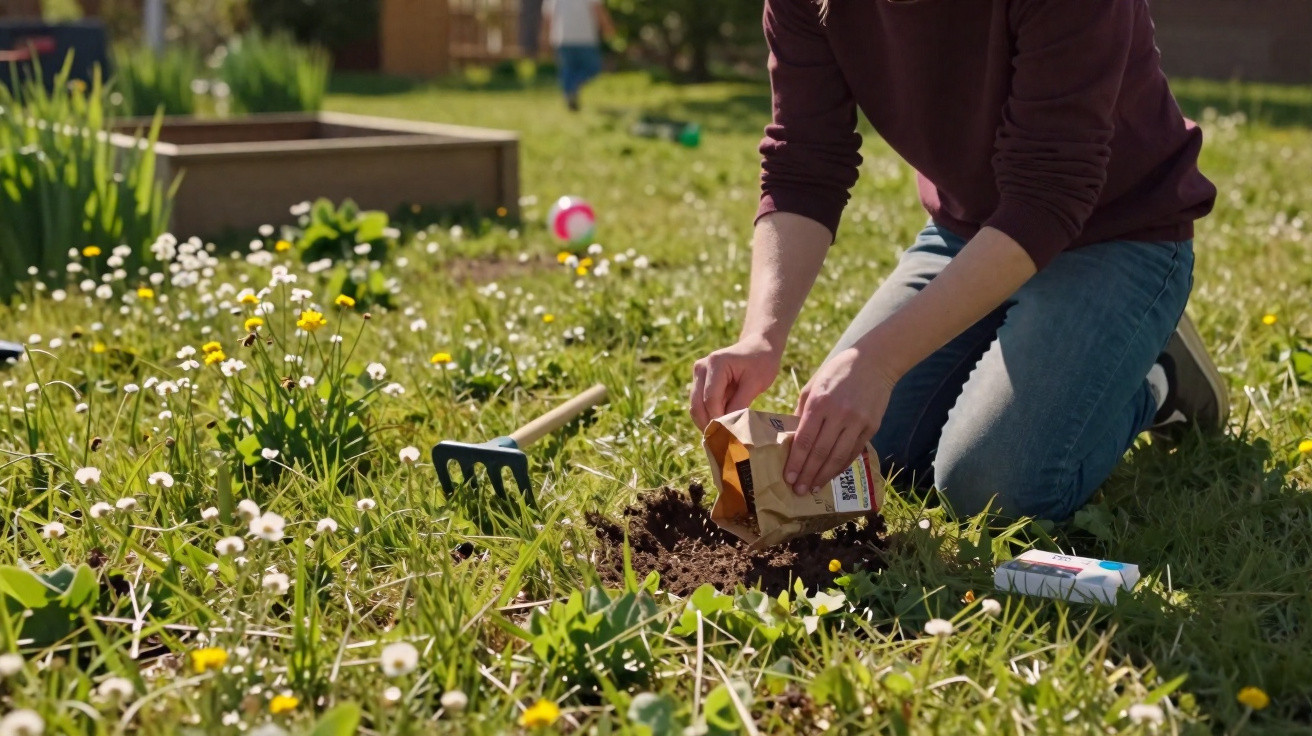
When the spring sun finally begins to warm up again, many garden owners automatically pull the lawnmower out of the shed. The aim is a neat, closely cut carpet of grass. Yet after months of rain, frost and waterlogging, the lawn is often struggling with yellow patches, moss and bare areas. Simply cutting everything short and applying moss-killing chemicals now can make matters worse for both the grass and bees, bumblebees and butterflies. Instead, one remarkably simple soil technique in April can support a thick, green lawn while providing more food for insects.
Why lawns turn yellow after winter and moss thrives
Winter leaves lawns under considerable strain, with several problems occurring at once:
- Rain and foot traffic compact the soil heavily.
- Grass roots receive too little air and too few nutrients.
- Water collects in places, leaving individual areas damp for a long time.
- The pH level may fall, making the soil more acidic.
- Old blades die back while fresh shoots struggle to establish themselves.
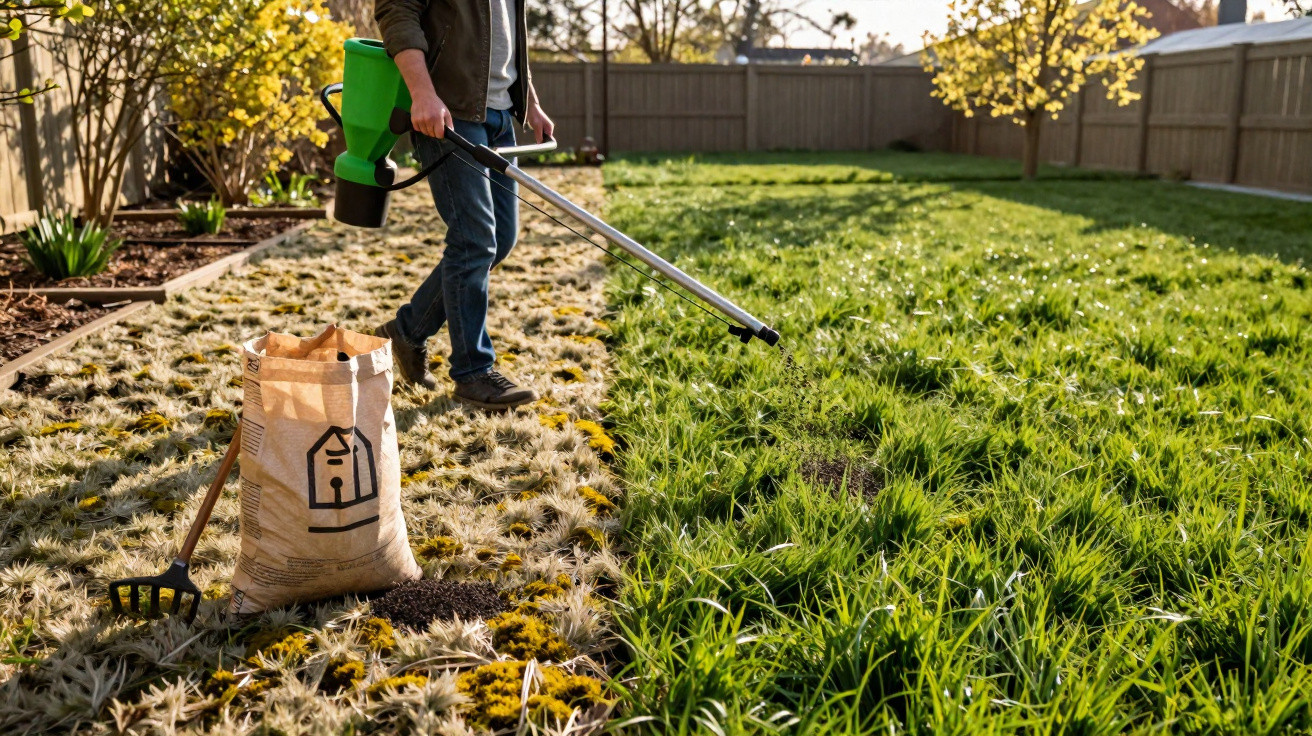
These are exactly the conditions in which moss flourishes. It favours shade, constantly damp ground and compacted soil. Once the grass starts to thin out, moss can quickly take over. Bare patches, yellowing blades and cushions of green moss in between are a familiar April sight in many gardens.
Moss is not the cause of the problem, but a symptom of a stressed, weakened lawn and compacted soil.
Many people respond by using moss killer, lime or mowing extremely low. Although this may make the lawn appear tidier in the short term, it worsens the imbalance over time. The grass becomes even weaker, gaps remain, and the moss returns, often more densely than before.
Why mowing aggressively in April harms insects
April also marks the beginning of the pollinator season. Bees, solitary bees, bumblebees and numerous butterfly species emerge from their winter shelters. They urgently need nectar and pollen, but many ornamental shrubs and perennials have not yet flowered, or are only flowering sparsely.
The familiar so-called “lawn flowers” provide vital support at this point: dandelions, daisies and clover. While they are often seen as unwelcome in a manicured lawn, they can be essential for insect survival during this period. Mowing everything down closely now removes much of these animals’ first available food.
In spring, there is a real hunger gap: few flowers but many hungry pollinators – every small flower matters.
The encouraging news is that a well-kept lawn and consideration for insects do not have to be mutually exclusive. The answer lies less in cutting the lawn close and more in overseeding it.
The key April step: overseed the lawn instead of only mowing
In spring, garden experts rely on one measure that can make a surprising difference: the so-called overseeding or reseeding lawn. Fresh lawn seed is sown directly into the existing turf without having to dig up the whole area.
The purpose is to make the turf denser, fill gaps, encourage stronger rooting and deny moss the space it needs. A thick grass cover allows very little light to reach the soil, which is precisely what moss dislikes.
How to overseed a lawn in April, step by step
The process is easier than it sounds. Even beginners can manage it with a little time on a dry but not hot day:
Do not mow the entire lawn drastically short
Cut only sparse or heavily moss-covered areas down to around 2.5 centimetres. Leave the rest slightly longer so that flowering islands remain available for insects.Rake out thatch and moss thoroughly
Use a sturdy rake or a scarifier to remove dead grass material and moss from the affected sections. The cleaner the surface, the better the new seed will germinate.Loosen and aerate the soil
A garden fork or lawn aerator is sufficient: make holes at regular intervals, roughly 10–15 centimetres deep. This allows air to reach the roots, helps water drain away faster and reduces waterlogging.Sow seed by hand or with a spreader
Scatter lawn seed as evenly as possible afterwards. Anyone unsure of the coverage can use a spreader. In troublesome areas, mixing the seed with a little lawn soil or fine compost can help.Keep it moist and keep feet away
The next two to three weeks are crucial. The soil needs to remain evenly moist, but without puddles forming. Children, dogs and football should stay off the overseeded areas.Make the first gentle cuts
Once the young grass reaches around 8–10 centimetres, mow it carefully for the first time. Set the mower high, at roughly a 5-centimetre cutting height, and trim only the tips.
Anyone who overseeds wisely in April creates a natural moss barrier step by step: dense grass roots rather than bare ground.
Push moss out instead of constantly fighting it
Overseeding alone will not solve everything. For a dense lawn that is largely free of moss in the long run, a few different habits are needed:
- Never cut too short: A height of 4–5 centimetres is ideal. Very short blades put grass under stress and allow the ground to dry out.
- Feed gently: A mild, preferably organic lawn fertiliser strengthens the grass without forcing explosive growth.
- Aerate compacted areas: Areas near paths, well-worn routes and around the patio should be aerated or top-dressed with sand regularly.
- Water in the right amounts: Water less often but thoroughly, rather than applying a small, shallow amount every day.
In extreme cases, targeted use of iron-based moss treatments can help. Anyone using these products should restrict them to the affected spots rather than spreading them preventively across the entire lawn. The goal remains to create conditions in which grass grows more strongly than moss.
Combining a “showpiece lawn” with insect protection
In spring, many amateur gardeners face an apparent dilemma: a perfect, evenly green area or a lively garden full of flowers and insects? In reality, a small rethink of how the space is divided is often enough.
Plan lawn zones: a play area here, a mini-savannah there
This practical arrangement has proved effective in many gardens:
- Maintained zone near the house: Around the patio, seating area and barbecue space, a closely kept and well-overseeded lawn creates a tidy appearance and room for play.
- More relaxed zone at the edge: Along beds, fences or behind the garden shed, allow the lawn to grow longer. Daisies, clover and dandelions can flower there.
- Later mowing dates: Mow these sections less frequently and at a greater height, around every three to four weeks, rather than cutting them to “English” lawn height.
Deliberately leaving certain corners wilder creates feeding areas for pollinators – without giving up a well-maintained lawn.
Additional tips: from seed mixtures to pH levels
Anyone keen to make the most of April can also adjust a few further factors:
- Choose the right seed mixture: Sunny areas need different mixtures from shaded locations beneath trees. Poorly chosen varieties suffer unnecessarily.
- Test the soil: A basic soil test from a garden centre can reveal whether the pH level is strongly acidic. If so, a measured application of lime may help to hold moss back.
- Plan flowering islands deliberately: Those who wish can also sow low-growing flowering plants in border areas that can cope with occasional mowing.
April is an especially good time to assess the garden closely: where is the lawn genuinely needed for playing or lying out, and where is it mainly filling space? The clearer these functions are allocated, the easier it becomes to decide which areas should be maintained strictly and where some growth can be encouraged. The result is a garden that feels pleasant beneath bare feet and also welcomes buzzing wings.


Comments
No comments yet. Be the first to comment!
Leave a Comment