
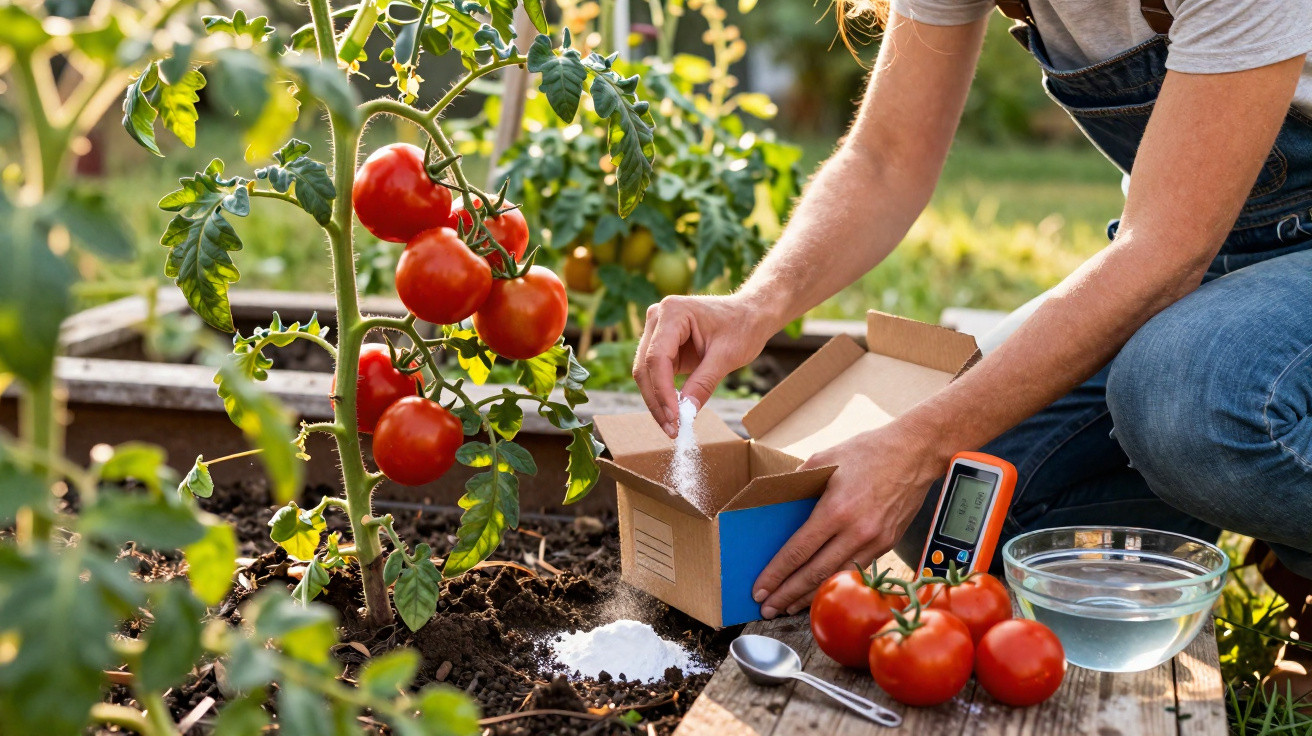
The fruits glow red and look plump and healthy, yet they lack what you have looked forward to for months: sweetness, fragrance and that distinctive summer flavour. Instead, some tomatoes seem firm, sour and sometimes even rather harsh on the stomach. For years, gardening groups and forums have circulated a tip that promises to change this with a simple cupboard staple.
The supposed miracle aid: bicarbonate of soda in the tomato bed
The product at the centre of the discussion is ordinary bicarbonate of soda, chemically known as sodium hydrogen carbonate. Many people know the powder from baking, as a home remedy for heartburn or for cleaning. Gardening enthusiasts swear that a small amount in the soil around a tomato plant makes its fruit taste milder.
The idea is that bicarbonate of soda partly buffers soil acidity, indirectly influencing the flavour of the tomatoes.
Countless blog posts, YouTube videos and social-media posts advise using bicarbonate of soda sparingly in the root zone. The trick sounds simple, perhaps even too simple: add a spoonful of powder to the soil and a sour fruit becomes a mild, “sweet” snack. However, the situation is not quite that straightforward.
How gardeners use bicarbonate of soda on tomatoes
The most common approach starts when young plants are put into a bed or container:
- Add a small quantity of bicarbonate of soda, around one teaspoon, to the planting hole.
- Mix the powder with some soil so that it does not sit directly against the roots.
- Then plant the tomato and fill in the hole as usual.
During the growing season, some gardeners take the process a stage further. Once the first small fruits have formed, at roughly cherry size, they scatter a very thin pinch of bicarbonate of soda over the soil around the stem. A second tiny application follows when the fruits are around half ripe.
The amounts should always remain very small. Many recommendations suggest considerably less than a quarter of a cup of bicarbonate of soda per plant over a season. It should not be more than this, as it could otherwise upset the soil’s balance.
Does it really produce sweeter tomatoes?
Reports vary widely. Some amateur gardeners describe fruits that are noticeably milder and less acid-led. Others see no difference at all despite using exactly the same method. There has been little systematic evaluation; essentially, these are numerous individual accounts that are difficult to compare.
Anyone who is curious can run their own trial. One straightforward method is:
- Treat one tomato plant with bicarbonate of soda.
- Grow a second plant of the same variety immediately beside it as normal.
- Give both the same care, then taste the ripe fruits blind and compare them.
This quickly reveals whether the effect is genuinely noticeable in your own soil.
Why bicarbonate of soda could alter flavour
The explanation lies in pH. Bicarbonate of soda is mildly alkaline, with a pH of around 8. Tomatoes, by contrast, prefer soil that is slightly acidic to neutral, ideally around 6 to 7. As pH rises, the acidity perceived in the flavour generally decreases.
Less acidity often tells our tongue: “it tastes sweeter” – even when the sugar content has not increased at all.
Many people know a similar effect from cooking. When making a very acidic tomato sauce, they sometimes add a tiny pinch of bicarbonate of soda to round out the flavour. The sauce then tastes milder, without using ordinary sugar.
In the garden, there is another consideration: soil pH affects which nutrients the plant can absorb. If this availability changes, the composition of the fruit may change too, including the balance of acids, sugars and flavour compounds.
Is there scientific evidence?
For tomatoes in home gardens, there are currently few robust studies showing a genuine increase in sugar content. Some viticulture studies found that a 5 per cent bicarbonate of soda spray reduced rot on grapes and slightly raised measured sugar levels. Whether this effect can be directly applied to tomatoes grown in a bed remains unclear.
For now, then, the bicarbonate of soda trick for tomatoes is based mainly on practical experience. Some gardeners are enthusiastic, while others remain sceptical. This is precisely why a small trial of your own is more worthwhile than copying the method blindly.
Risks and limits of the bicarbonate of soda trick
Although bicarbonate of soda seems harmless in the home, too much of it can certainly cause problems in the garden. As an alkaline substance, it raises the pH of the soil. If that level stays too high, tomatoes can become stressed.
- Leaves may turn yellowish.
- Growth may slow, and the plant can appear “tired”.
- Certain nutrients, including iron and manganese, become less available.
Anyone who applies larger quantities of bicarbonate of soda without care over many years risks turning slightly acidic, tomato-friendly growing medium into overly alkaline soil. Experts therefore recommend applying it very sparingly and treating only some of the plants at most.
Test the pH instead of scattering it blindly
A simple soil test from a DIY shop or garden centre can help you keep a general eye on pH. Even a test strip indicates whether the soil is more acidic, neutral or already slightly alkaline.
It can be useful to monitor how both the soil and plants develop over two to three years if bicarbonate of soda is used occasionally. This provides a realistic picture of whether the trick works in your own garden or is merely a placebo.
What really makes tomatoes sweet and flavoursome
Bicarbonate of soda may have a minor influence on how acidity is perceived. However, traditional factors that every gardener can adjust still have by far the greatest effect on flavour and sweetness:
| Factor | Effect on flavour |
|---|---|
| Variety | Cherry tomatoes and heritage varieties often offer more sweetness and flavour than standardised mass-produced types. |
| Light | Plenty of sunshine encourages sugar formation and flavour development in the fruit. |
| Watering | Water moderately rather than keeping plants constantly drenched; too much water dilutes the flavour. |
| Feeding | A balanced nutrient supply supports flavour; too much nitrogen produces large but bland fruits. |
| Ripeness | Fully ripened tomatoes picked straight from the plant taste more intense than fruit harvested half ripe. |
So, anyone who truly wants sweeter tomatoes should first focus on variety choice, location, watering and feeding. Bicarbonate of soda can at most be a small additional trick, not the main strategy.
Practical examples: when bicarbonate of soda may make sense
There are situations in which bicarbonate of soda may genuinely be worth considering in the garden. Those with very acidic soil, such as on former peatland or in regions with strongly acidic rain, often contend with particularly sharp-tasting tomatoes. In such cases, a very careful and localised increase in pH around the plants could be worth trying.
A slight softening of flavour may also be welcome for people with sensitive stomachs who react particularly strongly to acidity in raw vegetables. Choosing naturally mild varieties as well can create a combination that is noticeably easier to tolerate.
Alternatives and sensible combinations
Rather than applying bicarbonate of soda alone, many gardeners prefer longer-lasting ways to move the soil slightly towards neutral:
- Work in compost in moderation.
- Mulch with mature organic material that is not overly acidic.
- For strongly acidic soils, apply lime occasionally and at an appropriate dose.
Alongside these measures, bicarbonate of soda remains more of a fine-tuning tool for gardeners who enjoy experimenting. Anyone using it should recognise that it does not magically change flavour: it mainly affects the perception of acidity, and only when the soil was genuinely too acidic in the first place.
Ultimately, your own palate decides. If you enjoy trying things out, plant two identical rows of tomatoes next season, one with bicarbonate of soda and one without. The differences will teach you more than any heated online debate.

Comments
No comments yet. Be the first to comment!
Leave a Comment