
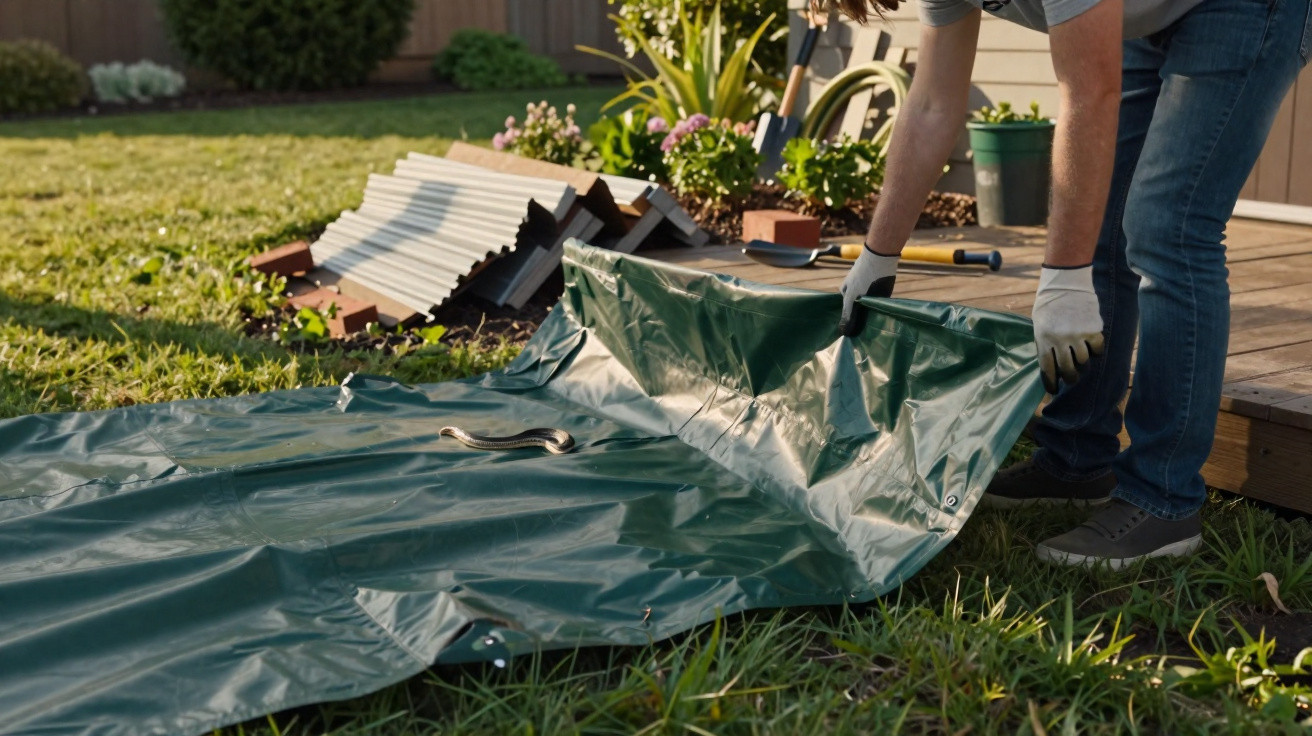
Many amateur gardeners tidy up diligently in March and April, yet leave behind precisely the thing that can prove irresistible to snakes: a tarp spread flat on the ground or old metal sheets. It may seem harmless, but lifting one can deliver quite a shock – and, in unfavourable circumstances, could be dangerous.
The overlooked risk: a garden tarp as a comfortable refuge for snakes
The main subject here is the garden tarp. This also includes heavy-duty plastic sheeting, leftover pond liner, black ground-cover fabric, or old corrugated metal and fibre-cement sheets placed directly on the ground. At first glance, these materials are simply useful. In spring, however, they can become ideal shelters for snakes.
“Tarps and sheets lying flat on the ground create a warm, protected space beneath them – exactly the kind of place snakes seek after winter dormancy.”
Snakes are ectothermic, meaning that they regulate their body temperature through their surroundings. In spring, days may already be sunny while nights remain cool. Dark plastic and metal absorb heat from the sun during the day, then release it gradually into the ground below. This creates a small store of warmth, with temperatures of around 25 to 30 degrees Celsius – the preferred range for many native snake species.
At the same time, this spot is shaded and shielded from predators and prying eyes. Rather than having to lie out in full sunshine, the animals can simply slip underneath the tarp. For a snake, it is rather like underfloor heating with a roof built in.
Common garden mistakes that attract snakes
Anyone with a garden will recognise the situation: after building work, roof repairs or digging over flowerbeds, tarps often remain on the lawn or woodpile for weeks. This is rarely deliberate; it is usually just down to convenience and the pressures of everyday life.
Yet these temporary arrangements can create a whole series of perfect hiding places:
- black plastic tarps laid directly on the ground
- old corrugated sheets, garden shed roofing or pieces of metal left at ground level
- fibre-cement sheets in the far corner of the garden
- woodpiles placed directly on the soil without any clearance
- compost heaps covered only loosely with a tarp
The combination of warmth, darkness and quiet is effectively an invitation to snakes. If someone casually lifts a corner of the tarp in May, they disturb the animal’s resting place – and are likely to get a fright themselves.
How to make your garden less appealing to snakes
A few straightforward measures can substantially reduce the chance of snakes settling close to the home. Many take only minutes but can make a significant difference.
Store tarps and sheets correctly
The key rule is simple: do not leave large materials directly on the ground for long periods.
- Remove unwanted tarps: Anything no longer needed should go into waste or be taken to a recycling centre.
- Store necessary tarps off the ground: Roll up clean tarps and keep them in a shed, garage or beneath cover on a hook.
- Raise woodpiles: Stack firewood on pallets or wooden supports at least 20 centimetres above ground level.
- Dispose of metal and fibre-cement sheets: Do not leave old sheets in the garden “for later”; take them to an appropriate disposal facility.
- Keep the area around the house short: Mow lawns and grassy areas regularly, especially near patios, paths, sandpits and ponds.
“The fewer concealed, warm spaces there are at ground level, the less often snakes will choose your garden as a daytime resting place.”
Why these snake-deterrent measures work so well
Snakes do not seek out your garden specifically; they simply make use of structures that are available. If suitable shelters are no longer present, they will naturally move to other places, such as banks, woodland edges or unused land, away from play areas and patios.
Storing tarps and metal sheets above ground removes this small, warm shelter. The animals can no longer find the combination of warmth and security they need there. Their activity is therefore quietly shifted away from the areas where people spend time most often.
If there is already a snake in the garden
Even with good prevention, an animal may have taken up residence beneath an old tarp or between logs. The most important response is to remain calm.
If you spot a snake, you should:
- move away immediately, keeping at least two to three metres away
- avoid sudden movements
- step backwards slowly
- keep children and pets away from the location
Most snakes found in central Europe avoid people and retreat when given the chance. They do not actively attack; they defend themselves only when they feel threatened or are cornered.
“Never reach beneath a tarp with bare hands or pull it away suddenly – there may be not only a snake underneath, but also hedgehogs, mice or stinging insects.”
What you should never do
Some instinctive reactions are understandable, but they increase the risk.
- Do not hit or kick it: Attacking a snake can easily trigger a defensive bite and, in many areas, breaches wildlife protection law.
- Do not try to catch it yourself: Without specialist knowledge, identifying a species reliably is difficult, and the animal may also be injured.
- Do not experiment with tools: Attempts to use a spade, rake or broom will appear to the animal as an attack.
If you are uncertain, contact the local council, a local wildlife organisation or a wildlife rescue centre. Many of these bodies know appropriate contacts who can assess the situation and, if necessary, relocate an animal humanely.
How dangerous are snakes in the garden really?
Most encounters with snakes end without harm. In many regions, the main species are non-venomous snakes such as grass snakes, which feed on frogs, fish or mice. Even where venomous species occur, bites are very rare because the animals are more likely to flee than attack.
Nevertheless, garden owners should take the risk seriously, particularly where children or pets are present. An unexpected encounter can cause a startled reaction, such as falling from a ladder or into a pond. Some people may also have allergic reactions to snake venom, even where the venom is not especially potent.
| Situation | Recommended action |
|---|---|
| A snake is moving across the lawn | Keep your distance, observe the animal and leave it an escape route |
| A snake is discovered beneath a tarp | Carefully place the tarp back down and retreat slowly |
| A dog is barking at a snake | Call the dog back, put it on a lead and leave the animal alone |
| A bite is suspected | Seek medical help immediately, remain calm and keep the bitten area still |
Practical extra tips for a thoughtfully designed garden
Anyone wishing to make their garden less attractive to snakes over the long term should consider the layout of the site as well as tarps and sheets. Dense, inaccessible corners are better suited as wildlife refuges, while open areas are more suitable for family activities.
A sensible approach is to separate the two. A wilder area with woodpiles, stones and deadwood can be created at the far end of the plot, where reptiles can also feel at home. Near the house, patio and play equipment, keep the space clear, regularly mown and free from tarps left on the ground.
For people with a strong fear of snakes, a regular inspection routine can help: once a month, check all areas containing tarps, old boards and metal pieces, then clear and organise them. This not only reduces the likelihood of unwanted wildlife encounters, but also makes the garden safer by reducing trip hazards.
Understanding snake behaviour makes gardening far more relaxed. A tarp spread flat across the lawn acts like an invitation to these animals. Once it has been rolled up, hung up or removed, your garden becomes noticeably less attractive as a snake hotspot – and the next trip into the garden can begin with a much better feeling.

Comments
No comments yet. Be the first to comment!
Leave a Comment