
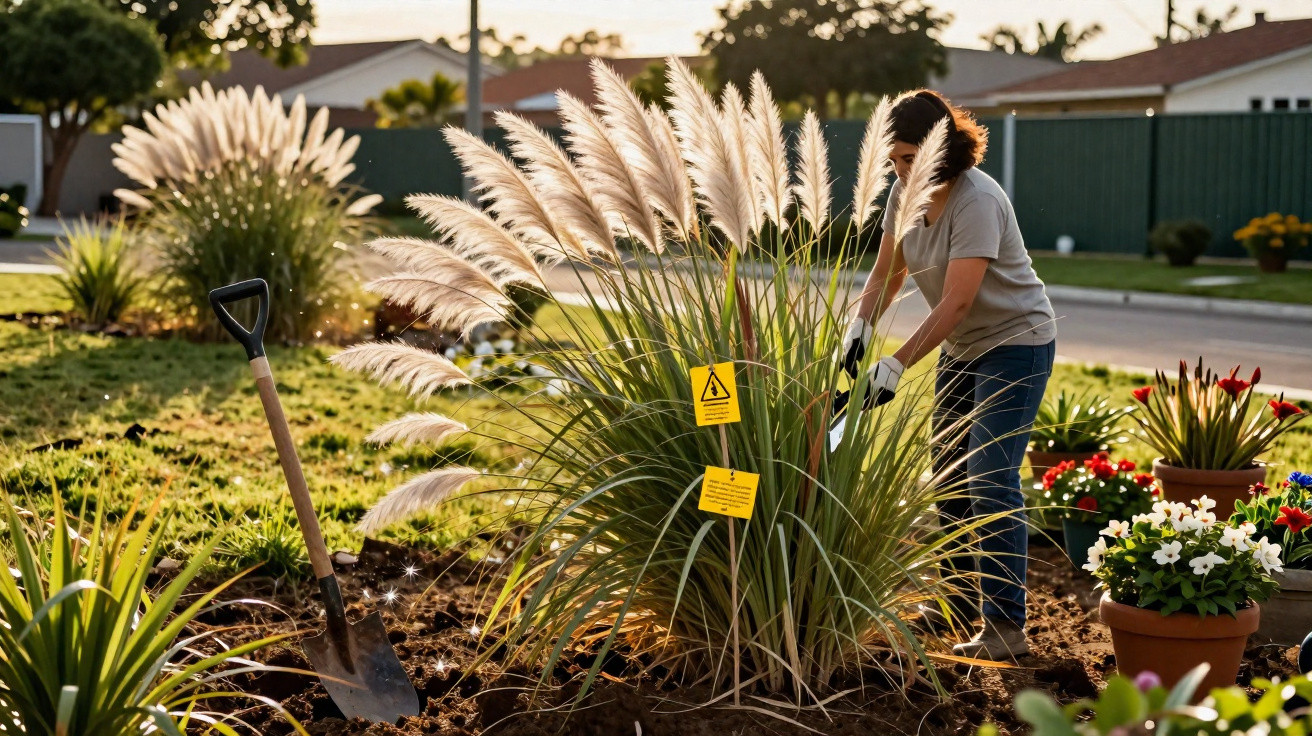
Many amateur gardeners know pampas grass only as a decorative star for the home, garden and Instagram photos. Yet in some countries, this fashionable plant has become a serious environmental issue, bringing strict rules, fines and the question of whether it may still be grown in the garden at all.
How pampas grass went from decorative favourite to problem species
Pampas grass, botanically known as Cortaderia selloana, originally comes from South America. In gardens, it forms imposing clumps that can grow more than two metres tall and almost as wide. Its creamy, often shimmering flower plumes make it a popular focal point.
However, those very flowers lie at the heart of the issue. Each plume can produce hundreds of thousands of tiny seeds. They are exceptionally light and can be carried by the wind for several kilometres. As a result, pampas grass can suddenly appear on verges, brownfield sites, embankments or dunes, far from the garden where it was first planted.
Pampas grass is now officially classified in several European countries as an “invasive alien species” that can displace native plants and alter entire habitats.
Once established, the grass forms thick stands. Native herbs, wildflowers and grasses are left with scarcely any light or room to grow. Biodiversity declines, with rare plant species disappearing first. Coastal dunes and wetlands are especially vulnerable, as even small changes in these areas can destabilise the wider ecosystem.
Pampas grass: more than an aesthetic concern
The risk is not limited to the displacement of native vegetation. Pampas grass has several characteristics that can make it troublesome for people and the environment:
- Sharp leaves: Its long, narrow leaves can cut the skin. Children and pets can easily be injured.
- Problems for allergy sufferers: The pollen can irritate airways and worsen symptoms, particularly in people who are already sensitive.
- Fire risk: During summer, the clumps can dry out considerably. Near homes or hedges, they can then act as highly flammable material.
- Difficult removal: Mature plants develop powerful roots and extremely dense clumps. Anyone who has tried to remove established pampas grass will know how labour-intensive it is.
For this reason, authorities and conservation organisations see it as more than an attractive decorative feature: it is a species capable of changing landscape structures over the long term.
What the regulations specifically prohibit
France added pampas grass to its list of strictly regulated invasive species in 2023. Although that may sound abstract, the consequences are very specific. Since then, it has been prohibited there to:
- import the plant or introduce it into the country;
- cultivate or deliberately plant it out;
- propagate or spread it;
- sell it or give it away;
- transport it while alive.
Nurseries have had to remove existing stock from their ranges, and landscape gardeners may no longer routinely use it. Only dried flower heads remain permitted, as they are no longer regarded as “living” plant material.
Deliberate breaches in France can lead to substantial penalties, potentially reaching six-figure sums in euros in serious cases. In practice, enforcement mainly focuses on commercial sellers, importers and larger new plantings. Older individual plants in private gardens are less likely to be targeted, but they still fall within the scope of the regulations.
Does pampas grass have to be removed from the garden immediately?
Many garden owners ask themselves what France’s strict rules mean if they already have pampas grass growing in a border. The position there is that a specimen planted before 2023 does not automatically have to be removed overnight. However, anyone who keeps it has a responsibility to manage it.
The crucial point is that the plant must not be allowed to spread further without control – either into a neighbouring garden or into the surrounding countryside.
Experts therefore advise taking several precautions:
- Cut off flower heads in good time: Removing the plumes before seeds mature is the most effective way to stop them spreading.
- Do not divide or relocate it: Splitting the clump creates new plant material that can spread.
- Wear protective equipment during maintenance: Thick gloves, long clothing and safety glasses help prevent injuries from the sharp-edged leaves.
- Dispose of it only through a recycling centre: Prunings and roots should not go on the compost heap. Put them in tightly sealed bags and take them to a landfill or designated collection point.
Anyone living near a sensitive site, such as a river corridor, bog, coast or nature reserve, should be particularly rigorous. Specialist bodies in these areas often advise gradual complete removal of the plant, using professional help where necessary.
How to remove pampas grass safely and effectively
Lifting mature pampas grass from the ground is physically demanding and cannot be done in five minutes. A staged approach makes sense:
- Cut back flowers and top growth: Prune the plumes and leaves hard to make the plant easier to handle.
- Split the clump: Use a sharp spading fork or saw to divide the rootstock into several sections.
- Dig out the roots: Remove as much of the root mass as possible to prevent regrowth.
- Monitor the site: Check the area over the following months and remove any fresh shoots immediately.
For very old, large specimens, hiring a mini digger or engaging a gardening contractor can be worthwhile. Anyone with health limitations should not tackle the job alone, as the combination of sharp leaves, weight and dust should not be underestimated.
Attractive, low-risk alternatives for the garden
There is no need to give up the airy, “boho” look of ornamental grasses simply because pampas grass is viewed critically. A wide range of decorative species offers a similar effect without invasive characteristics.
Popular alternatives include:
| Alternative | Mature height | Special feature |
|---|---|---|
| Fine feather grass (Stipa tenuissima) | 40–60 cm | Delicate, mobile stems, ideal for borders and containers |
| Purple moor-grass (Molinia caerulea) | up to 150 cm | Upright habit, turning yellow to orange in autumn |
| Blue fescue (Festuca glauca) | 20–30 cm | Blue-grey mounds, well suited to rock gardens |
| Switchgrass (Panicum virgatum) | 80–180 cm | Fine flower panicles, hardy and upright |
Many of these grasses combine well and add structure to borders without becoming a risk to their surroundings. When in doubt, it is worth checking regional guidance or asking an ecologically minded nursery.
Why countries take invasive species so seriously
The approach to pampas grass reflects a broader issue: non-native species that spread uncontrollably after being introduced. Global trade, travel and plant deliveries by post are bringing increasing numbers of species into regions where they never previously occurred.
Some remain harmless. A small number, however, become problem plants and cause lasting damage, for example to embankments, protected areas or agricultural land. Experience shows that what appears to be an attractive garden rarity today can shape entire landscapes in ten or twenty years’ time.
That is why many countries no longer wait until it is too late, instead imposing bans or strict conditions at an early stage. For gardeners, this means checking fashionable plants before they are permanently planted in the ground. A critical look can save a great deal of work later on – and sometimes fines as well.


Comments
No comments yet. Be the first to comment!
Leave a Comment